
Custom interiors that outgrew Facebook
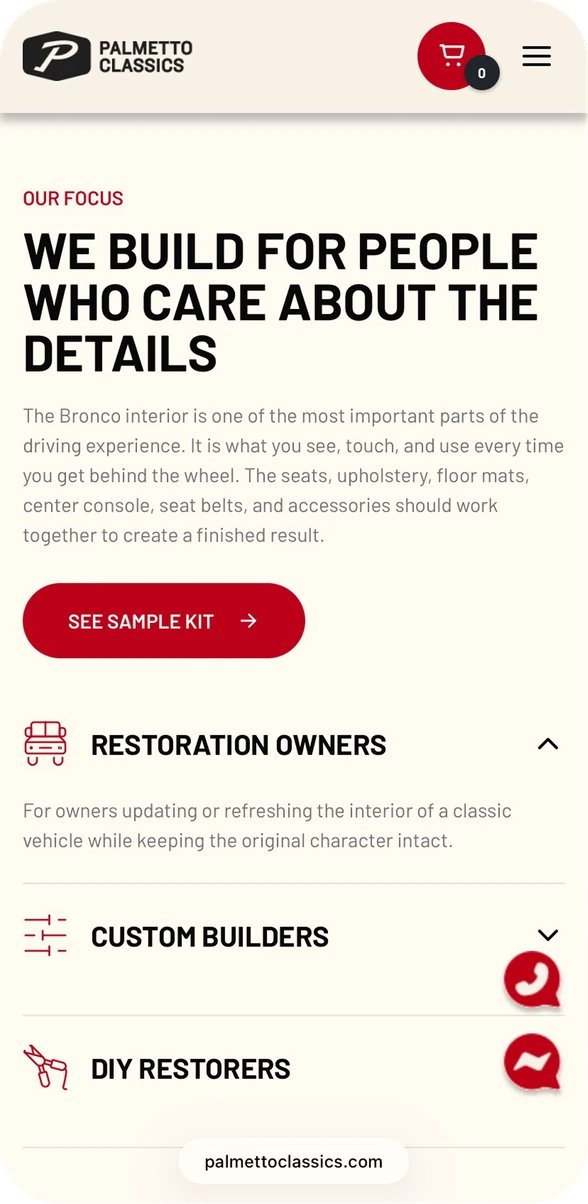
Palmetto Classics grew out of a restoration shop in Taylors, South Carolina. Its founders saw that the interior, the part a driver meets every time they get in, does as much as the engine to make a classic feel renewed. The company now makes handcrafted interiors and accessories for classic vehicles, mainly the first-generation Ford Bronco. After building a customer base on Facebook, the founder asked Align for an online store that would cut manual quoting, simplify communication during orders, and make the range easier to browse and buy. Selling in the US, it also had to meet ADA accessibility requirements.

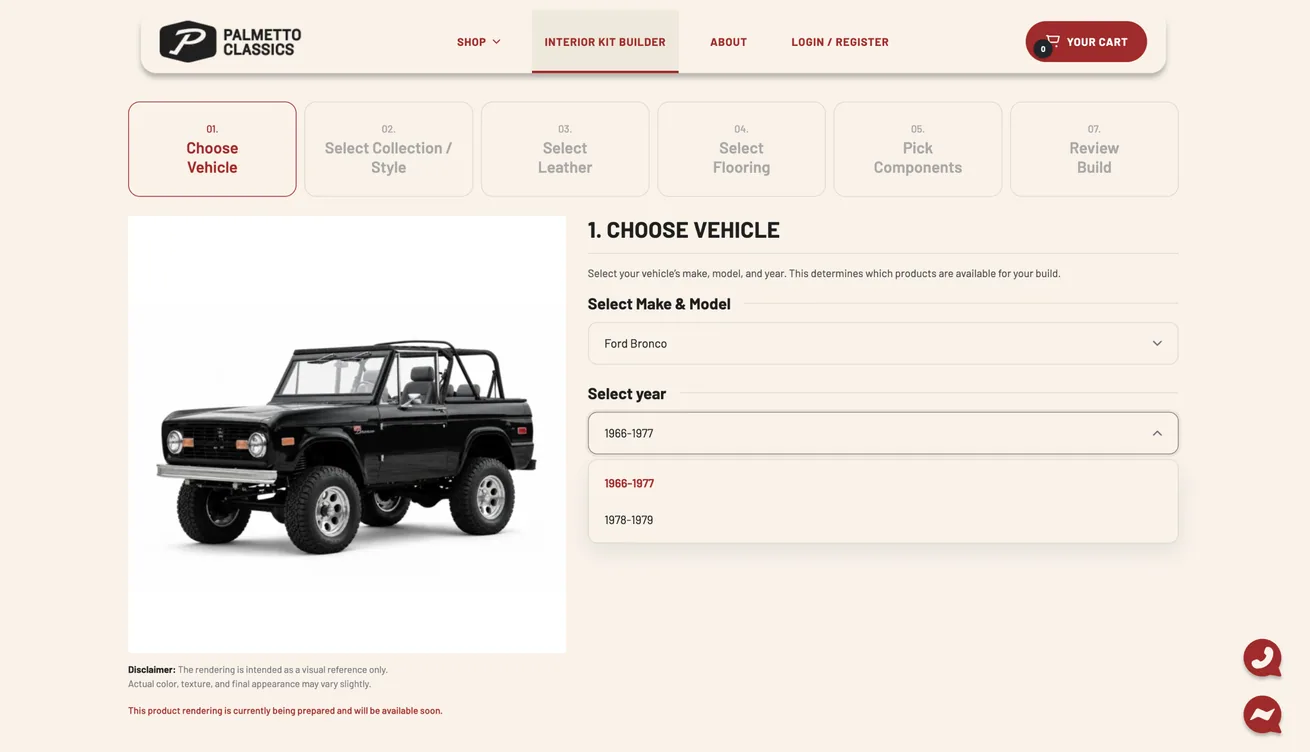
A configurator for a fully custom interior
Customers had to build a whole interior a la carte, choosing each part by style, material and configuration. A full interior can include seats, flooring, door panels, rear panels, center consoles and accessories, and the hard part is how they relate: some options only fit certain collections, others cannot be chosen together. The job was to turn that into a guided process that gives freedom without overwhelming anyone.

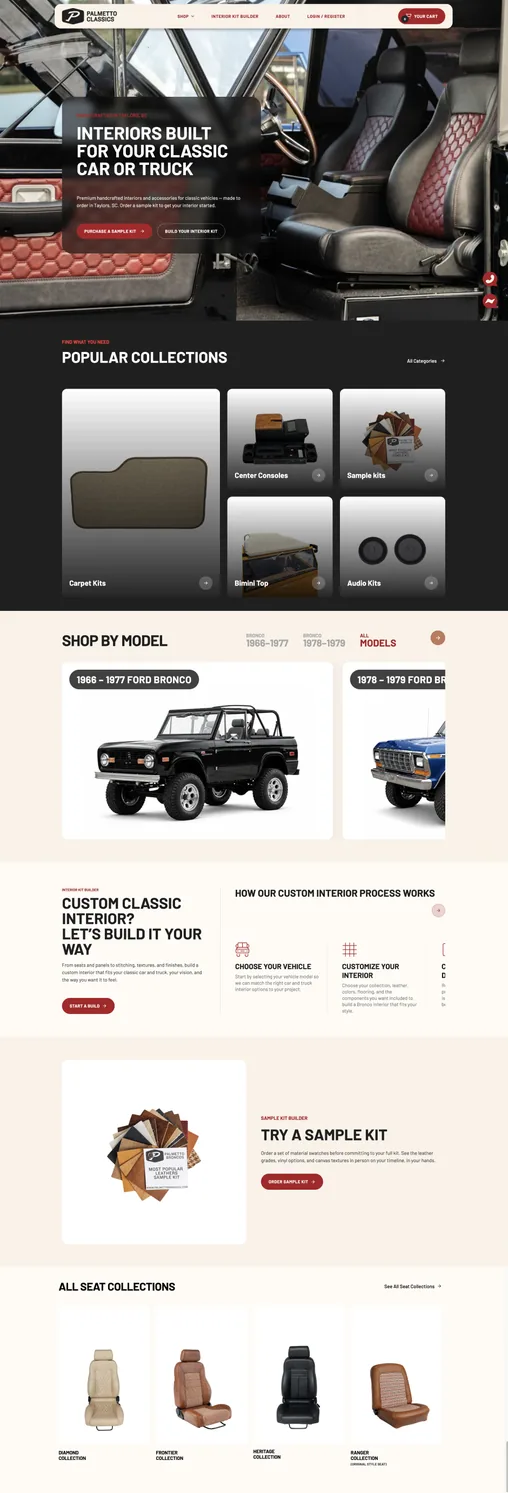
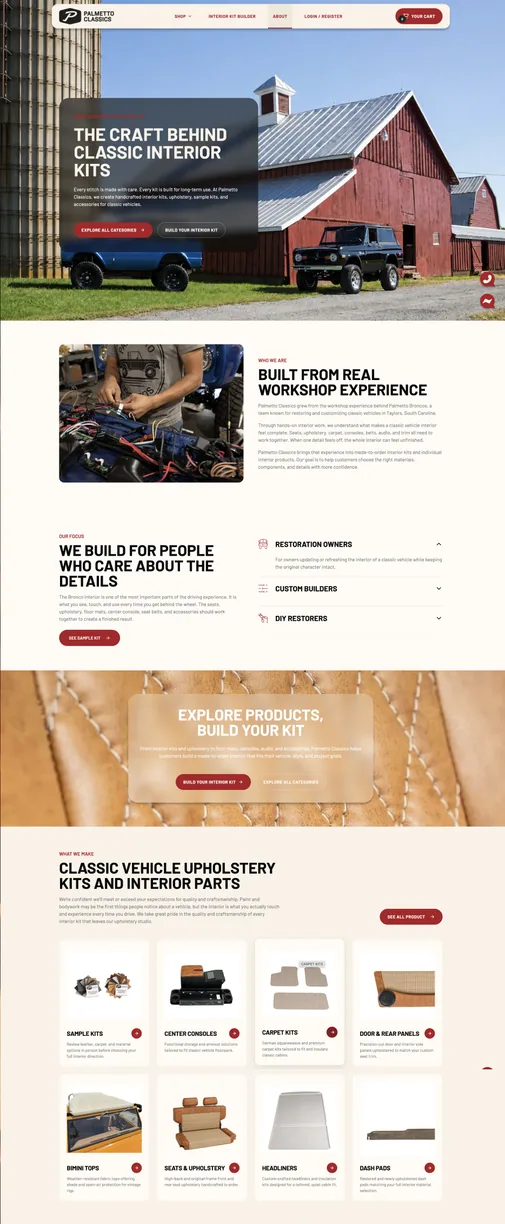
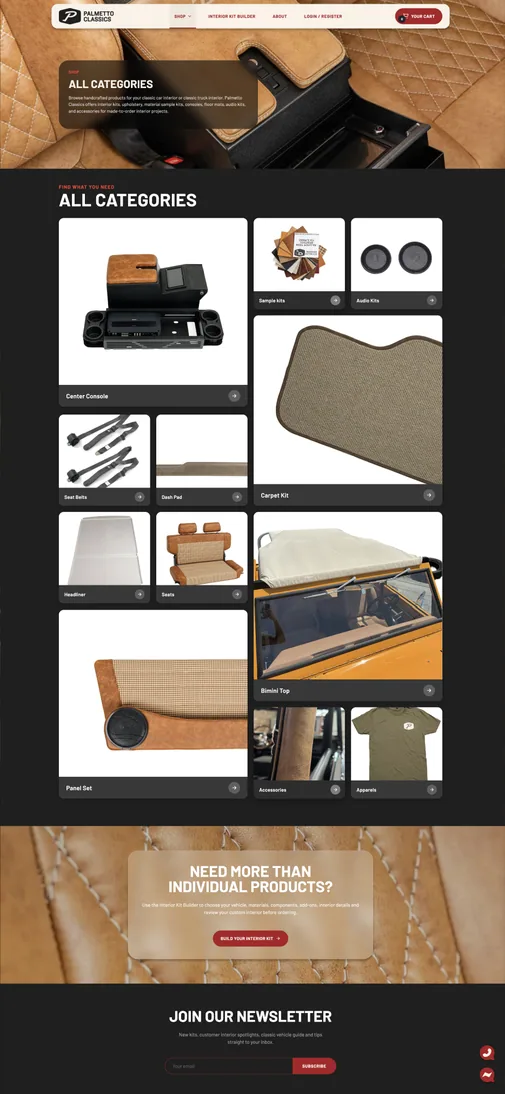
A catalog that changes with each choice
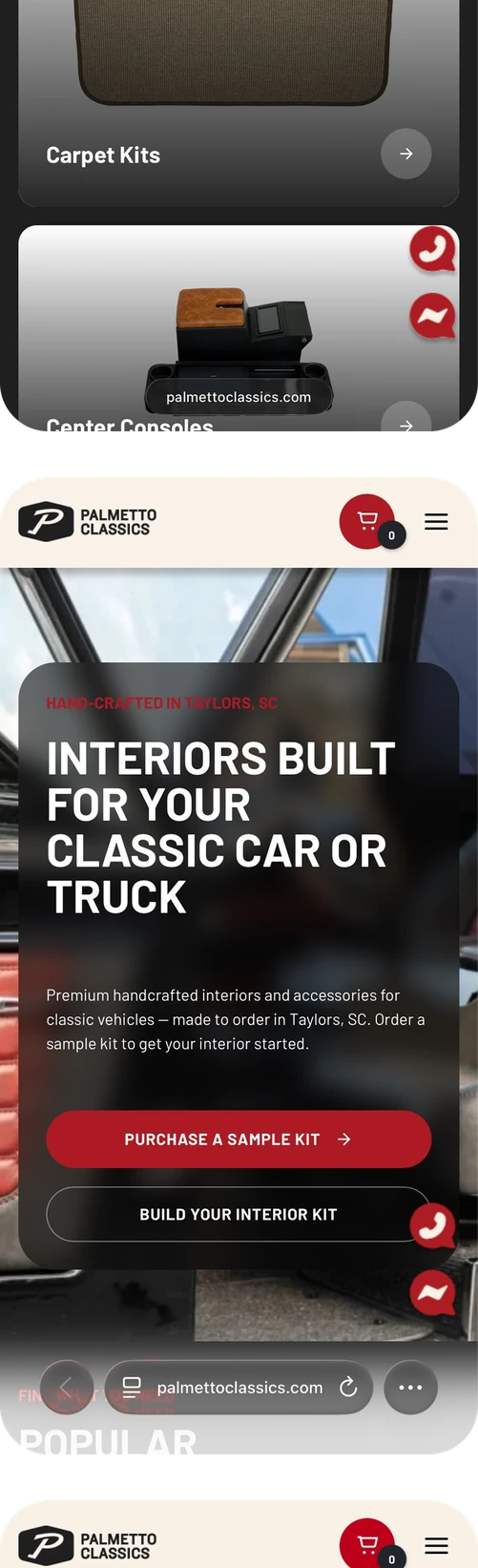
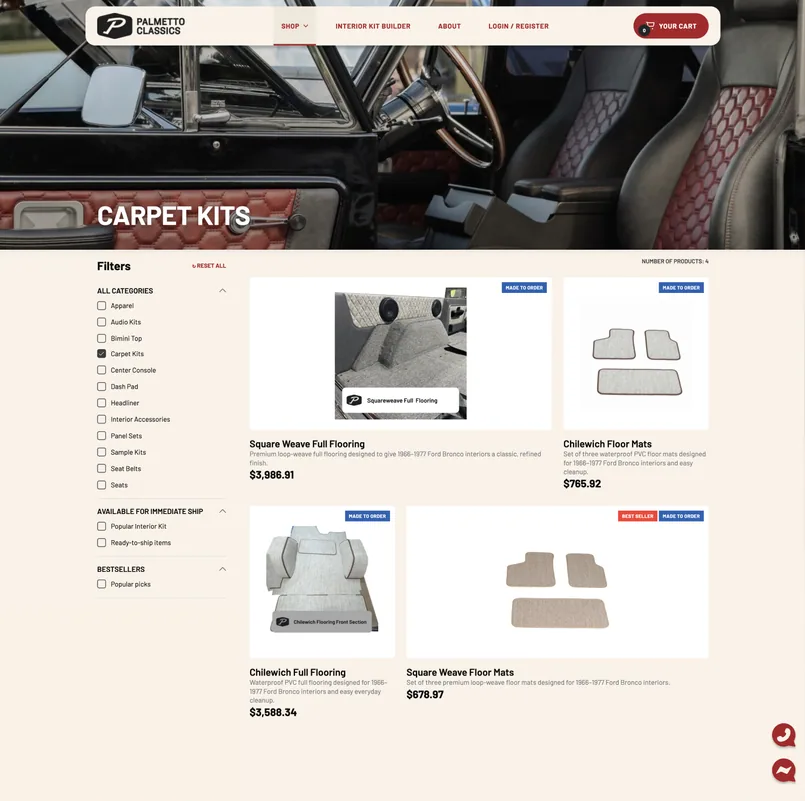
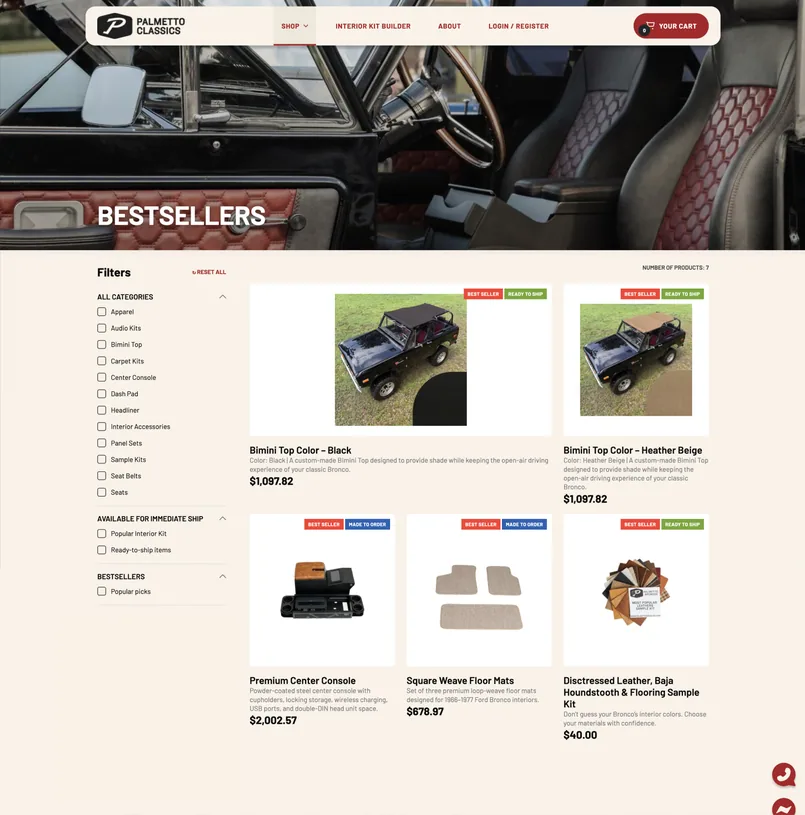
Products come in several leather colors, materials and finishes, and the images have to match each selection. Align set up an AI-assisted image workflow to produce the variations faster. The catalog also separates Made-to-Order from Ready-to-Ship, since each is paid for and shipped differently.

Deposit today, shipping later
Made-to-order products take a 50% deposit; ready-to-ship products are paid in full at checkout. Shipping often cannot be priced upfront because it depends on the finished order, package size, weight, address and carrier rate. Checkout had to say clearly what the customer pays today, what is due later, and when shipping and the balance are settled.

Connected to the workshop behind it
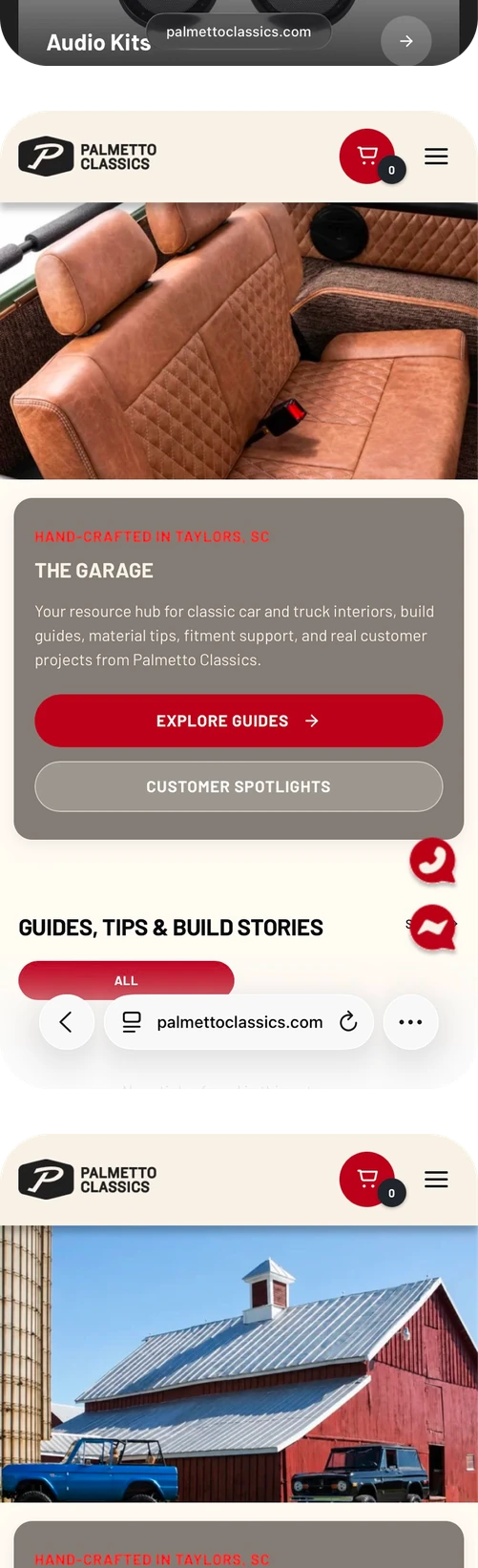
The site also runs the back of the business. The team needed to review complete configurations, track inventory, handle custom requests and follow orders through production and payment. The storefront had to connect to those workflows so the system can carry a custom business as it grows.
Accessible, down to the configurator
In the US an online store falls under the Americans with Disabilities Act, which names no technical standard for private sites, so claims are argued against the Web Content Accessibility Guidelines. We built to WCAG 2.2 Level AA. On a catalog that is mostly discipline: one h1 per page, a skip link, alt text, labelled fields, visible focus, and motion that stops when the system asks. The Interior Kit Builder is harder. Choosing a collection changes the leathers, the panels and the price, and by default a screen reader hears none of it. Every change is announced, each step states its position, and the whole build works from the keyboard. The store also publishes an accessibility statement naming the standard, the third-party parts such as payment and shipping, and a person to contact.
One decision at a time
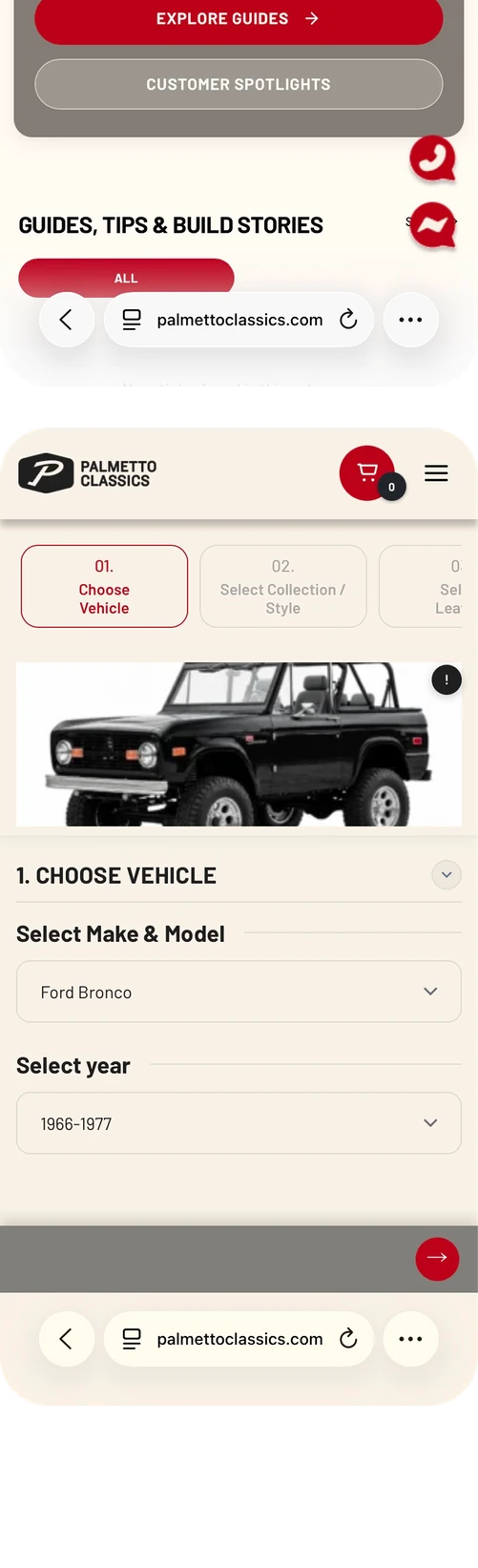
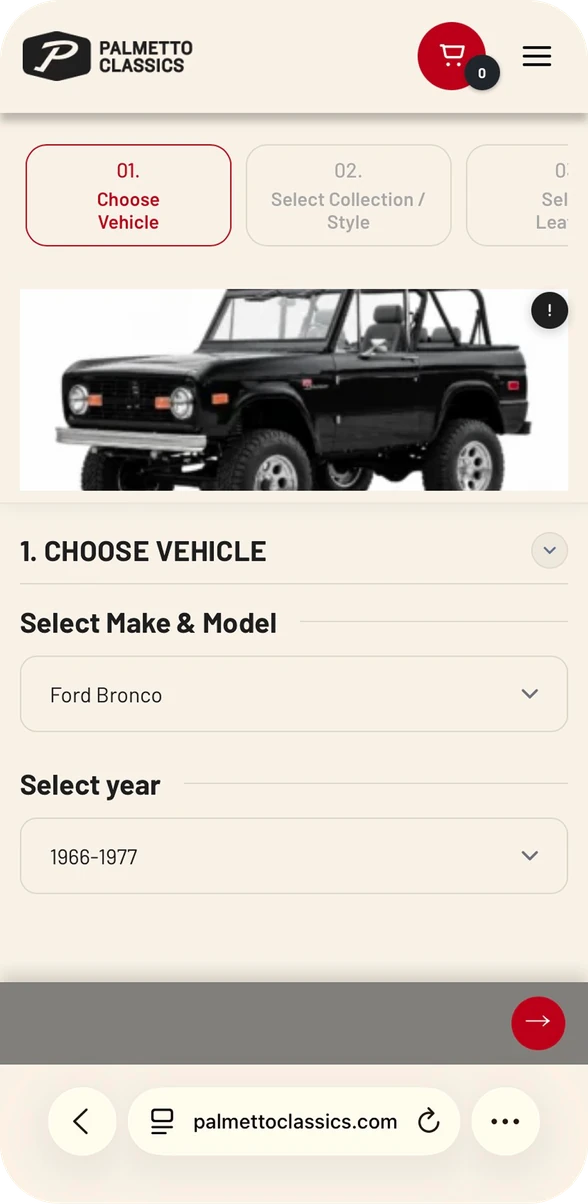
Align designed the store around how a customer actually builds an interior. Instead of one long form, the Interior Kit Builder is a sequence: vehicle, collection and style, leather, flooring, components, add-ons, review. Each step narrows the next. Options appear only when they apply, images update as the build changes, and incompatible combinations are blocked. Customers can also add notes, photos and custom requests for anything a standard build does not cover.

A hands-on sale, now online
A custom buying process that used to run by hand, turned into an online one that can grow.
-
A guided interior builder
Customers build an interior step by step, from collection and leather to seats, panels, consoles and accessories, with dependencies and incompatible combinations handled for them. What used to be a long manual conversation now starts as a structured order.
-
A more flexible catalog
Ready-to-Ship and Made-to-Order are clearly split, and the AI-assisted image workflow keeps up with new variations without rebuilding anything.
-
Checkout built for custom orders
Each product type has its own payment rule, including the 50% deposit, with shipping calculated later once the final package and address are known.
-
A system behind the store
The team sees each configuration, custom request, inventory level and payment status in the CMS, connected to production.
-
Built to WCAG 2.2 AA
Applied to the catalog and the configurator alike: described images, labelled fields, a builder that works from the keyboard and announces its changes, and a published accessibility statement with a person to contact.
Checked again with every release
Align kept working on the store after launch, on performance, accessibility and SEO. The accessibility review covered the catalog, account pages, checkout and the Interior Kit Builder against WCAG 2.2 AA, and it repeats: every new collection and every new builder step goes through it again.
Google PageSpeed Insights on the live store, each category scored out of 100.
- 97Performance
- 97Accessibility
- 100Best Practices
- 100SEO
- 99Performance
- 97Accessibility
- 100Best Practices
- 100SEO
WebAbility scanned fourteen pages of the live store on 12 October 2026, the catalogue, the account pages, the blog and the Interior Kit Builder among them, and returned the store as compliant.
- 95
- Average score across the fourteen pages scanned
- 14
- pages of the live store crawled, one of them unreachable
- 86–95
- the range the individual pages scored
- AA
- the WCAG 2.1 conformance level the scan reports the store meeting
- 22
- items raised across those pages, sixteen fixed in place and four held for manual review
Room to grow without a rebuild
Customers now have a clearer way to find, configure and buy an interior, and the team has one system for products, orders, payments and production. New products, collections and configurations can be added without rebuilding the experience.

