
Do I need SEO in 2026, especially when so much of digital marketing now seems to revolve around social media, paid ads, AI tools, short-form video, newsletters, and whatever new platform everyone is suddenly pretending they fully understand?
It is a fair question. SEO has been around for a long time, and because of that, some businesses wonder if it is still worth the investment. Search behavior is changing. AI search experiences are growing. Paid channels are more competitive. Social platforms keep shifting. Customers move between Google, YouTube, TikTok, LinkedIn, AI assistants, review sites, and referrals before they make a decision.
But that is exactly why SEO still matters.
SEO is no longer just about ranking a page for one keyword and waiting for leads to roll in. It is about helping people find your business, understand your expertise, trust your content, and move through your website with more confidence. It connects your website structure, content quality, technical health, brand authority, and user experience into one long-term growth system.
So if you are asking “do i need seo,” the short answer is probably yes. But the better question is: what kind of SEO does your business actually need?
Because in 2026, the businesses that win with SEO will not be the ones chasing shortcuts. They will be the ones building helpful, trustworthy, well-structured digital experiences that people and search engines can actually understand.
The Short Answer: Do I Need SEO?
Yes, you need SEO if people search online for your services, products, expertise, location, brand, or industry. SEO helps your business appear in front of people who are already looking for information, solutions, comparisons, providers, or answers related to what you offer.
That does not mean every business needs the same SEO strategy. A local clinic, a B2B consulting firm, an e-commerce brand, a nonprofit, and a creative agency all need different approaches. Some need local SEO. Some need technical SEO. Some need stronger service pages. Some need content strategy. Some need better internal linking. Some need all of the above, ideally not all at once on a random Tuesday.
At its core, SEO helps your business become easier to find and easier to understand. Google’s SEO Starter Guide explains that SEO is about helping search engines understand your content and helping users find your site through search [1]. That sounds simple, but doing it well requires thoughtful planning, useful content, clean structure, and ongoing improvement.
A strong SEO strategy can help your business increase organic visibility, attract more qualified traffic, support content marketing, improve website quality, and build long-term trust with your audience.

SEO Has Changed, But It Has Not Disappeared
Every few years, someone declares that SEO is dead. Then everyone searches Google to read the article about SEO being dead, which is a pretty strong hint that it is not.
What has changed is the way SEO works. Older SEO tactics often focused too much on keywords, backlinks, and technical tricks without enough attention to the quality of the content or the experience of the user. That approach is weaker today. Search engines have become much better at evaluating whether content is actually useful, whether a website is trustworthy, and whether the page experience supports the visitor.
In 2026, SEO is much less about gaming the system and much more about building a strong system. That system includes clear website architecture, helpful content, strong service pages, reliable technical performance, internal links, topical authority, and content that reflects real expertise.
| Old SEO Mindset | Modern SEO Mindset |
|---|---|
| Rank for keywords only | Match search intent and user needs |
| Publish more content at any cost | Publish better, more useful content |
| Focus only on Google rankings | Support visibility, trust, and conversion |
| Treat SEO as a one-time setup | Improve SEO continuously over time |
| Separate SEO from website strategy | Connect SEO with UX, content, and development |
| Chase shortcuts | Build authority and clarity |
This is why SEO still matters. The channel has evolved, but the need has not disappeared. People still search. People still compare. People still want answers before they make decisions. SEO helps your business show up during those moments.
Why SEO Still Matters for Businesses in 2026
SEO matters because search is still one of the strongest indicators of intent. A person scrolling social media may be curious. A person searching “best family doctor near me,” “website redesign agency,” “how much does local SEO cost,” or “do i need seo for my website” is actively looking for information or a solution.
That difference matters.
Search traffic often comes from people who already have a question, a problem, or a goal. They may not be ready to buy immediately, but they are moving through a decision-making process. If your website provides the right information at the right moment, SEO can help your business become part of that decision.
SEO also matters because it supports compounding growth. A paid ad stops working when the budget stops. A social post may disappear from the feed in a day. A strong SEO page can continue attracting traffic, building authority, and supporting conversions over time. It still needs updates and maintenance, but it can keep working long after the first publish date.
This does not mean SEO should replace ads, social media, or referrals. It means SEO should support them. A strong SEO foundation makes your entire digital presence more useful because it gives people somewhere clear, credible, and searchable to land.

SEO Helps People Find You When They Are Already Looking
One of the biggest advantages of SEO is that it meets people at the moment of intent. Instead of interrupting someone, SEO helps your business appear when someone is actively searching.
A person might search for a broad educational question, like “what is SEO?” They might search for a practical question, like “how to improve website traffic.” They might search for a buying question, like “what does an SEO agency do?” They might search for a local question, like “SEO agency near me.” Each search tells you something about where that person is in their journey.
Good SEO helps you create content for different stages of that journey. You can have blog posts that answer early questions, service pages that explain what you offer, case studies that build confidence, and CTAs that guide visitors toward the next step.
This is where SEO becomes more than traffic. Traffic alone is not the goal. Relevant traffic is the goal. You do not need every person on the internet to visit your website. You need the right people to find the right page at the right time.
SEO Builds Trust Before the Sales Conversation
Many people think SEO is only about visibility, but trust is just as important. When your website appears for helpful, relevant searches, and the content actually answers the user’s question, your business starts building credibility before any sales conversation happens.
This is especially important for service businesses. People usually do not choose a web design agency, healthcare provider, consultant, financial advisor, or B2B partner based on one quick impression. They research. They compare. They read. They look for signs that you understand their problem.
A well-structured SEO strategy helps your website answer those questions in a calm, useful way. It allows your business to show expertise through service pages, guides, FAQs, case studies, and resources.
Good SEO does not just help people find your website. It helps people feel like they found the right website.
That is the real power of SEO. It creates a bridge between discovery and trust. If your content is thin, generic, or confusing, people may find you and still leave. But if your content is clear, helpful, and aligned with their needs, SEO can support both visibility and conversion.
SEO Supports Better Website Structure
A strong SEO strategy often reveals whether your website structure makes sense. If your services are buried, your pages are too similar, your navigation is confusing, or your content does not match how people search, SEO will expose those problems very quickly.
That is not a bad thing. It is useful feedback.
SEO forces you to think about your website from the user’s perspective. What are people searching for? What words do they use? What questions do they ask before they contact you? Which services need their own pages? Which topics deserve supporting blog content? Which pages should link to each other?
This is why SEO should connect closely with website strategy. A website that is beautiful but poorly structured can still struggle to perform in search. A website with strong content but weak UX can still lose visitors. SEO works best when it is built into the larger website process, from sitemap planning and content structure to UX/UI design and development.
If your team is redesigning or rebuilding a website, it is worth thinking about SEO early. Align’s Website Process connects strategy, UX/UI design, development, and SEO foundations so the website is built with growth in mind from the start.
SEO Helps Your Content Work Harder
Content without SEO can still be useful, but it may not reach enough people. SEO gives content a clearer purpose. It helps you understand what your audience is searching for, what questions need to be answered, and how each article or page should connect to the rest of your website.
This does not mean every blog post needs to chase a keyword in a robotic way. Nobody wants to read an article that sounds like it was written by a spreadsheet wearing a blazer. The content still needs to feel human, useful, and thoughtful.
But SEO helps guide the content direction. It helps you decide which topics are worth writing, how to structure them, what search intent to address, and where to link next.
Google’s guidance on helpful content encourages creators to write content that benefits people, not content created primarily to manipulate search rankings [2]. That is important because modern SEO is not about producing more content just to have more pages. It is about producing better content that supports real user needs.
For businesses, that might mean writing articles that answer practical questions, such as “do i need seo,” “how often should I redesign my website,” “what does an SEO agency do,” or “how to choose a website designer.” These are not just keywords. They are real questions from people trying to make business decisions.
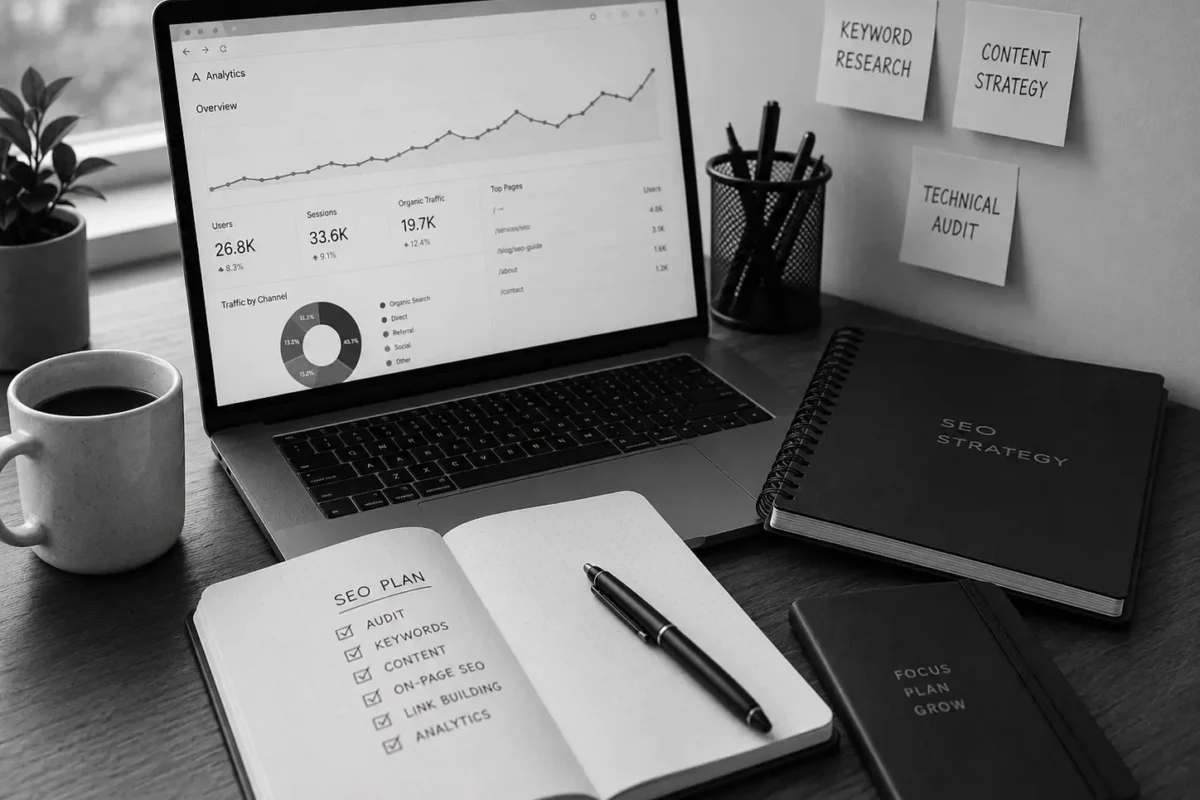
SEO Helps You Understand Your Audience
One underrated benefit of SEO is that it gives you insight into what your audience actually cares about. Keyword research is not just a ranking exercise. It is a window into customer thinking.
When you look at search data, you can see what people are confused about, what they compare, what they worry about, and what language they use. Sometimes this is humbling. Businesses often describe their services one way, while customers search in a completely different way.
For example, a business may say “digital experience optimization,” while customers search “why isn’t my website showing up in Google?” A company may say “brand ecosystem development,” while customers search “why does branding matter?” Both can be valid, but SEO helps close the gap between internal language and user language.
That gap matters. If your website uses only internal language, your audience may not find you or understand you. SEO helps translate your expertise into language people actually use.
SEO and AI Search Are Starting to Overlap
In 2026, SEO is also becoming more connected to AI search experiences. People are not only using traditional search results. They are also asking AI tools for summaries, comparisons, recommendations, and explanations. That does not make SEO irrelevant. It makes clarity, authority, structure, and trust even more important.
AI search systems need to understand information. They rely on clear content, structured pages, reliable sources, strong entities, and useful explanations. If your website does not clearly communicate who you are, what you do, who you help, and why you are credible, it may be harder for both search engines and AI-driven systems to understand your brand.
This is where SEO and GEO, or Generative Engine Optimization, begin to connect. The goal is not to chase every AI trend. The goal is to make your content easier to understand, reference, and trust across search experiences.
That starts with the same fundamentals that make SEO strong: useful content, clear structure, strong internal links, credible proof, and technically healthy pages.
The Main Types of SEO Businesses Need
Not every business needs the same SEO plan. Before deciding how much to invest, it helps to understand the main types of SEO and what they support.
| Type of SEO | What It Focuses On | Why It Matters |
| Technical SEO | Crawlability, indexing, speed, structure, Core Web Vitals | Helps search engines access and understand your site |
| On-page SEO | Titles, headings, content, metadata, internal links | Makes each page clearer and more relevant |
| Content SEO | Blog posts, guides, service content, topic clusters | Builds authority and answers user questions |
| Local SEO | Google Business Profile, local pages, reviews, location signals | Helps local customers find and trust your business |
| Authority building | Backlinks, mentions, partnerships, digital PR | Strengthens credibility and search trust |
| SEO reporting | Rankings, traffic, conversions, content performance | Shows what is working and where to improve |
A strong SEO process usually combines several of these areas. For example, you may need technical SEO to make sure your website can be crawled and indexed, content SEO to answer user questions, and on-page SEO to improve key service pages.
This is why “do i need seo” is not a yes-or-no question only. It is also a question about which SEO activities matter most for your current stage.

Signs Your Business Needs SEO
Your business may need SEO if people are already searching for services like yours, but your website is not showing up. It may also need SEO if your traffic has declined, your service pages are too thin, your content does not match user intent, or your competitors appear more often in search results.
You may also need SEO if your website gets traffic but does not convert. In that case, the issue may not be traffic volume. It may be that the wrong pages are ranking, the content is unclear, or the user journey is weak.
Here are a few common signs:
- Your website is not showing up for important service keywords
- Your competitors appear more often in search results
- Your blog content does not bring meaningful traffic
- Your service pages feel thin or outdated
- Your site has indexing or technical issues
- Your local visibility is weak
- You are relying too heavily on paid ads
- You do not know which pages are driving leads
- Your team keeps publishing content without a clear plan
If several of these feel familiar, SEO is probably not optional. It may be the thing that turns your website from a passive presence into a more useful growth channel.
When SEO May Not Be the First Priority
SEO is important, but it is not always the first thing a business should fix. Sometimes a business asks “do i need seo,” but what they really need first is a clearer website, stronger messaging, better service pages, or a more trustworthy brand experience.
If your website is confusing, outdated, slow, or missing core information, sending more traffic to it may not solve the problem. It may simply help more people experience the confusion faster. That is not growth. That is just scaling the headache.
In those cases, website strategy should come before aggressive SEO growth. You may need to improve the homepage, rebuild the service pages, clean up navigation, add proof points, improve performance, or create clearer CTAs before investing heavily in content and backlinks.
SEO works best when the website is ready to receive the traffic. This is why SEO and website design should not be treated as separate worlds. They need to support each other.
How SEO Supports Lead Generation
SEO can support lead generation by helping qualified visitors find the pages that answer their questions and guide them toward action.
A person may first find your business through a blog post. If the article is useful, they may explore a service page. If the service page is clear, they may read a case study. If the case study builds trust, they may contact you. This journey is not always instant, but it is powerful because the visitor is educating themselves along the way.
That is why internal linking matters. A blog post about “do i need seo” should not end in a dead end. It should guide readers toward related services, deeper resources, and clear next steps.
For example, if someone is trying to understand whether SEO is worth it, they may naturally want to see how an agency approaches SEO. Align’s SEO Process explains how SEO strategy, technical review, content planning, on-page optimization, local SEO support, and reporting can work together. If the reader is also planning a website redesign, the Website Process can help them understand how SEO should be considered during the website build.
Good SEO does not push people aggressively. It gives them a useful next step when they are ready.
Why SEO Is a Long-Term Investment
SEO usually does not work like turning on a light switch. It works more like building a garden, except the garden is your website and some of the weeds are broken links, duplicate content, and blog posts from 2018 that nobody wants to talk about.
It takes time because search engines need to crawl, index, evaluate, and compare your pages. Your website also needs time to build authority, improve content quality, earn links, and collect performance signals. That does not mean SEO takes forever to show value, but it does mean expectations need to be realistic.
The best SEO strategies focus on steady improvement. Month by month, you can improve important pages, publish useful content, fix technical issues, strengthen internal links, update old articles, and review performance.
Over time, those improvements compound. Your website becomes easier to understand. Your content becomes more useful. Your authority becomes stronger. Your organic visibility becomes more stable.
That is why SEO still matters in 2026. It is one of the few digital channels that can grow in value over time when managed well.
What a Good SEO Process Looks Like
A strong SEO process should feel clear, practical, and connected to business goals. It should not feel like a mysterious monthly report filled with charts nobody understands and acronyms everyone politely pretends to know.
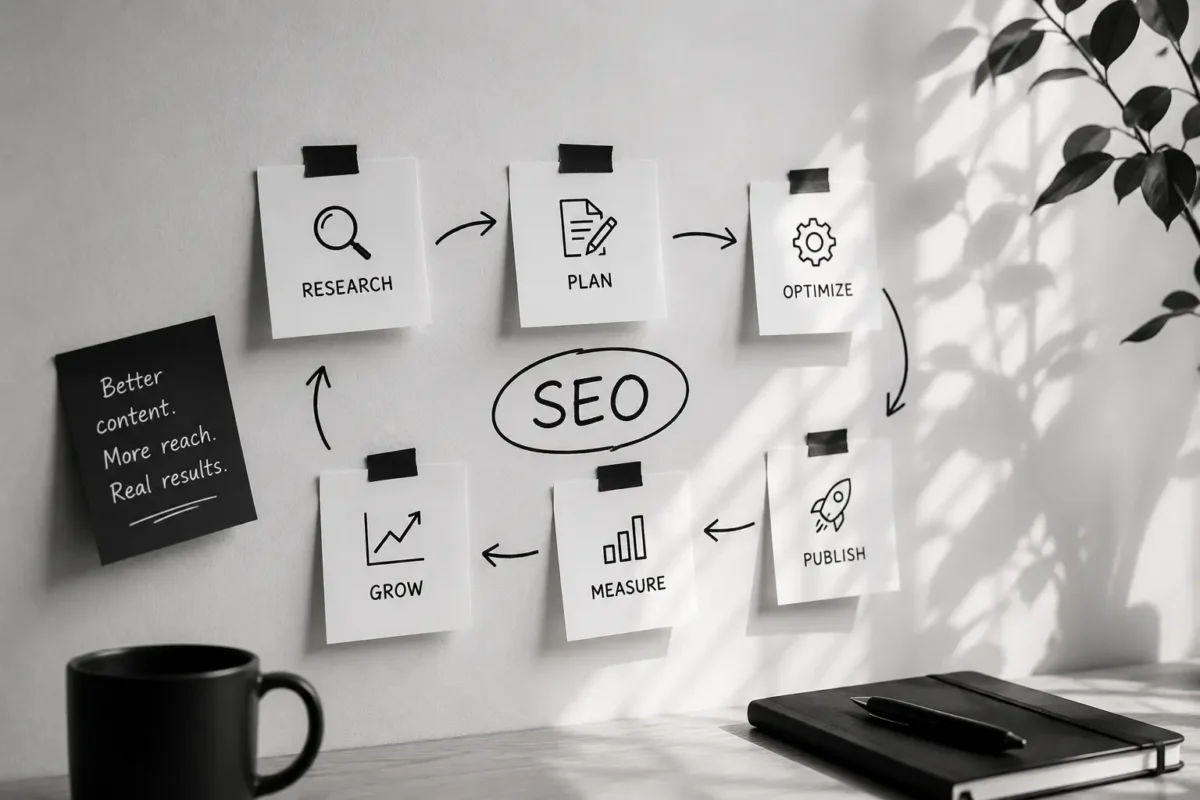
At Align, a good SEO process usually starts with understanding the business, audience, services, and current website performance. From there, keyword research and competitor review help identify opportunities. A technical audit checks whether search engines can properly crawl, index, and understand the website. On-page optimization improves titles, headings, metadata, page structure, and internal links. Content strategy helps plan useful articles, service pages, and topic clusters. Reporting then tracks what is working and what should improve next.
| SEO Step | What Happens | Why It Matters |
| Research | Review goals, audience, keywords, and competitors | Finds the right opportunities |
| Audit | Check technical health, indexing, and structure | Identifies issues holding the site back |
| Optimize | Improve key pages, metadata, headings, and internal links | Makes pages clearer for users and search engines |
| Create | Build helpful content around real user questions | Supports authority and organic traffic |
| Measure | Track rankings, traffic, conversions, and next steps | Keeps the strategy focused and accountable |
| Improve | Update content and fix issues over time | Helps SEO grow steadily |
This kind of process matters because SEO is not one task. It is an ongoing system of improvements.
Common SEO Mistakes Businesses Still Make
One of the biggest SEO mistakes is treating SEO as something you “add” after the website is finished. SEO should influence sitemap planning, page structure, content, navigation, performance, and development decisions. Adding SEO at the end is possible, but it often means fixing problems that could have been avoided earlier.
Another common mistake is publishing content without strategy. More blog posts do not automatically mean better SEO. If the content is thin, repetitive, off-topic, or disconnected from service pages, it may not support growth.
Businesses also often ignore technical SEO until something breaks. Indexing problems, slow pages, poor mobile experience, broken links, and messy site structure can quietly limit performance. Core Web Vitals measure real-world user experience, including loading performance, interactivity, and visual stability [3]. These technical details matter because they shape both user experience and search performance.
Finally, many businesses focus only on rankings and forget conversion. Ranking is useful, but it is not the final goal. The goal is to attract the right people and help them take meaningful action.
How to Know If SEO Is Working
SEO performance should be measured with more than one number. Rankings matter, but they are only part of the picture. Organic traffic matters, but traffic without relevance may not help the business. Leads matter, but they need to be connected back to the pages and queries that influenced them.
A good SEO report should help answer practical questions. Are important pages gaining visibility? Are the right keywords improving? Which blog posts are bringing useful traffic? Which pages need updates? Are users staying, clicking, and converting? Are technical issues improving? What should happen next?
SEO reporting should make decisions easier, not more confusing. If a report is full of data but gives no clear next steps, it is not doing its job.
So, Do I Need SEO?
If your customers search online before they choose a business, then yes, you need SEO.
If your competitors are showing up in search and you are not, you need SEO.
If your website has useful services but not enough visibility, you need SEO.
If your content is scattered, outdated, or not connected to your business goals, you need SEO.
If you are relying only on paid ads, referrals, or social media, SEO can help create a more stable long-term foundation.
But the real answer is not just “yes.” The real answer is that you need the right SEO strategy for your stage, audience, market, and website. SEO should not be treated like a generic checklist. It should be connected to how your business communicates, how your website is structured, and how people make decisions.
In 2026, SEO still matters because people still search for answers, services, comparisons, and trustworthy businesses. The tools may change. The search results may look different. AI may influence how people discover information. But the need for clear, helpful, credible content is not going away.
Ready to Build an SEO Strategy That Supports Long-Term Growth?
SEO should not feel like a guessing game. It should help your business become easier to find, easier to understand, and easier to trust.
At Align, we help businesses build SEO strategies that connect technical health, content quality, website structure, internal linking, and ongoing optimization. Whether you are improving an existing website, preparing for a redesign, or trying to build long-term organic visibility, we can help create a clearer path forward.
Explore Align’s SEO Process, learn how SEO connects with our Website Process, or Start a Project with our team.
References
- Google Search Central: Creating helpful, reliable, people-first content
- Google Search Central: Understanding Core Web Vitals and Google search results
- Nielsen Norman Group: 4 Trustworthiness Factors
- Web.dev: Web Vitals