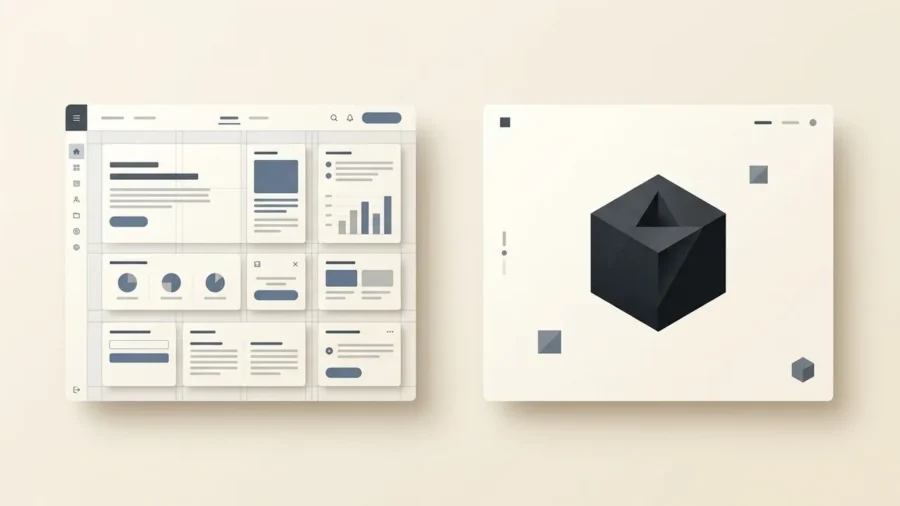
While many people use the terms interchangeably, achieving a truly clean web page design involves much more than simply stripping away visual elements. In the world of high-end digital branding, the distinction between a clean layout and a minimalist philosophy is the difference between a user-friendly interface and a conceptual art piece. Clean design focuses on clarity, organization, and ease of use, ensuring that every element on the screen serves a specific purpose without overwhelming the visitor.
Minimalism, by contrast, is a rigorous discipline that seeks to strip a design down to its barest essentials, often prioritizing aesthetic extreme over traditional utility. When we approach web projects at Align, we prioritize reducing cognitive overload to help users make decisions faster. This approach aligns with Hick’s Law[1], which suggests that increasing the number of choices results in a logarithmic increase in decision time. By understanding these nuances, brands can create digital experiences that feel both sophisticated and effortlessly functional.
Defining the Aesthetic: What is Clean Web Page Design?
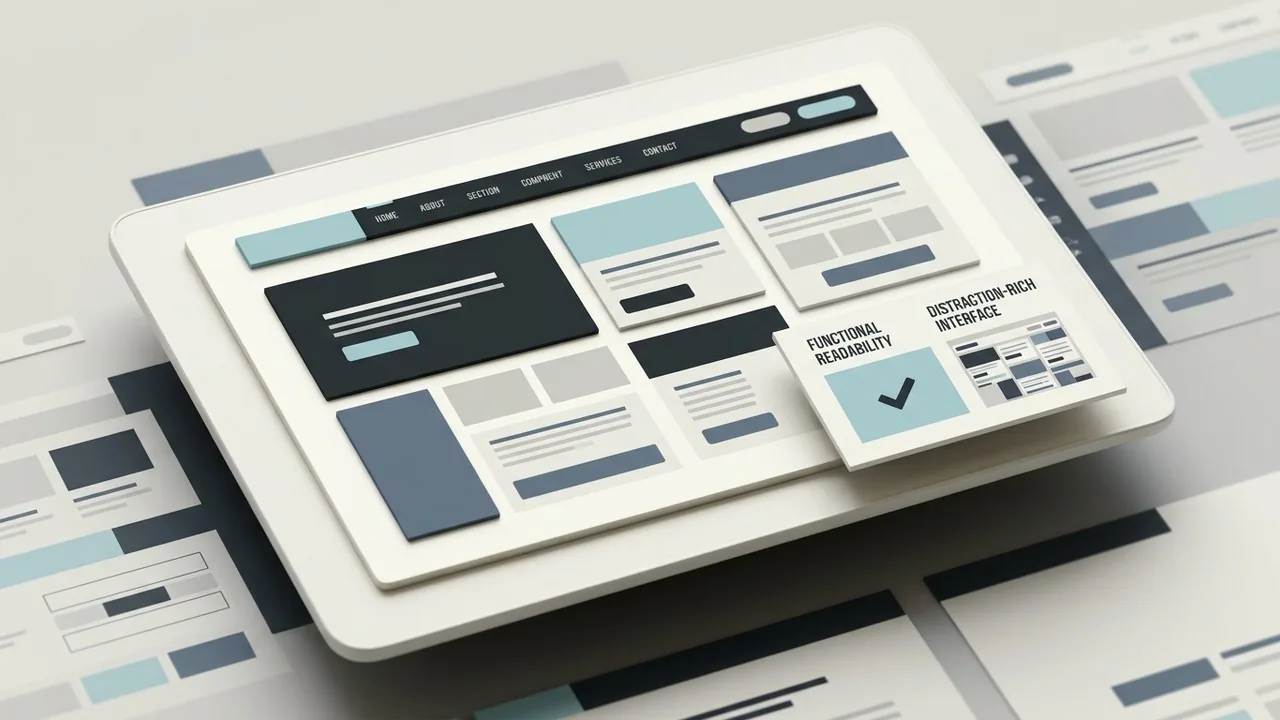
In the world of digital interfaces, clean web page design is often mistaken for a lack of content, yet it is actually a highly intentional strategy centered on functional clarity. Unlike minimalism, which can occasionally lean into the avant-garde or experimental, clean design is rooted in the user experience. It is the art of removing friction so that the user’s journey from landing page to conversion is as smooth as possible.
Clean design is not about how little you can put on a page; it is about how clearly you can communicate the purpose of every element that remains.
Prioritizing Readability and Flow
At its core, a clean interface ensures that the most important information is the easiest to find. This involves choosing typography that remains legible across devices and ensuring that the logical flow of information matches user expectations. When the layout is intuitive, users spend less time deciphering the interface and more time engaging with the brand story.
The Role of Strategic White Space
White space, or negative space, is the breathing room between elements. In clean web page design, this space is not ’empty’; it is a functional tool used to group related items and separate distinct sections. Proper spacing prevents the UI from feeling cramped, which reduces cognitive load and helps visitors focus on one call-to-action at a time. This focus is a key component of effective UX, as outlined in Hick’s Law[2], which notes that simplifying choices can significantly improve the user’s decision-making process.
Visual Hierarchy Over Visual Deprivation
While minimalism might strip away a button’s shadow or a decorative border to achieve a specific look, clean design uses these visual cues to establish a hierarchy. By using size, color contrast, and placement, designers guide the eye toward the primary objective. It is about organization rather than deprivation, ensuring that the interface feels professional and polished without losing its utility.
Quick Breakdown: Clutter vs. Clean
- Clutter: Competing calls-to-action that confuse the visitor.
- Clean: A singular, obvious path toward the primary goal.
- Clutter: Dense blocks of text with no visual breaks.
- Clean: Scannable headers and generous line spacing.
- Clutter: Sensory overload from too many colors or fonts.
- Clean: A disciplined palette that reinforces brand identity.
The Philosophy of Minimalism: More Than Just Empty Space
While clean web page design focuses on the arrangement of elements, minimalism is a deliberate philosophical choice that prioritizes the essence of an object over its decoration. Rooted in the visual arts and architecture of the 1960s, this movement suggests that by removing the superfluous, we reveal the truth of the remaining piece. In the digital realm, this translates to an interface where every pixel must justify its existence.[3]
The ‘Less is More’ Origin Story
Minimalism didn’t start with a high-end tech landing page; it began as a reaction against the chaos of abstract expressionism. Figures like Ludwig Mies van der Rohe championed the idea that simplicity is not the absence of design, but the result of rigorous refinement. In modern UX, this means the designer isn’t just making things look tidy; they are actively challenging whether a sidebar, a footer, or even a traditional menu is strictly necessary for the user to achieve their goal.
Radical Reduction: Removing the Non-Essential
In a minimalist framework, the designer often strips away standard UI tropes to create a singular focal point. This approach leans heavily into psychological principles like Hick’s Law, which suggests that increasing the number of choices will increase the time it takes for a person to make a decision. By offering only one path, minimalism removes the cognitive load entirely.
Minimalism is not the lack of something; it is simply the perfect amount of something.
When Minimalism Becomes an Art Form
When executed correctly, minimalism transcends utility to become a brand statement. It uses massive typography, high-contrast color palettes, and intentional ‘negative space’ to create a sense of luxury or avant-garde sophistication. However, the risk is high; without a clear visual hierarchy, a minimalist site can become an unusable puzzle. The hallmark of a successful minimalist site is that even with the barest of elements, the user never feels lost.
Minimalist Hallmarks
- Flat Textures: No shadows, gradients, or 3D effects that distract from the content.
- Limited Palette: Using only one or two colors to create a high-impact visual signature.
- Bold Typography: Letting the typeface do the heavy lifting of the visual hierarchy.
- Extreme White Space: Using vast empty areas to force the eye toward a single call-to-action.
Key Differences: Functionality vs. Philosophy
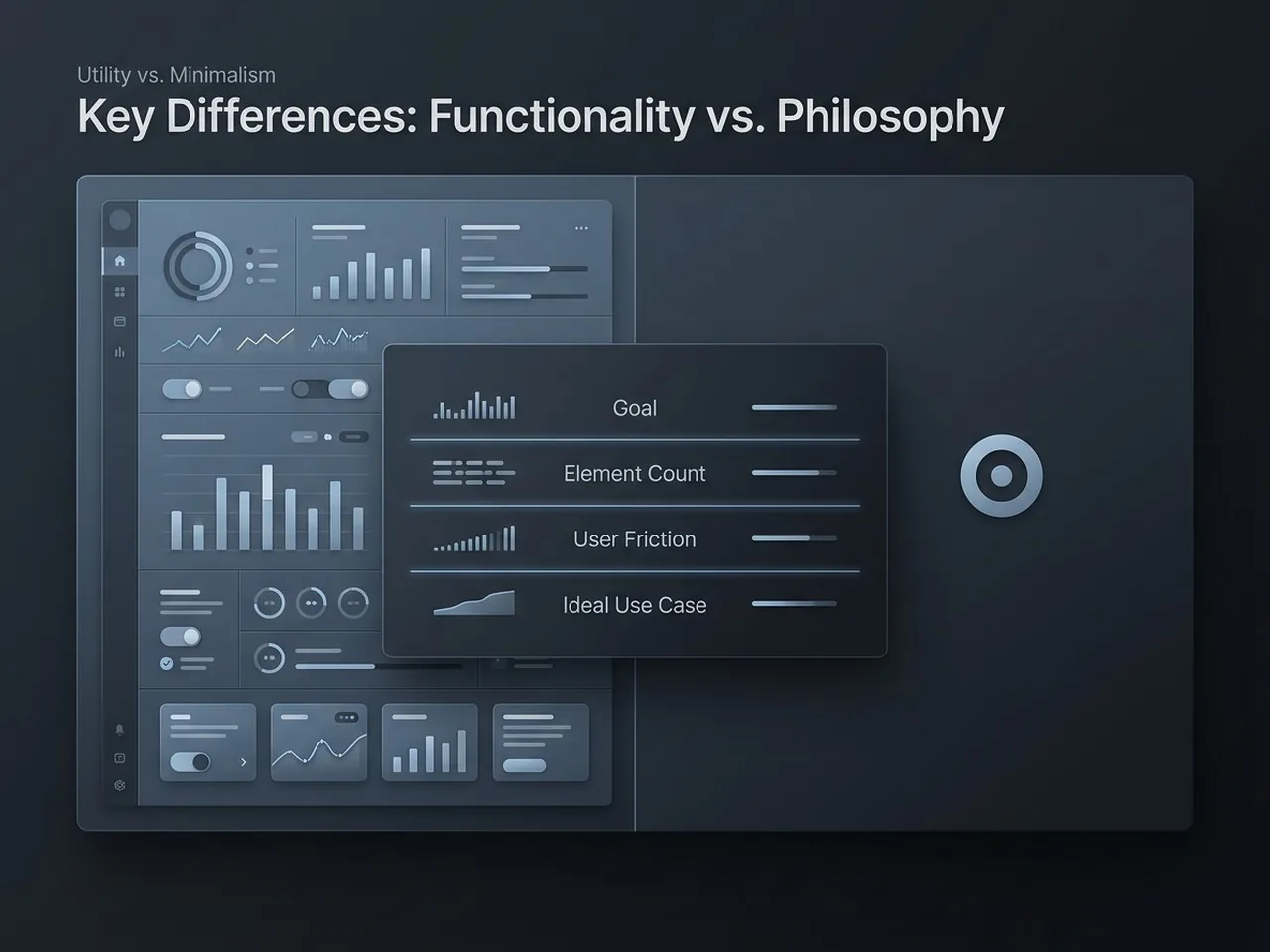
While both styles prioritize clarity, the fundamental divide lies in their intent. Clean web page design is a functional strategy aimed at organizing information efficiently, regardless of how much content exists. In contrast, minimalism is a philosophical choice that seeks to strip away everything but the absolute essential, often sacrificing density for the sake of aesthetic impact.
Content Density and User Needs
Clean design is the workhorse of the digital world. It thrives in complex environments, such as SaaS dashboards or data-heavy marketplaces, where the goal is to make a vast amount of information digestible. By using generous padding, clear grids, and logical grouping, a clean layout prevents cognitive overload without requiring the deletion of necessary features. Minimalism, however, often requires a radical reduction of the feature set to maintain its visual purity, making it better suited for portfolio sites or luxury brand landing pages.
Navigation Patterns and Accessibility
Navigation in clean design follows established mental models, ensuring users can find what they need through visible menus and breadcrumbs. Minimalism often hides these elements behind ‘hamburger’ icons or experimental gestures to maintain a pristine interface. This can create friction, as reducing the number of choices can ironically make the remaining ones harder to find. According to Hick’s Law[4], increasing the complexity of a choice or hiding the path to a goal can significantly slow down user decision-making.
Brand Identity Alignment
Choosing between these two depends heavily on your brand voice. A clean design signals reliability, transparency, and ease of use, which is ideal for service-based businesses. Minimalism signals exclusivity and high-end sophistication. One is about being helpful; the other is about being iconic.
| Feature | Clean Web Page Design | Minimalist Design |
|---|---|---|
| Goal | Usability & Clarity | Aesthetic Impact |
| Element Count | High to Moderate | Strictly Minimal |
| User Friction | Low (Intuitive) | Moderate (Discovery-based) |
| Ideal Use Case | Dashboards, E-commerce | Portfolios, Luxury Brands |
Clean design makes a complex system feel simple; minimalism makes a simple system feel like art.
Why Clean Web Page Design Often Wins for Conversions
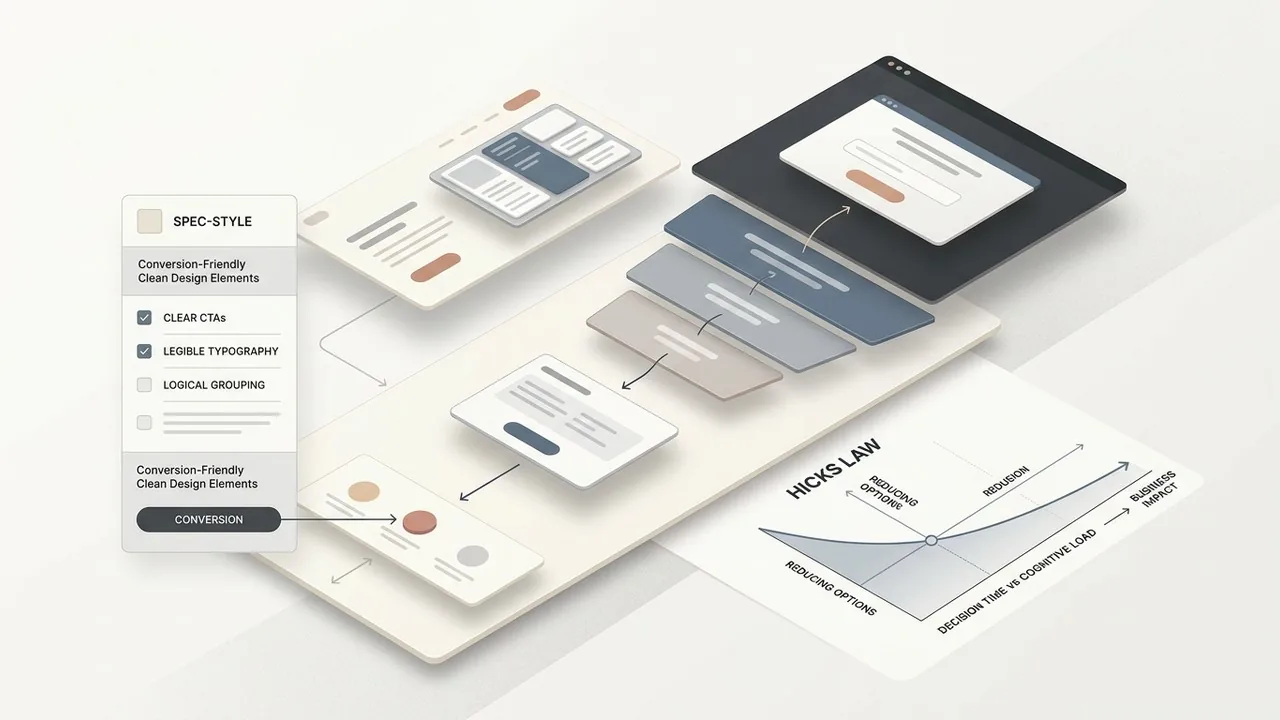
While minimalism is a powerful aesthetic choice, clean web page design is often the superior workhorse for business growth. The primary reason lies in the delicate balance between clarity and information. A clean design doesn’t just strip elements away; it organizes them so the brain can process the offer, the value proposition, and the call to action without breaking a sweat.
Reducing Cognitive Load Without Sacrificing Context
Conversion rates often plummet when users feel overwhelmed by too many choices or, conversely, frustrated by too little information. This is where Hick’s Law[5] comes into play, which suggests that the time it takes to make a decision increases with the number and complexity of choices. Clean design leverages this principle by grouping related items and using whitespace to create breathing room, ensuring the user feels in control rather than confused.
Directing the User Journey via Visual Cues
In a truly minimalist interface, you might lose the visual signifiers that tell a user where to click next. Clean design maintains these vital cues. By using consistent button shapes, contrasting colors for primary actions, and logical flow, you guide the visitor toward the finish line. It is about creating a path of least resistance where the most important element on the screen is always the most obvious one.
The Balance of Trust and Professionalism
There is a psychological comfort in a well-ordered page. When a site looks organized, users subconsciously project that organization onto the business itself. A clean layout communicates that you have thought through the user’s needs, which builds the foundational trust required for a transaction to occur.
Conversion-Friendly Clean Design Elements:
- High-contrast CTAs that stand out from the background
- Legible typography with clear hierarchical nesting
- Logical grouping of features and benefits
- Strategic whitespace to prevent visual fatigue
Minimalism removes the noise, but clean design amplifies the signal.
Choosing the Right Path for Your Brand
Deciding between a minimalist aesthetic and a clean web page design depends entirely on your business goals and how you need to communicate with your audience. While both styles prioritize order, the psychological impact they leave on a visitor varies significantly based on their intent.
When to Go Minimal: Luxury and Portfolio Sites
Minimalism is the language of exclusivity. For luxury brands, high-end fashion, or architectural portfolios, the absence of content suggests that the few items present are of immense value. By stripping away everything but the core visual, you invite the user to focus on the craftsmanship or the ‘vibe’ of the brand rather than a list of features. It is a confident approach that assumes the audience already understands the brand’s prestige.
When to Go Clean: SaaS, E-commerce, and Content Hubs
Service-based businesses and digital products thrive on transparency and clarity. In these industries, users are looking for answers, pricing, and functionality. A clean web page design ensures that while the interface is beautiful and uncluttered, the information remains highly accessible. This approach respects Hick’s Law[1], which suggests that the time it takes for a person to make a decision increases with the number and complexity of choices. By organizing complex data into a clean layout, you reduce cognitive load without sacrificing the necessary information.
The Hybrid Approach: The Best of Both Worlds
Many modern brands find success in a middle ground. You can utilize a minimalist, high-impact hero section to establish an emotional connection, then transition into a clean, structured layout as the user scrolls down to learn about the logistics of your service.
| Industry | Recommended Style | Primary Goal |
|---|---|---|
| Luxury & Boutique | Minimalism | Brand Prestige |
| SaaS & Tech | Clean Design | User Acquisition |
| E-commerce | Clean Design | Conversions |
| Creative Portfolios | Minimalism | Visual Impact |
Minimalism tells a story through what is missing; clean design tells a story through what is perfectly placed.
Common Pitfalls to Avoid in Simplified Design
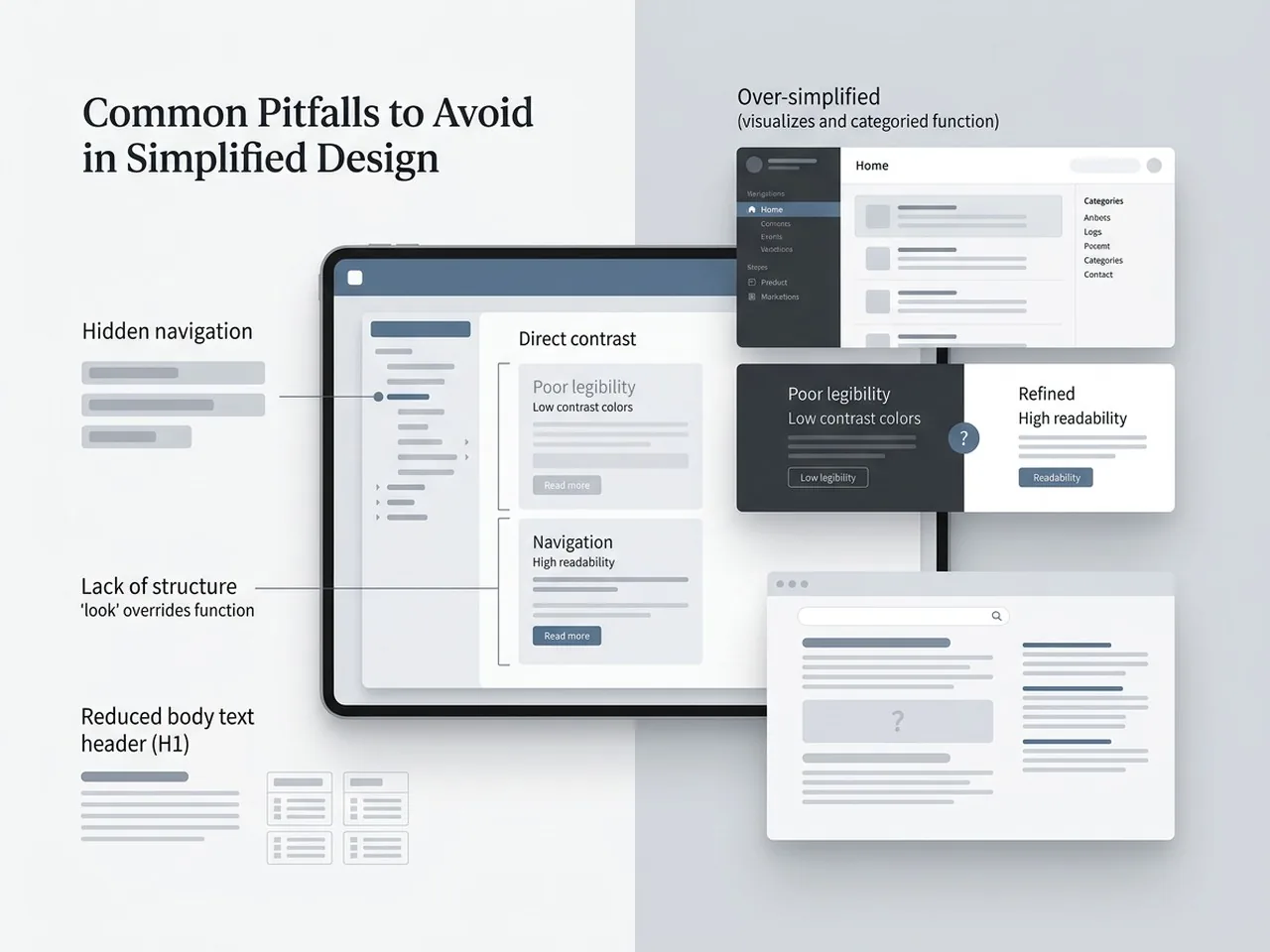
In the pursuit of a sophisticated look, many brands inadvertently strip away the very elements that make a website functional. While clean web page design aims to reduce friction, an over-correction into extreme minimalism often results in a ‘mystery meat’ navigation experience where users are left guessing where to click.
The ‘Ghost Button’ Problem
Ghost buttons, or transparent buttons with a thin outline, are a staple of minimalist aesthetics. However, they often lack the visual weight necessary to trigger an action. When a call-to-action is too subtle, it fails to draw the eye, leading to a significant drop in conversion rates because the user simply doesn’t perceive it as an interactive element.
Sacrificing SEO for Aesthetics
One of the most dangerous mistakes is removing descriptive H1 headers or body text to achieve a ‘gallery’ feel. Search engines rely on text to understand context; if you replace your value proposition with a single cryptic word or a background video without metadata, your rankings will suffer. A clean web page design should prioritize readability and crawlability over a perfectly empty canvas.
Ignoring Mobile Accessibility
Hidden navigation menus and tiny, low-contrast fonts might look sleek on a high-resolution desktop monitor, but they become unusable on mobile devices. If your navigation is tucked away behind an unlabeled icon or your text fails contrast accessibility standards, you are essentially locking out a massive portion of your audience.
Quick Breakdown: Simplified Design Red Flags
- Low-contrast text that is difficult to read in direct sunlight
- Clickable elements that are too small for thumb-tapping
- Navigation labels replaced by ambiguous icons
- Critical SEO keywords removed in favor of white space
Good design is invisible, but it should never make your content invisible to search engines or users with accessibility needs.
Conclusion: Balancing Form and Function
Choosing between a clean web page design and a strict minimalist approach is not merely an aesthetic decision; it is a strategic one that dictates how users interact with your brand. While minimalism pushes the boundaries of reduction to create an artistic statement, clean design focuses on removing friction to enhance usability. The most successful modern websites often sit at the intersection of these two philosophies, utilizing generous white space and intentional typography without sacrificing the functional cues that guide a visitor toward a goal. By prioritizing clarity over simple emptiness, you ensure that your digital presence remains both visually stunning and highly effective in a competitive market.
Build a High-Converting Site with Align
Creating a website that looks sophisticated while maintaining peak performance requires a delicate balance of design intuition and technical expertise. At Align, we specialize in crafting digital experiences where clean web page design meets rigorous SEO and conversion strategy. Whether you are launching a new brand or looking to refine an existing platform, our team is ready to help you navigate the nuances of modern UX. Contact us at Align.vn for a comprehensive UX audit or a full website redesign; let’s collaborate to build a high-performing site that resonates with your audience and drives measurable growth for your business.