
Why does branding matter when businesses now have websites, social media, paid ads, SEO, AI tools, email campaigns, and more digital platforms than most teams can comfortably manage?
It is a fair question. For some businesses, branding still sounds like a logo, a color palette, or a pretty deck of design rules that sits in a folder nobody opens. But in the digital age, branding is much more than how a business looks. It shapes how people understand you, remember you, trust you, and decide whether they want to work with you.
Today, customers do not meet your business in one clean, controlled moment. They may first see you through a Google search result, a LinkedIn post, a website homepage, a review, a social ad, an AI-generated answer, a proposal deck, or a forwarded link from someone on their team. If your brand feels different in every place, people may not know what to believe. If your brand is clear and consistent, every touchpoint helps build recognition and trust.
So if you are asking “why does branding matter,” the answer is simple: because your brand is often the first, fastest, and most repeated signal people use to decide whether your business feels credible, relevant, and worth remembering.
A strong brand does not just make you look better. It makes your business easier to understand.
The Short Answer: Why Does Branding Matter?
Branding matters because it helps people recognize your business, understand your value, trust your message, and remember you when they are ready to make a decision.
A strong brand gives your business a clearer identity. It helps explain who you are, what you stand for, who you serve, and why people should choose you. It also creates consistency across your website, social media, sales materials, email signatures, proposals, presentations, and marketing campaigns.
In the digital age, this consistency is not optional. People move quickly online. They compare brands fast. They scan before they read. They form opinions before they speak to your team. If your brand feels scattered, outdated, or unclear, you may lose trust before the real conversation starts.
Branding matters because it turns a business from “another option” into something people can recognize, remember, and feel confident choosing.
Branding Is More Than a Logo
A logo is important, but it is not the whole brand. A logo is one piece of the system. Your brand includes your positioning, messaging, tone of voice, visual identity, website experience, content style, customer experience, and the overall feeling people associate with your business.
Think of the logo as the face of the brand. It may be the first thing people notice, but it cannot carry the entire personality alone. A great logo attached to unclear messaging, inconsistent visuals, weak service pages, and confusing customer experience will only go so far.
Branding becomes powerful when every part works together.
| Brand Element | What It Does |
|---|---|
| Brand strategy | Defines your position, audience, value, and direction |
| Messaging | Explains what you do and why it matters |
| Logo design | Creates a recognizable visual mark |
| Visual identity | Builds consistency through color, typography, layout, and graphics |
| Brand voice | Shapes how your business sounds and communicates |
| Website experience | Turns brand strategy into a usable digital experience |
| Brand applications | Shows how the brand works across real materials |
| Brand guidelines | Helps your team use the brand consistently |
This is why a strong branding process should not jump straight into logo concepts. It should begin with understanding the business, audience, market, goals, and long-term direction.
At Align, our Branding Process connects brand discovery, strategy, logo design, visual identity, brand guidebook, and real-world brand applications into one clearer system.
Branding Builds Trust Before People Contact You
Trust is one of the biggest reasons branding matters. Before a customer fills out a form, books a call, visits your office, or asks for a proposal, they are already judging your business. They are looking at your website, reading your copy, checking your visuals, scanning your social presence, and quietly asking, “Does this business feel credible?”
Nielsen Norman Group notes that trustworthy web design depends on credibility signals such as professional design quality, clear information, transparency, and useful content [2]. For brands, that means trust is not built by one big statement. It is built through many small details working together.
Most people will not say this out loud. They will just leave the page.
Trust is built through details. A professional visual identity can build trust. Clear messaging can build trust. Consistent service pages can build trust. A polished proposal deck can build trust. A website that feels modern and easy to use can build trust. Even the way your brand appears in a small social media thumbnail can shape the way people perceive your business.
This is especially important for service businesses, consulting firms, healthcare brands, nonprofits, agencies, and B2B companies. In these industries, customers are not only buying a product. They are choosing a relationship, a team, a promise, or a long-term partner.
A strong brand gives people small reasons to trust you before they have a big reason to choose you.
That is why brand identity should never be treated as decoration. It is part of how people judge reliability.

Digital Customers Compare Brands Faster Than Ever
In the past, a customer might learn about a business through one brochure, one phone call, or one in-person meeting. Today, they may compare five businesses in ten minutes.
They can open multiple tabs, scan websites, check reviews, search brand names, compare social profiles, and ask AI tools for recommendations. The decision journey is faster, messier, and more fragmented.
This is exactly why branding matters more now. Edelman’s 2025 Brand Trust report highlights how brand trust continues to shape what people expect from businesses and how they decide which brands deserve their attention [3]. When customers are moving quickly, your brand needs to be easy to understand at a glance.
A strong brand helps answer important questions quickly:
- What does this business do?
- Who is it for?
- Does it feel professional?
- Does it understand my problem?
- Is it different from the other options?
- Does it feel current and active?
- Can I trust this team?
If your brand does not answer these questions clearly, customers may move on. Not because your business is bad, but because your digital presence did not make the value obvious enough.
And online, unclear often feels risky.
Branding Helps Your Business Become More Recognizable
Recognition is one of the most practical benefits of branding.
When your brand identity is consistent across your website, social media, ads, emails, slides, signage, and proposals, people begin to recognize you faster. They may not convert the first time they see you. But repeated, consistent exposure makes your business feel more familiar.
Familiarity matters because people often choose what they can remember. A business with a clear visual identity, strong message, and consistent presence has a better chance of staying in someone’s mind after the first interaction.
This is especially important when your sales cycle is long. Many customers are not ready to buy today. They may be researching, comparing, waiting for budget approval, or slowly realizing their current website is a problem. A memorable brand helps you stay visible while they move through that process.
A scattered brand makes people start over each time they see you. A consistent brand builds memory over time.

Branding Makes Your Website Work Better
Your website is often the most important home for your brand.
Social media may create awareness. Ads may bring traffic. SEO may help people find you. Referrals may open the door. But your website often decides whether people understand you enough to take the next step.
That is why branding and website strategy should work together.
A strong brand gives the website a clear direction. It shapes the message, tone, visual style, content hierarchy, imagery, CTA style, and user experience. Without brand clarity, a website can look good but still feel generic. It may have nice layouts, but no strong point of view.
A website built with strong branding can feel more confident. The homepage tells a clearer story. The service pages feel more focused. The visuals support the message. The design feels intentional instead of random. The CTA feels connected to the brand experience.
Align’s Website Process is built around this connection. Brand discovery, sitemap planning, UX/UI design, responsive development, and SEO-friendly structure all work better when the brand foundation is clear.

Branding Supports SEO and Content Strategy
Branding and SEO may seem like separate topics, but they are closely connected.
SEO helps people find you. Branding helps them trust and remember you once they arrive.
If someone lands on your website from Google and the brand feels unclear, generic, or inconsistent, they may leave quickly. But if the page feels credible, well-positioned, and aligned with their needs, they are more likely to keep reading, explore another page, or contact your team.
Branding also supports content strategy. A clear brand knows what topics it should talk about, what tone it should use, what audience it serves, and what point of view it brings to the conversation. This makes blog posts, service pages, case studies, newsletters, and social content easier to plan.
Google’s guidance on helpful content encourages businesses to create content that is useful, reliable, and people-first [1]. Strong branding supports that because it forces a business to understand its audience, clarify its expertise, and communicate with a consistent point of view.
Without branding, content can feel random. With branding, content has a clearer voice and purpose.
Branding Creates Consistency Across Every Touchpoint
A brand is not experienced in one place. It is experienced everywhere.
Someone may see your company on a proposal deck, then visit your website, then receive an email from your team, then check your LinkedIn page, then download a PDF, then share your website with their boss. If all of those touchpoints feel disconnected, the brand becomes harder to trust.
Consistency does not mean everything has to look identical. It means everything should feel like it belongs to the same business.
Strong branding creates consistency across:
- Website pages
- Landing pages
- Social media posts
- Digital ads
- Email signatures
- Sales decks
- Case studies
- One-pagers
- Business cards
- Event materials
- Signage
- Internal documents
- Client presentations
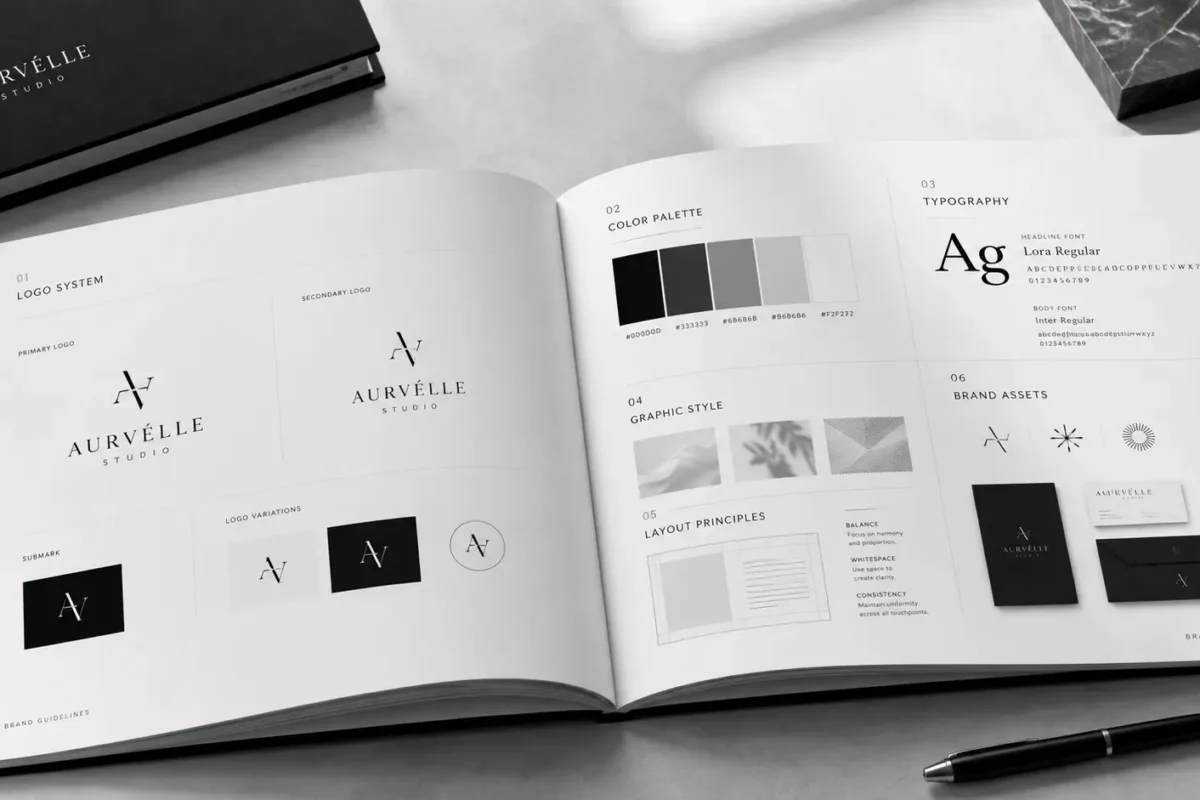
This is where a brand guidebook becomes useful. It gives the team a practical system for using the brand, including logo rules, color usage, typography, graphic style, image direction, and real application examples.
A brand guidebook is not just for designers. It helps the whole team protect consistency.
Branding Helps You Stand Out in a Crowded Market
Most markets are crowded. There are many agencies, clinics, consultants, nonprofits, restaurants, software tools, service providers, and e-commerce brands offering similar things.
Branding helps show why your business is different.
That difference may come from your personality, process, values, audience focus, quality, specialization, design style, customer experience, or point of view. But if that difference is not expressed clearly, customers may only compare you on price.
And price is a very dangerous place to compete if people do not understand your value.
A strong brand helps you shift the conversation. Instead of looking like a generic option, your business can feel more specific, more memorable, and more aligned with the right customers.
Branding does not mean trying to look bigger than you are. It means presenting your business with enough clarity and confidence that people understand why you are worth considering.

Branding Gives Your Team a Clearer Direction
Branding is not only for customers. It also helps your internal team.
When your brand is unclear, your team may struggle to make decisions. One person writes copy in one tone. Another designs social posts in a different style. A sales deck looks different from the website. A proposal uses outdated colors. Everyone is trying their best, but the brand slowly becomes messy.
A clear brand system gives your team a shared direction. It helps people understand how the brand should look, sound, and behave.
This makes everyday work easier:
| Without a Brand System | With a Brand System |
| Every design decision starts from scratch | The team has clear visual rules |
| Messaging feels inconsistent | The brand voice is more aligned |
| Materials look disconnected | Touchpoints feel more professional |
| New team members need more explanation | Guidelines help people understand faster |
| Brand quality depends on individual taste | Brand quality is easier to maintain |
A strong brand system saves time because your team does not need to reinvent the brand every week.
Branding Matters Even More Because of AI
AI is changing how people search, compare, write, design, and make decisions. This makes branding even more important, not less.
When content becomes easier to generate, many businesses may start sounding the same. Generic articles, generic social posts, generic landing pages, and generic visuals will become even more common. In that environment, a clear brand voice, strong point of view, and recognizable identity become valuable.
Google’s guidance on AI-generated content explains that content quality should be evaluated by helpfulness, reliability, and people-first value, not simply by whether AI was used to create it [4]. That makes brand clarity even more important, because your brand becomes the filter that helps your team decide what sounds right, what feels useful, and what should actually be published.
AI may help with speed, but branding gives the work direction.
If your business uses AI to create content, translate materials, summarize research, or support marketing workflows, your brand system becomes the quality control layer. It helps your team review whether the output still sounds like you, feels like you, and supports your positioning.
A clear brand becomes a filter. It helps you decide what to publish, what to change, and what to reject.
In the digital age, and especially in the AI age, businesses with stronger brand clarity will have a better chance of standing apart from the noise.
What Happens When Branding Is Weak?
Weak branding does not always look terrible. Sometimes it just feels forgettable.
A weak brand may have a logo, but no clear identity. It may have a website, but no strong message. It may post on social media, but every post feels different. It may offer great services, but people do not immediately understand the value.
Common signs of weak branding include:
- Your website looks different from your sales materials
- Your logo feels outdated or hard to use
- Your messaging is vague or too broad
- Your team uses different colors, fonts, or templates
- Your social media content has no clear visual direction
- Your brand looks similar to many competitors
- Customers do not quickly understand what makes you different
- Your business has grown, but your brand still reflects an older stage
When branding is weak, your business has to work harder to explain itself. When branding is strong, people understand more quickly.
What Should a Strong Brand Include?
A strong brand should include both strategy and identity.
The strategy gives the brand direction. The identity makes that direction visible. The applications show how the brand works in real life.
| Brand Component | Why It Matters |
| Brand discovery | Understands goals, audience, market, and business context |
| Brand strategy | Defines positioning, message, personality, and direction |
| Logo system | Creates a recognizable visual mark |
| Color and typography | Builds consistency and emotional tone |
| Graphic style | Gives the brand a more distinctive visual language |
| Key visual direction | Helps the brand show up consistently across campaigns |
| Brand guidebook | Gives the team rules for using the brand |
| Brand applications | Shows how the identity works in real materials |
This is why branding should be treated as a system, not a single design task.
A good brand system should be beautiful, but it should also be practical. It should help the team create materials faster, communicate more clearly, and show up consistently across digital and physical touchpoints.
How to Know If Your Business Needs Better Branding
Your business may need better branding if your current identity no longer reflects who you are, what you offer, or where you are going.
This often happens when a business grows. A startup may begin with a simple logo and basic colors. That can work for a while. But as the business adds services, hires a team, enters new markets, creates marketing campaigns, or builds a more serious website, the old brand may start to feel too small.
You may need stronger branding if:
- You are launching a new business
- You are preparing for a website redesign
- Your brand feels outdated
- Your visuals are inconsistent
- Your messaging is unclear
- Your team keeps recreating materials from scratch
- Your business has changed but your brand has not
- Your competitors look more professional
- Your audience does not understand your value quickly
- You want a more consistent presence across digital and print materials
Better branding is not always about becoming more polished. It is about becoming more clear.
Why Branding Matters for Long-Term Growth
Branding matters because it creates a foundation that can grow with the business.
A strong brand can support new services, new campaigns, new markets, new content, new sales materials, and new digital experiences. It makes future decisions easier because the direction is already defined.
This is one of the biggest long-term benefits of branding. It reduces confusion. It creates alignment. It gives the business a system to build from.
Without brand clarity, every new project can feel disconnected. A new landing page looks one way. A new deck looks another way. A social campaign uses different language. A website redesign becomes harder because the brand foundation is weak.
With a strong brand, the business has a clearer base. The website can be better. The SEO content can sound more consistent. The sales materials can feel more professional. The team can move faster without losing quality.
That is why branding is not only a creative investment. It is a business investment.
So, Why Does Branding Matter?
Why does branding matter in the digital age? Because people are overwhelmed with choices, content, platforms, and messages. They need clear signals to decide what is trustworthy, relevant, and worth remembering.
Branding gives your business those signals.
It helps people recognize you faster, understand your value, trust your presence, and remember your business when they are ready to act. It makes your website stronger, your content more consistent, your marketing more memorable, and your team more aligned.
A strong brand does not guarantee success on its own. But without a clear brand, everything else becomes harder. Your website has to work harder. Your sales team has to explain more. Your content feels less focused. Your marketing becomes easier to ignore.
Branding matters because it helps your business become easier to choose.
Ready to Build a Brand People Can Recognize, Remember, and Trust?
Your brand should do more than look nice. It should help people understand your business, trust your presence, and remember you across every touchpoint.
At Align, we help businesses build brand systems that connect strategy, logo design, visual identity, brand guidebooks, and real-world applications. Whether you are launching a new brand, refreshing an outdated identity, or preparing for a stronger website, we can help you create a brand that feels clearer, more consistent, and built for growth.
Explore Align’s Branding Process, see how brand clarity supports our Website Process, or Start a Project with our team.
References
- Google Search Central: Creating Helpful, Reliable, People-First Content
- Nielsen Norman Group: Trustworthiness in Web Design: 4 Credibility Factors
- Edelman: 2025 Edelman Trust Barometer Special Report: Brand Trust, From We to Me
- Google Search Central: Google Search’s Guidance About AI-Generated Content