Design has always been a game of precision, where every pixel is scrutinized and every grid line is sacred. However, a new movement is shifting the focus from rigid structures to raw feeling, a concept now widely known as vibe design. This approach prioritizes the emotional resonance and aesthetic energy of an interface over traditional, clinical wireframing. It is about capturing a mood instantly, allowing designers to explore creative directions at the speed of thought rather than getting bogged down in the early technicalities of layout and spacing.
As this trend gains momentum, Google Labs has introduced a powerful new ally in the creative process called Stitch. By leveraging generative AI, Stitch allows creators to describe a visual direction and see it manifest into functional UI components almost instantly. According to Google Labs, this tool is designed to bridge the gap between high level conceptualizing and concrete execution, making the transition from a fleeting idea to a polished interface smoother than ever before. For agencies and designers alike, mastering vibe design with these emerging tools is no longer just an experiment; it is the future of rapid, high fidelity prototyping.[1]
What is Vibe Design and Why is it Trending?
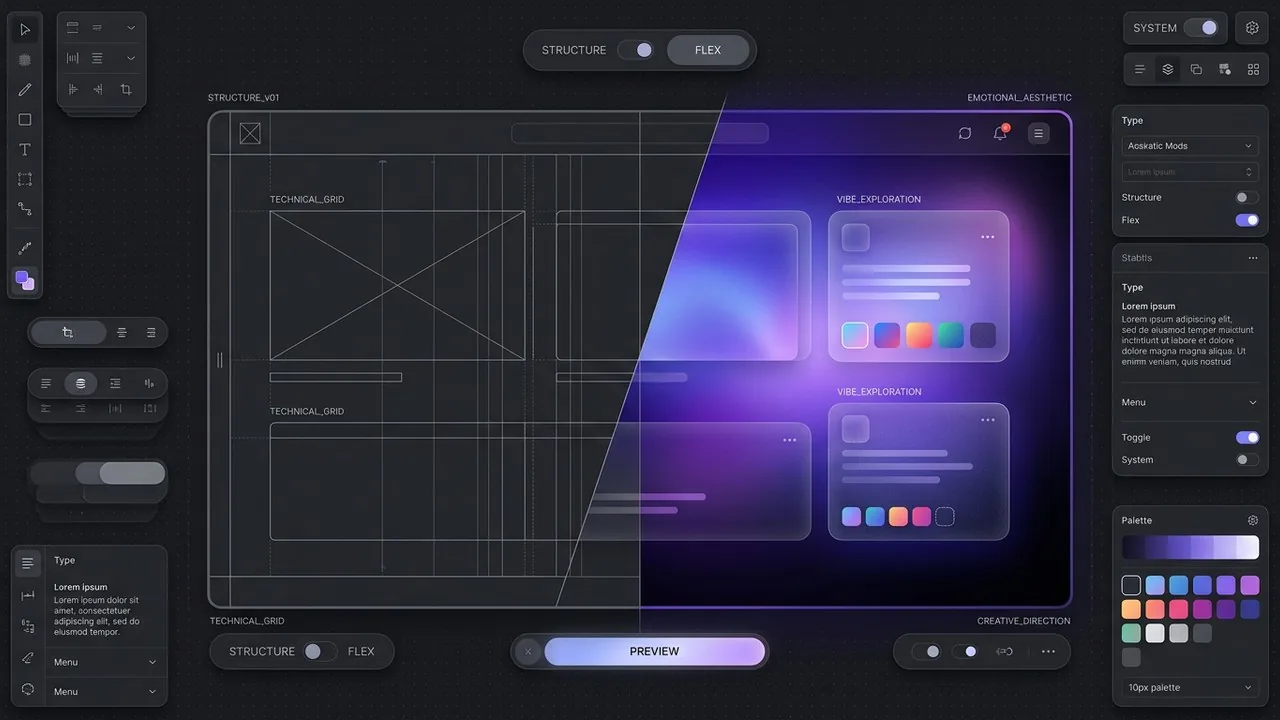
In the traditional design world, we often start with the skeleton; we map out wireframes, define grids, and obsess over pixel measurements before a single drop of color hits the canvas. Vibe design flips this script entirely. It is a philosophy where the emotional impact and the general atmosphere of an interface take precedence over rigid technical constraints in the early stages. Instead of starting with ‘where does this button go,’ designers are asking ‘how should this experience feel?’ This shift allows teams to explore creative directions at the speed of thought, prioritizing the soul of the brand before worrying about the plumbing of the UI.
Moving from pixels to prompts
The rise of generative tools has turned language into a primary design instrument. In a vibe design workflow, a designer might describe a mood as ‘ethereal, minimalist, and high-tech’ to see how those attributes manifest visually. This approach bypasses the immediate friction of manual layout tasks, allowing for a broader exploration of aesthetics. According to reports on the evolution of the platform, Google Labs is leaning into this by developing Stitch, a tool that converts plain text prompts into functional user interfaces, effectively turning descriptive intent into tangible design assets.[2]
The shift toward intentional aesthetics
Vibe design is trending because it solves the ‘blank page’ problem while maintaining a high level of intentionality. It isn’t about random generation; it is about using AI to rapidly iterate on a specific creative vision. By focusing on the high-level aesthetic first, designers can ensure the visual language resonates with the target audience on a visceral level. Once the vibe is locked in, the technical refinement follows, ensuring that the final product is not just functional, but also emotionally compelling.
Introducing Stitch: Google Labs’ Answer to Vibe Design
As the design landscape shifts toward a more fluid, expressive approach, Google Labs has introduced Stitch to bridge the gap between abstract creative vision and concrete interface elements. Stitch represents a fundamental departure from traditional component-by-component construction, allowing designers to focus on the overall atmosphere of a project first. By leveraging generative AI, the tool interprets descriptive prompts to establish a cohesive visual language that permeates every button, menu, and layout choice.[3]
The core concept of Stitch
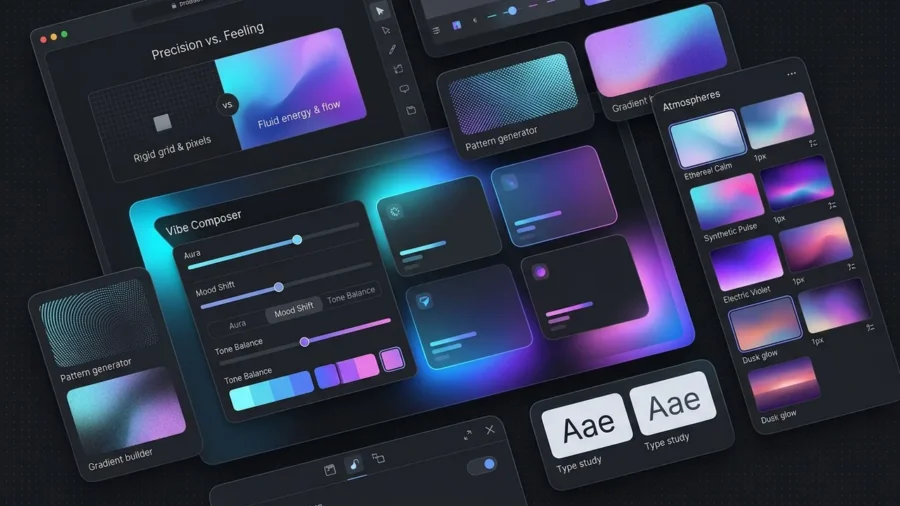
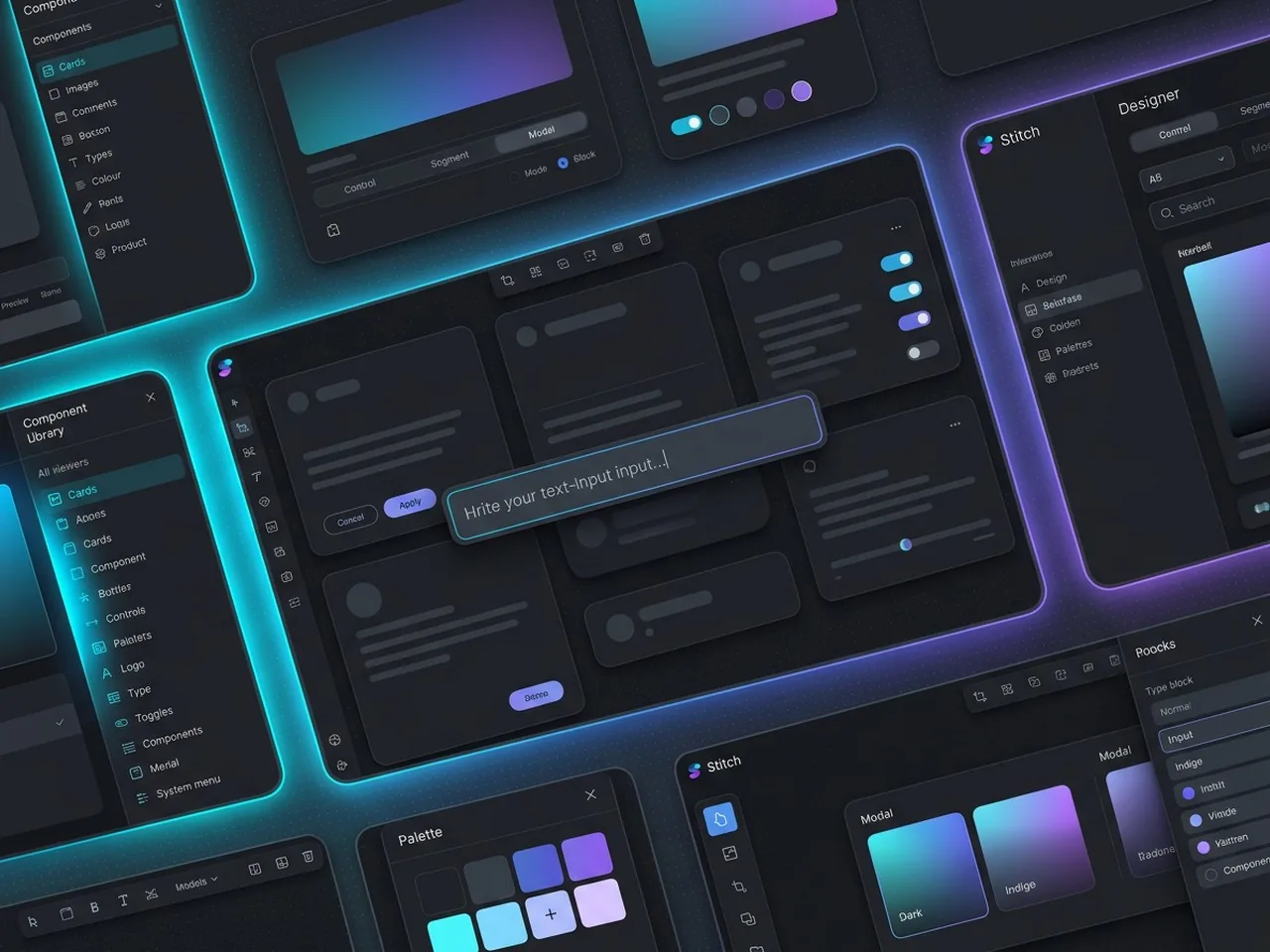
At its heart, Stitch is built to handle the heavy lifting of visual consistency. Instead of manually styling dozens of individual assets, designers can describe a specific aesthetic direction or vibe, and the system manifests that intent across an entire library of components instantly. This process allows for a rapid exploration of styles that would previously take days of manual adjustment in a standard design environment. It effectively turns the prompt into a primary design tool, where the nuance of language dictates the weight of shadows, the curve of borders, and the depth of color palettes.
How Google is reimagining the UI workflow
Google is reimagining the UI workflow by moving away from granular pixel-pushing in the early stages of ideation. With Stitch, the workflow starts with high-level intent, enabling a more iterative and experimental phase where different visual directions can be tested in real-time. This approach doesn’t just speed up production; it democratizes the ability to explore complex aesthetic themes without getting bogged down in the technicalities of CSS or component architecture. By focusing on the broader vibe design, teams can align on a creative vision much faster, ensuring that the final product feels intentional and emotionally resonant from the very first prototype.
Figma vs. Stitch: Comparing the Design Workflow
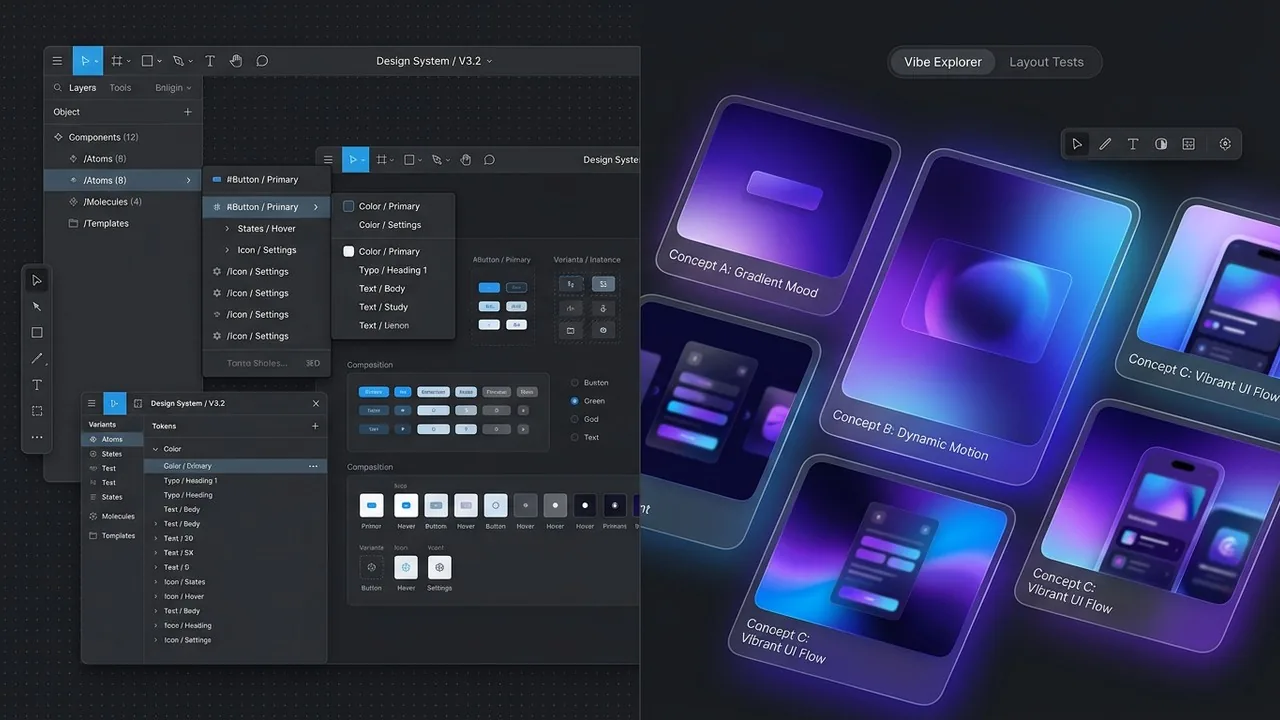
The traditional design process usually begins with a blank canvas and a set of meticulously crafted components. In Figma, designers spend hours defining atoms, building out complex auto-layout structures, and ensuring every pixel aligns with a rigid design system. This bottom-up approach is essential for production-ready assets, but it can sometimes stifle the initial creative spark by forcing designers to focus on technical execution before they have even settled on a visual direction.
Precision vs. Exploration
While Figma excels at precision and high-fidelity handoffs, Google Stitch introduces a top-down philosophy centered on vibe design. Instead of dragging and dropping individual buttons, designers use Stitch to describe an aesthetic or an emotional goal. This allows for rapid exploration that simply isn’t possible when you are tethered to a component library. According to a guide by Codecademy[4], Stitch enables creators to generate mobile app UI concepts through AI-powered prompts, making it an ideal environment for testing multiple visual themes in a fraction of the time it would take to build them manually.
The Role of Manual Craftsmanship
This shift does not make the manual craftsmanship of Figma obsolete; rather, it redefines where that effort is spent. Stitch is the playground for the conceptual phase, where the ‘vibe’ is discovered and refined through AI-assisted iteration. Once the creative direction is solidified, the workflow naturally transitions back to Figma for the heavy lifting of engineering preparation, accessibility checks, and final layout polishing. By separating conceptual exploration from technical execution, design teams can ensure their apps are both functionally sound and aesthetically soulful.
How to Master Vibe Design Using Stitch
Stepping into the world of vibe design requires a mental shift from pixel pusher to creative director. Instead of starting with a blank canvas and a rectangle tool, you begin with a vision. Google Stitch allows you to manifest that vision by translating abstract moods into tangible UI components. The platform functions as an AI-native workspace where the initial friction of building layouts is replaced by high-level curation, letting you focus entirely on the emotional resonance of the interface.[5]
Prompting for Style and Mood
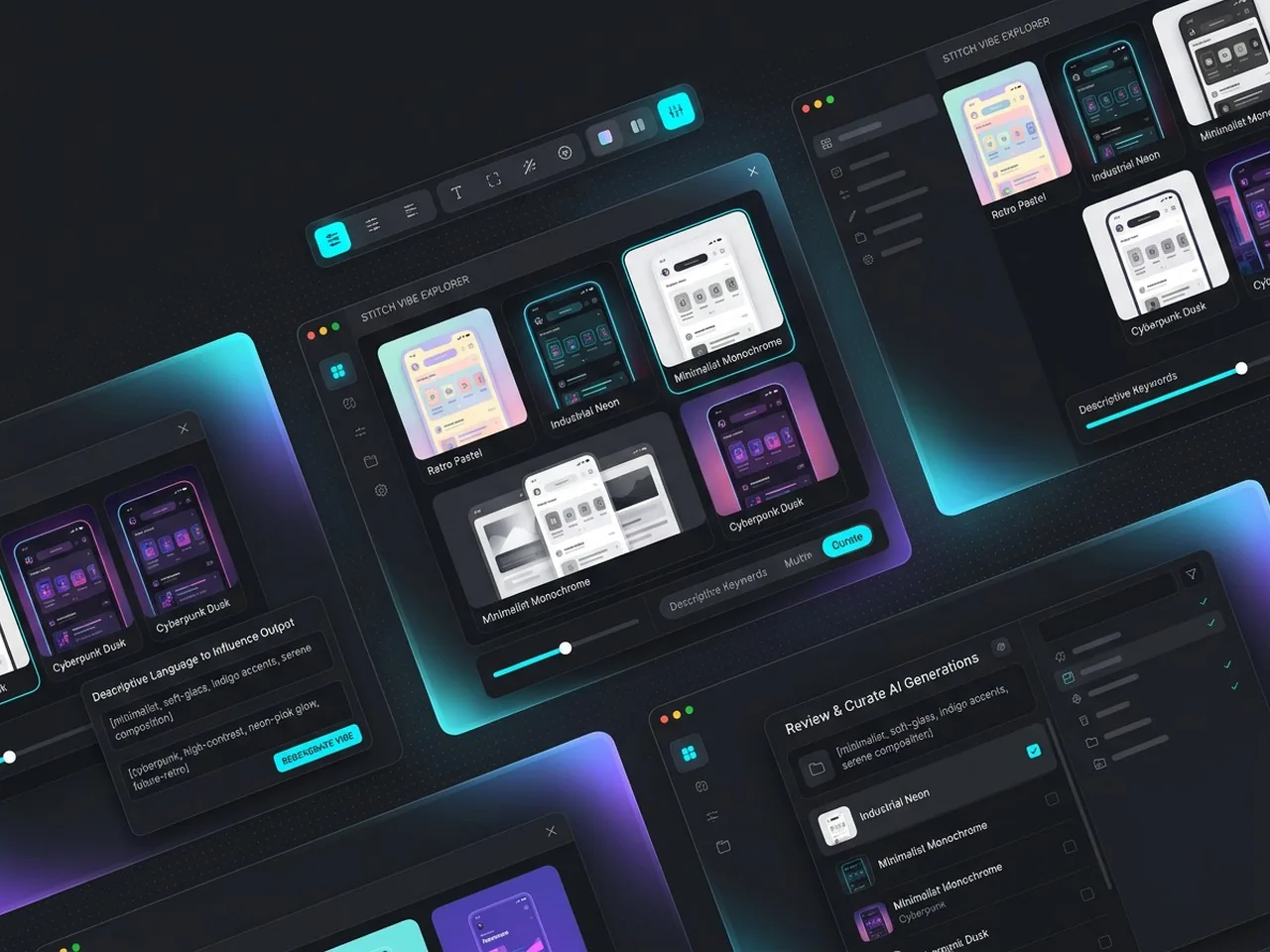
Success in Stitch depends on your ability to communicate aesthetic intent through descriptive language. To master the vibe, move beyond functional descriptions like “login screen” and focus on sensory keywords. Use terms that define the atmosphere, such as “brutalist minimalism,” “glassmorphism with soft neon accents,” or “organic textures and earthy tones.” By layering these stylistic prompts, you guide the AI to generate a specific visual language that feels intentional rather than generic. The goal is to describe how the interface should feel to the user, allowing the tool to handle the structural heavy lifting.
Iterating on Generated Components
The beauty of vibe design lies in the rapid feedback loop. Once Stitch generates a set of components, your role shifts to that of a curator. You can instantly swap styles, adjust color palettes, or refine the density of information without redrawing a single vector. If a specific component hits the mark, you can use it as a foundation to influence the rest of the layout, ensuring visual harmony across the entire experience. This iterative process allows you to explore dozens of creative directions in minutes, a feat that would take days in a traditional manual workflow.
Why Vibe Design Won’t Replace Traditional UX/UI
While the speed of vibe design is undeniably impressive, it is important to remember that a beautiful interface is only one half of a successful digital product. Google Stitch excels at translating a mood into a visual reality, yet it lacks the situational awareness to understand complex user journeys or the subtle nuances of accessibility. Design is more than just an aesthetic choice; it is a problem-solving discipline that requires deep empathy and strategic thinking.
The Necessity of Human-Centered Logic
Human-centered design relies on logic that an AI cannot yet replicate. A tool might know where a button looks best, but it doesn’t necessarily understand why that button needs to be there based on a specific user persona or a complex business goal. Designers bring a level of critical thinking to the table that ensures a product is not just pretty, but functional and intuitive. We consider the edge cases, the error states, and the emotional friction a user might feel during a checkout process, all of which require a human touch to navigate effectively.
Where AI Hits a Wall
The current limitations of AI in design often appear in the form of technical debt and accessibility gaps. While Stitch can generate modern mobile and web app prototypes in minutes, the fine-tuning of spacing, contrast ratios, and screen reader compatibility still demands a professional eye. The future of the industry isn’t a total takeover by AI; instead, it is a hybrid workflow. The best products will likely emerge from a process where Stitch handles the initial inspiration and rapid exploration, while Figma remains the home for high-fidelity production, precise handoffs, and the rigorous logic that defines world-class UX.[6]
The Future of High-Speed Creativity
Vibe design represents a fundamental shift in how we approach the blank canvas. By leveraging tools like Google Stitch, designers can bypass the tedious initial setup and jump straight into the emotional heart of a project. While Figma remains the undisputed king of precision and developer handoff, Stitch serves as the ultimate sandbox for rapid experimentation and aesthetic discovery. The most successful digital products will soon be those that marry this new era of AI-driven speed with the structural integrity of traditional UX principles. Embracing this hybrid workflow allows for more time spent on innovation and less on manual execution, ensuring that every interface feels as good as it looks.
Ready to Level Up Your Digital Presence?
Navigating the rapidly evolving landscape of AI design tools can feel overwhelming, but you do not have to do it alone. At Align, our team expertly blends cutting-edge technology like Stitch with world-class UX/UI expertise to build websites that do not just look good; they convert. We understand how to take the raw inspiration of vibe design and refine it into a high-performance digital experience that resonates with your audience. Whether you are looking to refresh your brand or build a complex web platform from scratch, we are here to help you lead the way. Visit Align.vn today to see how we can transform your vision into a reality.
References
- Design UI using AI with Stitch from Google Labs
- Google Labs turns Stitch into a full AI design platform that converts plain text into user interfaces
- From idea to app: Introducing Stitch, a new way to design UIs – Google Developers Blog
- Design Mobile App UI with Google Stitch (Step-by-Step Guide) | Codecademy
- Google Labs Unveils Stitch: AI-Native UI Design Platform
- Google Stitch: Build Modern Mobile & Web App Prototypes In Minutes