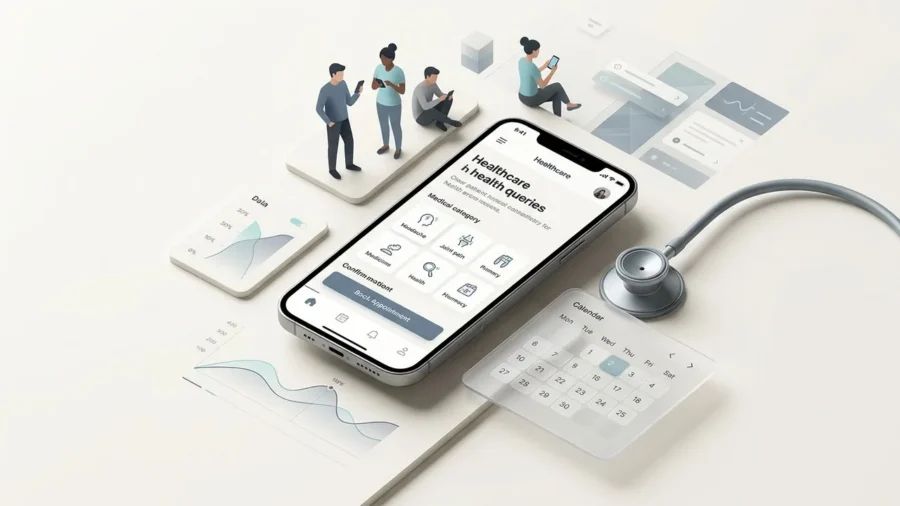
When a potential patient feels that first pang of a headache or a sudden joint pain, they no longer reach for a phone book; they reach for their smartphone. Your digital presence is often the very first interaction a person has with your practice, making medical website design the most critical component of your patient acquisition strategy. If your site looks outdated or feels clunky, patients will likely assume your medical technology is behind the times as well.
The stakes are incredibly high in the healthcare space because trust is the primary currency. Research shows that Google processes about one billion health-related searches every single day[1], which means your office is constantly being auditioned against the clinic down the street. At Align, we believe your website should do more than just exist; it should act as a digital concierge that simplifies the patient journey, builds immediate credibility, and turns casual searchers into lifelong patients through intentional, high-performance design.
Why First Impressions Matter in Medical Website Design
In the digital age, your website is often the very first point of contact a patient has with your practice. It functions as a virtual waiting room, and just as you wouldn’t want a physical office to appear cluttered or neglected, your digital presence must radiate professionalism. If a site feels sluggish or looks outdated, prospective patients frequently subconsciously equate that lack of polish with the quality of medical care they might receive. With Google reporting that 5% of all searches are health-related[2], the competition for attention is fierce.
The 50-millisecond rule for patient trust
Psychological studies suggest that users form an opinion about a website’s credibility in as little as 50 milliseconds. This split-second judgment determines whether a patient lingers to book an appointment or bounces back to the search results. High-quality imagery, clean layouts, and intuitive navigation are not just aesthetic choices; they are foundational trust signals that reassure a visitor they are in capable hands.
Mobile-first design for on-the-go care
Most patients today look for doctors while commuting or during a lunch break, making a mobile-responsive interface non-negotiable. A medical website design must prioritize thumb-friendly buttons and fast loading times on smartphones. If a patient cannot find your phone number or office location within two taps, they will move on to a competitor whose site is easier to navigate.
Reflecting clinical excellence through aesthetics
Aesthetics should mirror the precision of your clinical work. By utilizing calming color palettes, high-resolution photography of your staff, and clear typography, you create a cohesive brand identity. This visual harmony bridges the gap between digital interaction and physical care, ensuring that your online presence is a true reflection of your commitment to patient wellness.

Prioritizing Patient Experience with Intuitive UX
In the world of medical website design, user experience is not just a digital convenience; it is an extension of patient care. When a visitor arrives at your site, they are often seeking clarity during a stressful time. If your interface feels like a maze, you risk losing their trust before they even step foot in your office. A seamless journey from the homepage to the confirmation screen is the hallmark of a practice that values its patients’ time and peace of mind.
Streamlining the appointment booking flow
The friction point most likely to cause patient churn is a clunky, multi-step booking system. Patients today expect the same ease of scheduling they find in retail or travel sectors. According to research on healthcare appointment booking preferences[3], a significant portion of patients now prefer digital scheduling over traditional phone calls. By minimizing the number of form fields and providing real-time availability, you remove the barriers that prevent prospective patients from committing to a visit.
Accessibility and ADA compliance for diverse needs
Healthcare is universal, and your website must be too. Adhering to WCAG 2.1 standards is essential for ensuring that individuals with visual, auditory, or motor impairments can navigate your content effectively. This includes maintaining high color contrast, providing alt-text for images, and ensuring the site is fully navigable via keyboard. Accessibility is not merely a legal checkbox; it is a commitment to inclusivity that broadens your reach and demonstrates a high standard of professional ethics.
Clear navigation for urgent care and services
When a patient needs immediate information, every second counts. Your navigation should prioritize high-intent actions, such as finding urgent care hours or specific medical services. By using descriptive labels and a logical hierarchy, you help users find answers without unnecessary scrolling. A well-structured menu ensures that whether a user is looking for a routine check-up or specialized treatment, the path is always visible and intuitive.
Essential Features for a Modern Medical Website Design
In a digital first landscape, your website serves as the primary gateway to your practice. Research indicates that approximately 80% of patients have searched for a doctor online before ever committing to an appointment, making your digital presence a critical factor in patient acquisition. To convert these researchers into active patients, your medical website design must balance technical sophistication with a welcoming user experience.
Patient portals and HIPAA-compliant forms
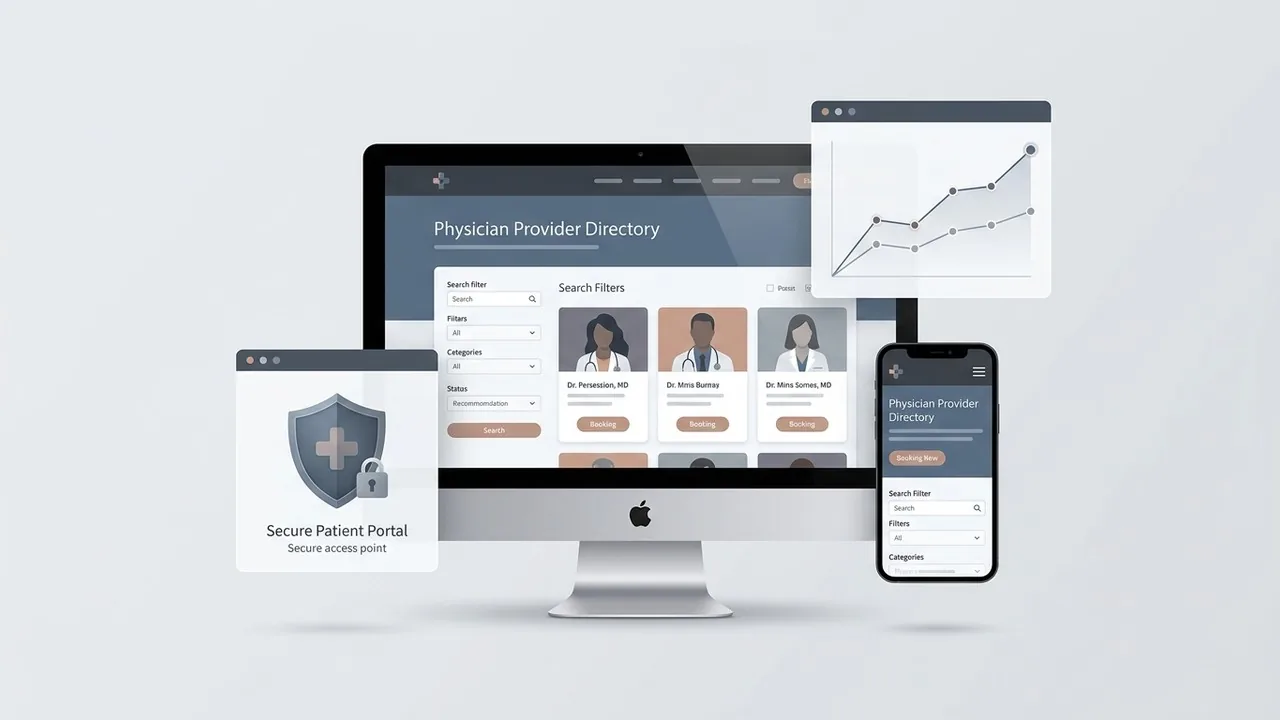
Security is the foundation of digital healthcare. Integrating HIPAA-compliant forms ensures that sensitive patient data remains protected during intake or appointment requests, which builds immediate trust. A seamless patient portal further enhances this experience by allowing users to manage their records, view test results, and communicate with providers in a secure, centralized environment. This convenience reduces the administrative burden on your front desk while empowering patients to take charge of their health journey.
Provider profiles that humanize your staff
Patients are not just looking for credentials; they are looking for a person they can trust with their well-being. Modern medical website design should feature robust provider profiles that include professional photography, personal philosophies of care, and clear descriptions of expertise. When a patient can see a doctor’s face and read about their approach to medicine, the clinical barrier thins, making the first in-person interaction feel much more comfortable.
Educational content and integrated health blogs
Positioning your practice as a thought leader requires more than just a list of services. By hosting an integrated health blog, you provide valuable answers to the questions patients are already asking online. High-quality educational content improves your search engine visibility and establishes authority, ensuring that when patients search for specific health topics, your practice is the one providing the expert guidance they need.[4]

SEO Strategies to Help Patients Find Your Practice
Great medical website design and search engine optimization are two sides of the same coin; one attracts the visitor, while the other ensures they have a reason to stay. In the healthcare space, visibility is everything. If your practice does not appear when a local patient searches for care, your beautiful design stays hidden. Effective SEO ensures your digital front door is easy to find by aligning your site structure with the way people actually search for medical help.
Local SEO and Google Business Profile integration
For a doctor’s office, local visibility is the primary driver of new patient acquisitions. Integrating your Google Business Profile with your website creates a seamless data loop that confirms your location, hours, and services to search engines. This synergy helps your practice appear in the coveted local map pack, which is essential given that many patients prioritize proximity when choosing a provider.
Optimizing for ‘near me’ medical searches
The rise of mobile search has made ‘near me’ queries a dominant force in healthcare marketing. To capture this traffic, your medical website design must include localized keywords and schema markup that tells search engines exactly where you are and what you do. Statistics show that 77% of patients use search engines before booking an appointment, making it vital to rank for these high-intent local phrases to stay competitive.[5]
Page speed and its impact on search rankings
Google’s Core Web Vitals have made page speed a non-negotiable factor for ranking. In a clinical context, a slow-loading site is more than an inconvenience; it is a barrier to care. High bounce rates caused by sluggish performance signal to search engines that your site is not user-friendly, which can actively suppress your rankings in local search results. A fast, responsive site ensures that patients can access information and booking tools without frustration.
Building Authority Through Social Proof and Security
In the world of medical website design, establishing credibility is not just a marketing goal; it is a requirement for Google’s E-E-A-T framework. Because healthcare falls under the Your Money Your Life category, search engines and patients alike demand the highest levels of Experience, Expertise, Authoritativeness, and Trustworthiness. When a prospective patient lands on your page, they need immediate reassurance that your practice is both clinically competent and ethically sound.
Showcasing patient testimonials and success stories
Real human stories bridge the gap between clinical expertise and patient comfort. By featuring authentic testimonials, you allow new visitors to see the tangible impact of your care through the eyes of their peers. It is important to curate these stories carefully to ensure they remain HIPAA compliant, focusing on the quality of service and the professional environment of the office. This social proof validates your reputation and turns a sterile digital interface into a welcoming, reliable resource.
Displaying certifications and medical affiliations
Your credentials are the backbone of your authority. Highlighting board certifications, professional memberships, and hospital affiliations directly supports the expertise component of E-E-A-T. Patients often look for these badges of honor as a shorthand for quality, while search engine algorithms use them to verify that your content is authored by legitimate medical professionals. Research indicates that many people turn to digital resources in critical moments; for instance, studies have shown that health-related Google searches often spike just before a patient seeks emergency care, highlighting the need for your site to be a trusted source of truth.[6]
Ensuring data privacy with SSL and encryption
Trust is easily broken if a website feels insecure. Beyond the visible accolades, the technical infrastructure of your site must prioritize patient privacy. Implementing a robust SSL certificate and end-to-end encryption for contact forms is essential for protecting sensitive health information. When patients see the secure padlock icon in their browser, they feel confident sharing their data, which ultimately fosters a stronger relationship between the provider and the public.
Conclusion: The Future of Your Medical Practice Starts Online
Building a successful healthcare presence requires more than just a digital business card; it demands a strategic blend of empathy, technical precision, and high-performance design. By prioritizing intuitive navigation, mobile responsiveness, and patient security, you create a digital environment where visitors feel cared for before they even step into your office. High-quality medical website design bridges the gap between a clinical necessity and a welcoming patient experience, ensuring your practice remains a trusted pillar in your community. As digital expectations continue to evolve, staying ahead with a fast, accessible, and SEO-optimized site will be the defining factor in your long-term growth and patient retention.
Ready to Elevate Your Practice with Professional Medical Website Design?
At Align, we understand that healthcare providers face unique challenges when balancing patient privacy with the need for a modern digital presence. Our team specializes in crafting bespoke UX/UI solutions and SEO strategies specifically tailored for the medical industry. We focus on building high-converting websites that not only look beautiful but also function seamlessly to drive patient inquiries and establish authority. If you are looking to grow your practice and offer your patients a superior online experience, we are here to help you navigate the process. Contact us at Align.vn today for a consultation, and let’s work together to build a digital foundation that supports your professional goals and your patients’ well-being.
References
- 1 Billion Searches a Day: How Your Patients Look for Medical Information Online
- Believe it or not, 5% of all Google searches are health-related – Medical Buyer
- Healthcare Appointment Booking: Audience Preferences
- What health topics are people searching online?
- 14 Healthcare Marketing Statistics That Speak Volumes [2025]
- Health-Related Google Searches Increase Just Before ED …