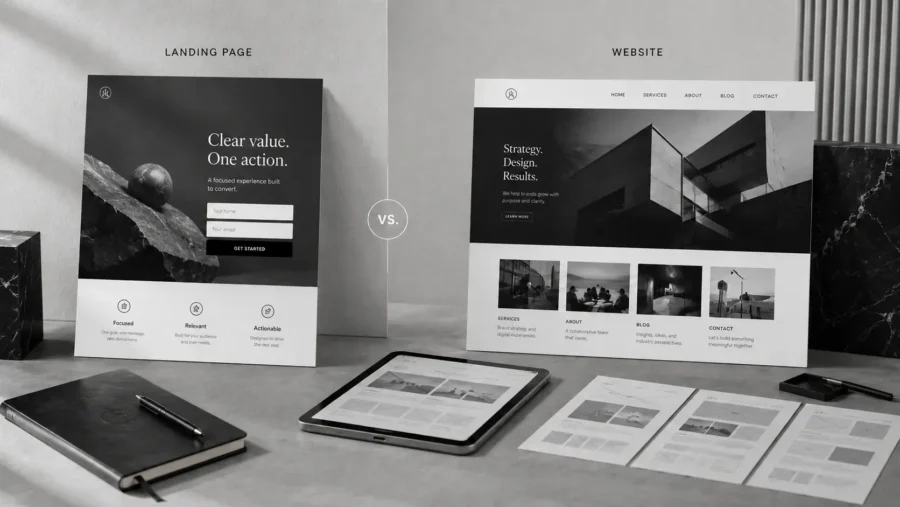
When a business starts building its online presence, one of the most common questions is: what is the difference between a landing page and a website? Should the business invest in a full website first, or is a landing page enough for the current goal?
This is a very practical question, especially for small businesses, startups, new brands, or teams preparing to run ads for a specific product, service, event, or campaign. Many people think a landing page and a website are the same thing. Others may think, “Why do we need a website? A landing page is simpler, cheaper, and faster.” In reality, landing pages and websites are completely different in their purpose, structure, and best use cases.
A website is like the digital home of a business. It introduces the brand, services, team, content, case studies, blog, contact information, and many other touchpoints. A landing page, on the other hand, is more like a private consultation room for one specific goal. It is designed to lead users toward a clear action, such as filling out a form, booking a consultation, buying a product, registering for an event, or downloading a resource.
So instead of asking whether a landing page is better than a website, the better question is: what is your business trying to achieve right now?
In this article, Align will help you understand the difference between a landing page and a website, when to use a landing page, when to invest in a website, and when your business should use both to improve marketing, SEO, and conversion performance.
Quick Answer: Landing Page vs Website
A landing page is a single page designed for one specific conversion goal. A website is a multi-page system that helps a business provide information, build its brand, support SEO, introduce products or services, and create long-term trust.
For example, if your business is running an ad campaign to promote a new product or service, launch a special offer, host a webinar, or advertise a specific service, a landing page may be the right choice. Through a landing page, customers are guided toward a clear action such as purchasing, filling out a form, or signing up for an event.
On the other hand, if your business goal is to build a long-term brand presence, improve SEO, develop content, and help customers fully understand your business and services, a website is the stronger foundation.
| Criteria | Landing Page | Website |
|---|---|---|
| Main goal | Increase conversions for one specific action | Build a complete digital presence |
| Structure | Usually one single page | Multiple connected pages |
| Content | Focused on one offer, product, service, campaign, webinar, or event | Includes broader information about the brand, services, blog, and case studies |
| Navigation | Little to no navigation to reduce distraction | Includes menu, sitemap, and page hierarchy |
| Best for | Ads, campaigns, lead generation, product launches | Branding, SEO, content, trust, and long-term growth |
| Timeline | Usually faster to build | Requires more planning |
| Long-term SEO | Can help, but is more limited | Stronger when structure and content are planned well |
So if you want the short answer to “landing page vs website,” remember this: a landing page focuses on short-term conversion, while a website builds a long-term foundation.
To Understand Better, What Is a Landing Page?
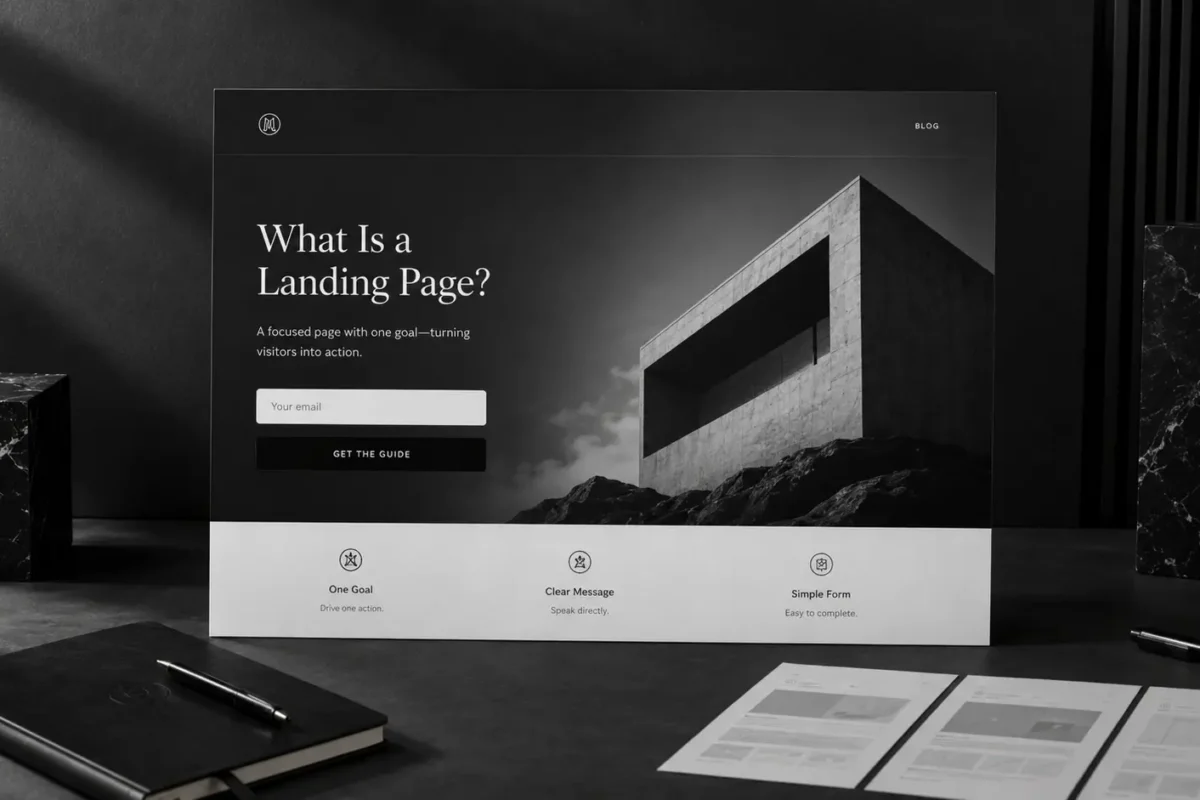
A landing page is a web page designed for users to “land” on after clicking from an external source, such as an ad, email, social media post, QR code, or campaign link. According to WordPress Learn, a landing page is usually a marketing page created to encourage visitors to take a specific action [1].
The most important quality of a landing page is focus. A strong landing page does not try to explain everything about the business. Instead, it focuses on one message, one audience segment, one offer, and one clear CTA, or call to action.
For example, a landing page can be used to:
- Introduce a new product
- Capture leads for a specific service
- Promote webinar or event registration
- Offer a free ebook or downloadable resource
- Collect quote requests
- Book consultations
- Run a promotional campaign
- Sell a specific product or service package
An effective landing page usually includes a strong headline, concise content, clear visuals, specific benefits, trust signals, a visible form or CTA, and very few distractions.
A landing page is not the place for a business to tell its entire origin story, from the founding year to the reason behind the logo color. It should do one thing really well: help users understand the offer and take action.
What Is a Website?
A website is a system of multiple connected pages that presents a fuller picture of a business, brand, products, services, content, and digital experience.
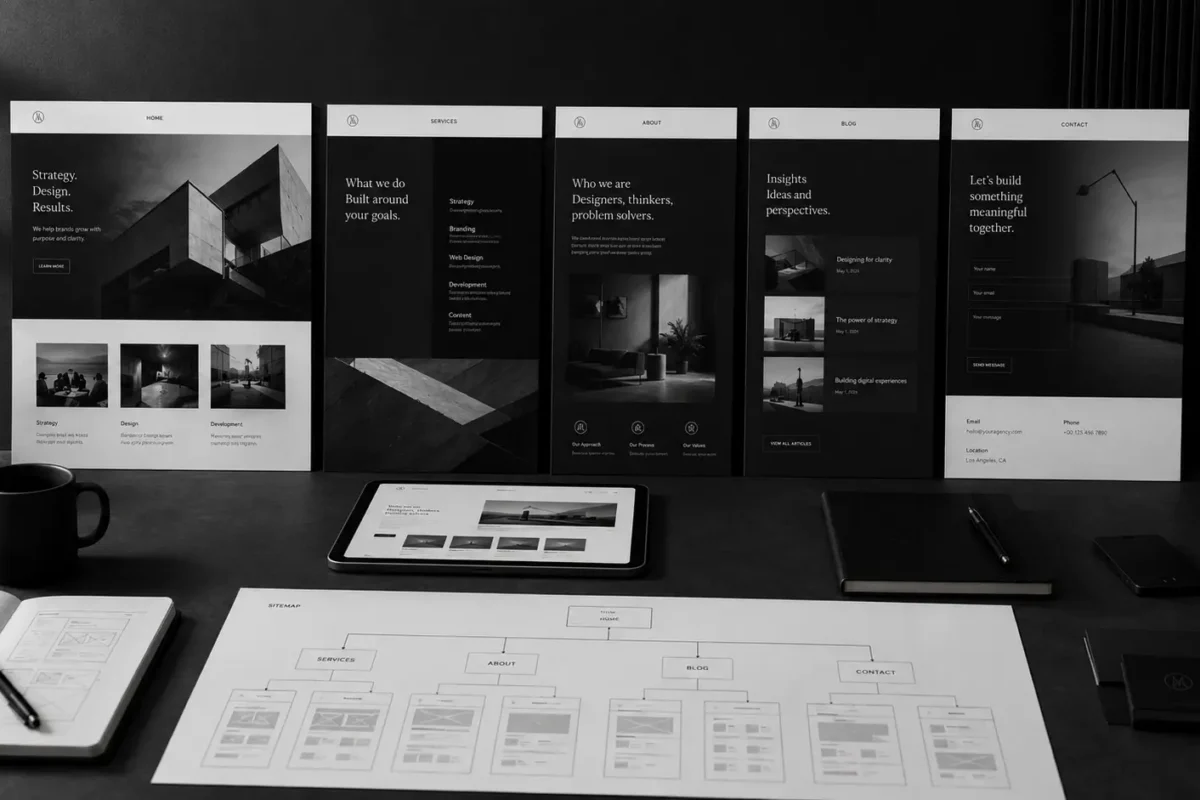
A business website often includes pages such as:
- Homepage
- About
- Services
- Case Studies or Portfolio
- Blog or Insights
- Contact
- Landing pages
- Resource pages
- Careers
- Privacy Policy, Terms, Sitemap
A website has a broader role than a landing page. It does not only support one campaign. It helps the business build trust, support SEO, tell the brand story, show capabilities, explain services, and create multiple touchpoints with customers.
Google Search Central explains that SEO helps search engines understand website content and helps users find websites through Search [2]. This is especially important for multi-page websites because each page or blog post can serve a different search intent.
A well-built website can help a business:
- Create a professional first impression
- Present services clearly
- Increase visibility on Google
- Build a long-term content system
- Create trust through case studies, testimonials, and portfolio work
- Support the sales team
- Capture leads from multiple traffic sources
- Serve as the foundation for ads, SEO, email, and social media
If a landing page is a campaign, a website is the foundation where all campaigns can connect back.

Landing Pages and Websites Have Different Goals
The biggest difference between a landing page and a website is the goal.
A landing page usually has one goal. For example: fill out a form, book a call, purchase, sign up, or download a resource. Every piece of content on the landing page should support that goal. That is why landing pages often limit extra links, reduce navigation, and avoid sending users in too many directions.
A website is different. A website has multiple goals. A user may visit a website to learn about the business, read a blog post, explore services, check the portfolio, find contact information, or evaluate credibility before reaching out.
Google Ads also uses the concept of “landing page experience,” which refers to how useful, relevant, navigable, and aligned a landing page is with user expectations after they click an ad [3]. This shows that a landing page should not only look good. It also needs to match the user’s need and intent.
| Question | Landing Page | Website |
| What does the user need to do? | Take one specific action | Learn, explore, compare, or contact |
| Should the content be broad or narrow? | Narrow and focused | Broader and deeper |
| Does it need a menu? | Usually limited | Needs clear navigation |
| Is it good for ads? | Very suitable | Sometimes, but not always optimized |
| Is it good for long-term SEO? | Possible, but more limited | Very suitable when built properly |
When a business does not understand the goal clearly, it is easy to choose the wrong tool. Building a landing page when the business actually needs a full website can leave the brand without a strong foundation. Building a large website when the business only needs to test one short-term offer can make the project heavier than necessary.
When Should a Business Use a Landing Page?
A business should use a landing page when it needs to focus users on one specific action.
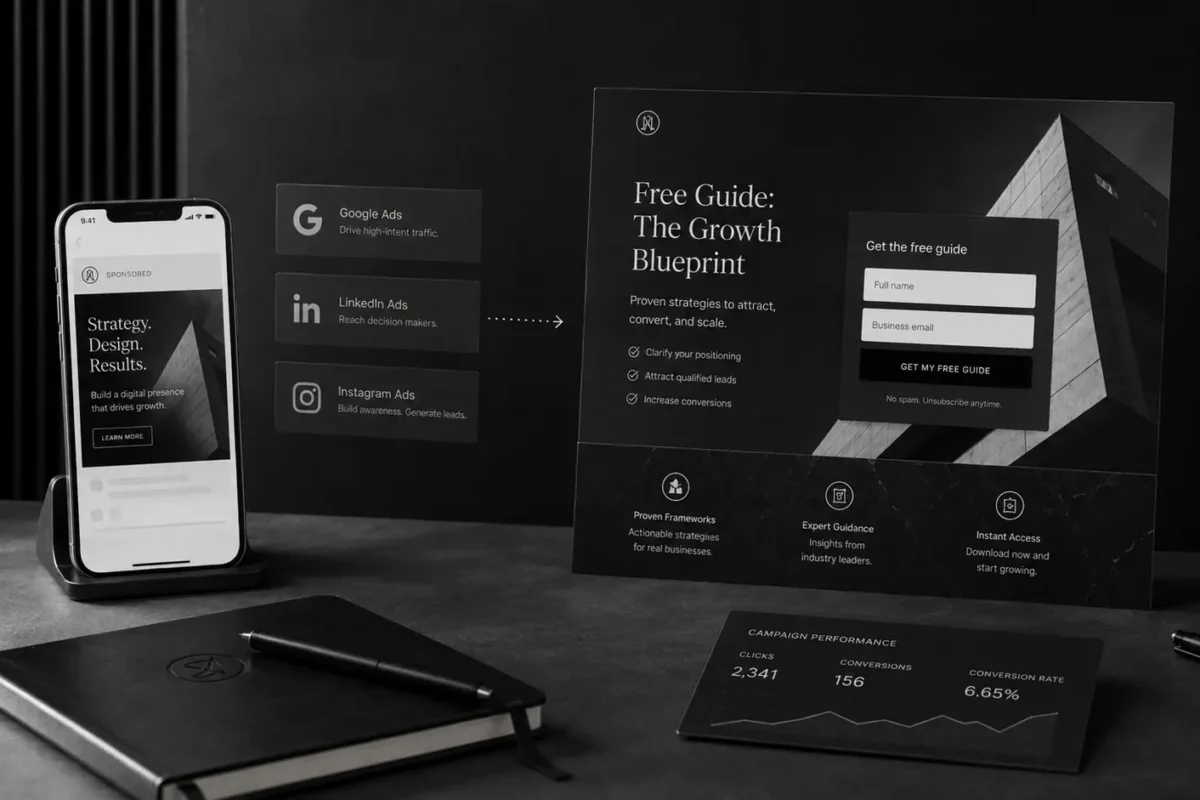
Landing pages are especially useful when you are running a campaign with a clear goal. For example, you may want to advertise a new product, collect leads for a service, open registration for an event, run a seasonal offer, or test a new message before investing more heavily.
Landing pages are also helpful when a business wants to measure campaign performance. Because the content and CTA are focused, the team can more easily track conversion rate, form submissions, click rate, cost per lead, and performance by traffic source.
A business should consider using a landing page if:
- You are running Google Ads, Meta Ads, or LinkedIn Ads
- You have a specific product or service to promote
- You want to test a new offer
- You need to collect leads quickly
- You want to create a registration page for an event or webinar
- You need a dedicated page for a specific audience segment
- You want clearer conversion tracking
- You do not want users distracted by too many menus or links
A good landing page should quickly answer: “What am I looking at, why is it relevant to me, what is the benefit, can I trust this, and what should I do next?”
When Should a Business Use a Website?
A business should invest in a website when it needs to build a long-term digital foundation.
If customers need to understand who you are, what you do, whether you are credible, what you have done before, how your services are different, and where they can learn more, a website is necessary.
Websites are especially important for B2B companies, service businesses, agencies, educational organizations, nonprofits, healthcare brands, consulting firms, e-commerce brands, and any business that wants to build long-term credibility online.
A business should invest in a website if:
- You need to present your brand professionally
- You have multiple services or audience groups
- You want to build long-term SEO
- You need a blog or content hub
- You want to build trust through case studies, testimonials, or portfolio work
- You will need more landing pages in the future
- You want to support your sales team with clear content
- You need your website to serve as the foundation for overall marketing
This is why, in Align’s Website Process, a website is not treated as just a design product. It is built through discovery, sitemap planning, wireframed content, SEO planning, UX/UI design, responsive development, and handover so it can continue supporting the business after launch.
Can a Landing Page Replace a Website?
In some short-term situations, a landing page can temporarily replace a website. For example, a startup preparing to launch may use a landing page to introduce a product, collect emails, or test market demand before building a full website.
However, in the long term, a landing page should not fully replace a website if the business needs to build brand trust, SEO, and credibility.
A landing page usually does not have enough space to tell a complete brand story. It is also not suitable for organizing many types of content, such as blog posts, service pages, case studies, resource pages, or different information groups. If a business only has a landing page, customers may not have enough information to evaluate its capability or trustworthiness.
A landing page can help customers act faster. A website helps customers understand you more deeply and trust you for longer.
So landing pages and websites should not be seen as competitors. They are two different tools within the same digital system.
Should Businesses Use Both a Landing Page and a Website?
In many cases, yes.
A strong website can serve as the main foundation, while landing pages can support specific campaigns. This is how many businesses make their digital marketing more effective.
For example, a business can have a main website with Home, About, Services, Blog, Case Studies, and Contact. Then, when running ads for a specific service, the business can create a dedicated landing page focused on that service, that audience, and that CTA.
This allows the website and landing pages to support each other:
| Website Supports | Landing Page Supports |
| Overall brand building | Campaign conversion |
| Long-term SEO | Paid ads or email campaign performance |
| Deeper information | One focused offer |
| Trust across multiple pages | Less distraction and clearer action |
| Content foundation | Faster message testing |
When a website and landing pages are built from the same clear brand system, users get a more consistent experience. This is also why Align’s Branding Process is important. If brand strategy, visual identity, and messaging are unclear, the landing page may not convert well because users do not feel enough trust, while the website may feel disconnected because it lacks direction.
How Are Landing Pages and Websites Different for SEO?
For SEO, a website usually has stronger long-term potential than a landing page.
The reason is simple: a website has more pages, can target more keywords, build more topic clusters, and create stronger internal linking. A website with a blog or content hub can answer different customer questions across the awareness, consideration, and decision stages.
A landing page can still be optimized for SEO, especially if it is an evergreen landing page for a product or service with steady search demand. However, landing pages usually have narrower content, fewer internal links, and less ability to build topical authority if they stand alone.
For example, the keyword “landing page vs website” is better suited for a blog post or in-depth guide than a sales landing page. Meanwhile, a keyword like “professional landing page design” may be better suited for a service page or a more focused landing page.
If a business wants to take SEO seriously, the website should be the main foundation. Landing pages can be added to support campaigns or keyword groups with clear intent.
How Are Landing Pages and Websites Different for Conversion?
For short-term conversion, landing pages often have an advantage.
Because a landing page is designed for one specific goal, it can reduce distractions and guide users toward action faster. This is especially helpful when traffic comes from ads. Users click on an ad because of a specific message, so the landing page should continue that exact message.
If an ad talks about “professional landing page design services,” but the user is sent to a general homepage, they may have to search for the relevant information themselves. And honestly, not everyone has the patience to hunt for information like they are solving a treasure map.
A good landing page helps users think less. They see the right information, the right benefit, and the right CTA.
However, conversion does not come only from a beautiful CTA button. It also comes from trust. If the business does not have a clear brand, professional visuals, strong information, or a convincing offer, the landing page may still underperform.
What Should a Good Landing Page Include?
A good landing page should be clear, focused, and easy to act on.
Important components usually include:
- A clear headline that speaks to the main problem or benefit.
- A subheadline that explains the offer’s value.
- Visuals that support the message.
- Key benefits, not just features.
- Social proof such as testimonials, client logos, data, or case studies.
- A visible CTA repeated in the right places.
- A simple form that does not ask for too much information.
- FAQ to address common concerns.
- Trust signals such as security, policies, guarantees, or contact information.
- A strong mobile experience.
Google Ads also provides landing page reports to help advertisers evaluate the performance of URLs used in campaigns [4]. This shows that a landing page should not simply be launched and forgotten. It should be tracked, measured, and optimized over time.
What Should a Good Business Website Include?
A good business website needs to do more than a landing page. It needs to present the brand, organize information clearly, support SEO, and help users move through the site easily.
A business website should include:
- Homepage with a clear message
- Detailed service pages
- About page that builds trust
- Easy-to-use contact page
- Blog or Insights if SEO is part of the strategy
- Case studies or portfolio if proof is needed
- Clear CTAs across key pages
- Easy-to-understand navigation
- Responsive design
- Good page speed
- Logical heading structure
- Internal links between related pages
- Content written around user intent
A good website should not just be a place where a business “exists online.” It should become a foundation that helps customers understand the business, trust the business, and take the next step.
Should Your Business Choose a Landing Page or a Website?
The answer depends on your current goal.
If you need to launch a quick campaign, promote a specific offer, collect leads for one service, or test a new product, a landing page is a strong option.
If you need to build your brand, create an SEO foundation, present your services clearly, support your sales team, and develop long-term content, a website is necessary.
For serious growing businesses, the best answer is often not “landing page or website.” It is “website as the foundation, landing pages as campaign tools.”
| Situation | Best Choice |
| Testing a new offer or product | Landing page |
| Running ads for a specific service | Landing page |
| Building a long-term brand | Website |
| Investing in SEO and blog content | Website |
| Sharing information about services, team, and case studies | Website |
| Doing both SEO and campaigns | Both website and landing pages |
| No clear brand direction yet | Branding should happen first or in parallel |
| Increasing conversion for one specific audience group |

Checklist: How to Choose Between a Landing Page and a Website
Before deciding, a business can ask:
- What is the main goal right now?
- Do we need short-term conversion or a long-term foundation?
- Is traffic coming from ads, SEO, social, email, or referrals?
- How much information does the user need before taking action?
- Is the offer specific?
- Does the business already have a main website?
- Are the brand identity and messaging clear?
- Do we need a blog or content hub?
- Do we need multiple service pages?
- Does the team need to update content regularly?
If most answers point to one specific campaign, consider a landing page. If most answers point to brand, services, SEO, and long-term growth, invest in a website.
Common Mistakes When Creating a Landing Page or Website
Many businesses do not fail because they choose the wrong tool. They fail because they use the right tool in the wrong way.
Common landing page mistakes include:
- Adding too much unrelated information
- Unclear CTA
- Overly long form
- Lack of trust signals
- Content that does not match the ad
- Poor mobile optimization
- No conversion tracking
Common website mistakes include:
- Homepage is too generic
- Navigation is confusing
- Service pages lack enough information
- No internal linking
- No SEO optimization
- No content strategy
- Beautiful design but weak user experience
- Website does not reflect the brand clearly
Both landing pages and websites need strategy. A good-looking design alone is not enough.

Ready to Build a Professional Website or Landing Page for Your Business?
A strong website or landing page should not only look good. It should be clear, easy to use, aligned with your goals, and persuasive enough to help users take the next step.
At Align, we help businesses build websites and landing pages based on strategy, UX/UI design, responsive development, SEO-friendly structure, and brand clarity. Whether you need a full business website, a campaign landing page, or a digital system that supports both SEO and paid ads, we can help you create a stronger foundation for growth.
Explore Align’s Website Process, see how brand strategy supports digital experience through our Branding Process, or learn more about our SEO Process to build websites and landing pages with a stronger search foundation.
References
- WordPress Learn: Create a Landing Page
- Google Search Central: SEO Starter Guide
- Google Search Ads 360 Help: Landing Page Experience
- Google Ads Help: Evaluate the Performance of Your Landing Pages