You have exactly a few seconds to capture a lead’s attention before they vanish into the digital ether, which makes the debate of inbound vs outbound marketing more critical than ever for growing brands. While one strategy focuses on earning attention through high-value content, the other demands it through direct outreach; choosing between them isn’t just a matter of preference, but a strategic decision that dictates your entire customer acquisition cost. Understanding how to balance these two forces determines whether your brand becomes a trusted authority or just another voice lost in the noise of a crowded marketplace.
In this guide, we will break down the fundamental differences between these pull and push methodologies to help you build a sustainable growth engine. You will learn how to identify which approach aligns with your current business goals, the specific costs associated with each, and how to integrate them for maximum impact. Whether you are looking to build long-term organic equity or need immediate sales results, mastering the nuances of inbound vs outbound marketing is the first step toward a dominant digital presence.
Defining the Core Philosophies: Inbound vs Outbound Marketing
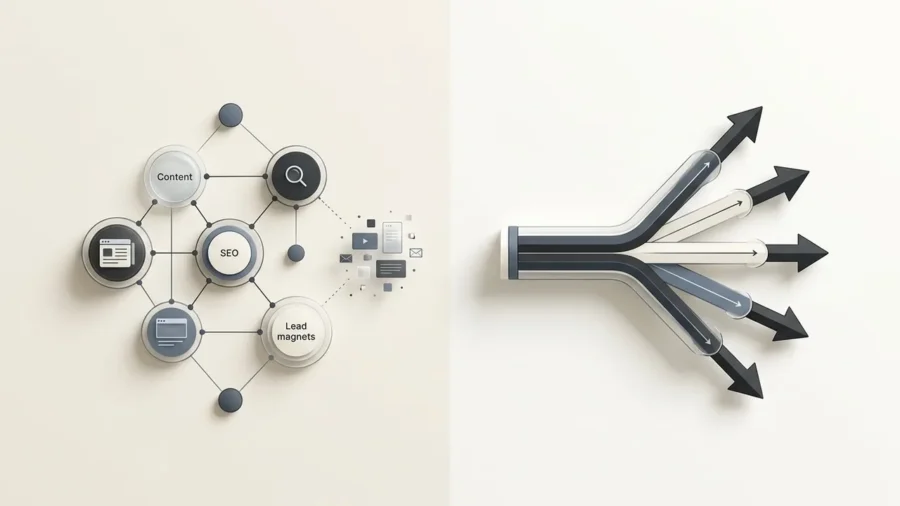
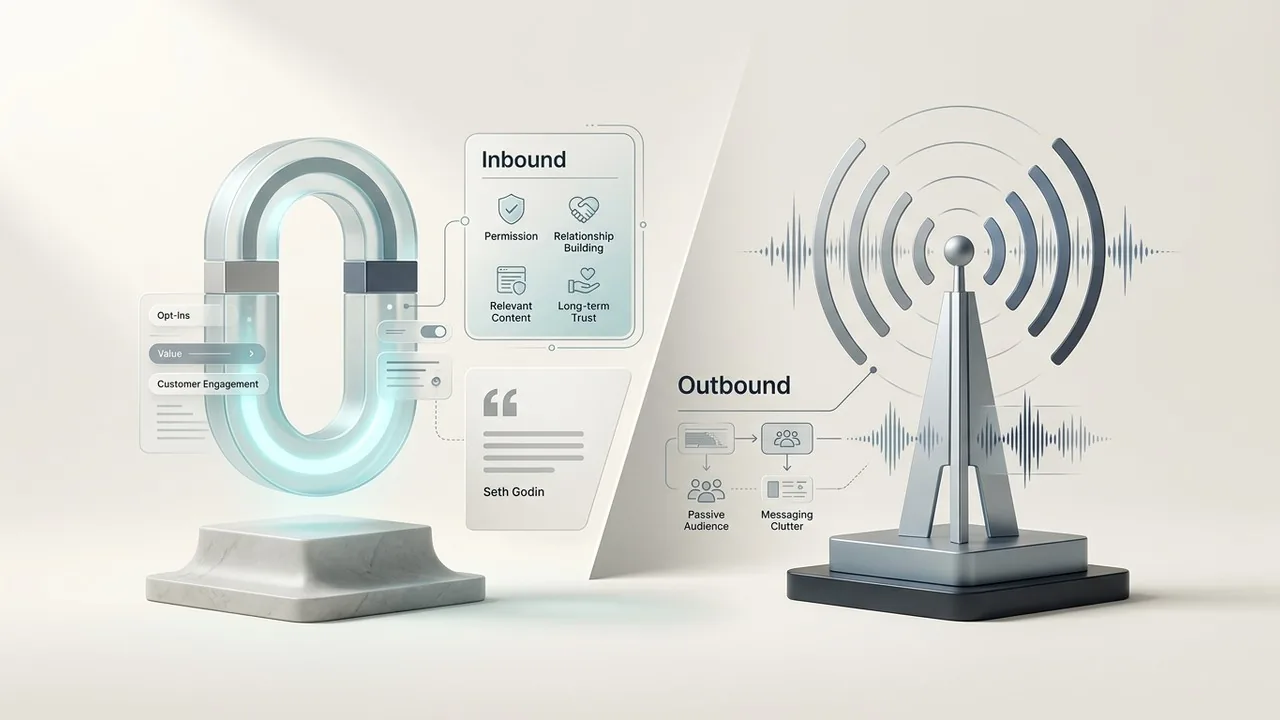
At its heart, the debate of inbound vs outbound marketing is a choice between earning attention and buying it. While both paths aim to drive revenue, they operate on entirely different psychological planes. Outbound marketing functions as a megaphone, broadcasting a message to a wide audience in hopes of finding a needle in a haystack. Inbound marketing, conversely, acts as a magnet, pulling qualified leads toward your brand by providing specific value before a transaction ever occurs.
The ‘Magnet’ Approach: What is Inbound Marketing?
Inbound marketing is a long-term strategy centered on visibility and trust. Instead of chasing customers, you create a digital ecosystem where they find you through organic search, social media, or helpful blog content. This permission-based model ensures that when a user interacts with your brand, they are doing so because they have a genuine need or interest. Success in this arena is measured by the depth of the relationship and the authority your brand builds over time.
Quick Breakdown: Core Philosophies
- Inbound: Permission-based, customer-centric, and focuses on ‘pulling’ users through educational content.
- Outbound: Interruption-based, brand-centric, and focuses on ‘pushing’ messages through paid media.
- The Goal: Moving from transactional noise to relational resonance.
The ‘Megaphone’ Approach: What is Outbound Marketing?
Outbound marketing is the traditional ‘push’ method that many of us grew up with; think TV commercials, cold calling, trade shows, and billboard advertisements. In the digital space, this translates to display ads, unrequested emails, and YouTube pre-roll. It is designed to be disruptive, grabbing attention by force rather than invitation. While it often receives a bad reputation for being intrusive, it remains the fastest way to generate immediate awareness or scale a promotion to a massive audience in a short window of time.
The Fundamental Shift in Modern Consumer Behavior
The rise of ad blockers and the ability to skip commercials has fundamentally changed how people interact with brands. Modern consumers are no longer passive recipients of advertising; they are active researchers. This shift has made the inbound methodology more critical than ever, as buyers now complete a significant portion of their journey before ever speaking to a sales representative. As noted in the HubSpot State of Marketing Report[1], the focus has moved toward creating personalized experiences that respect the user’s time and intelligence.
Our jobs as marketers are to provide a megaphone for our users, not for ourselves. Sell by starting a conversation, not by interrupting one.
Head-to-Head Comparison: Costs, Reach, and Longevity: inbound vs outbound marketing
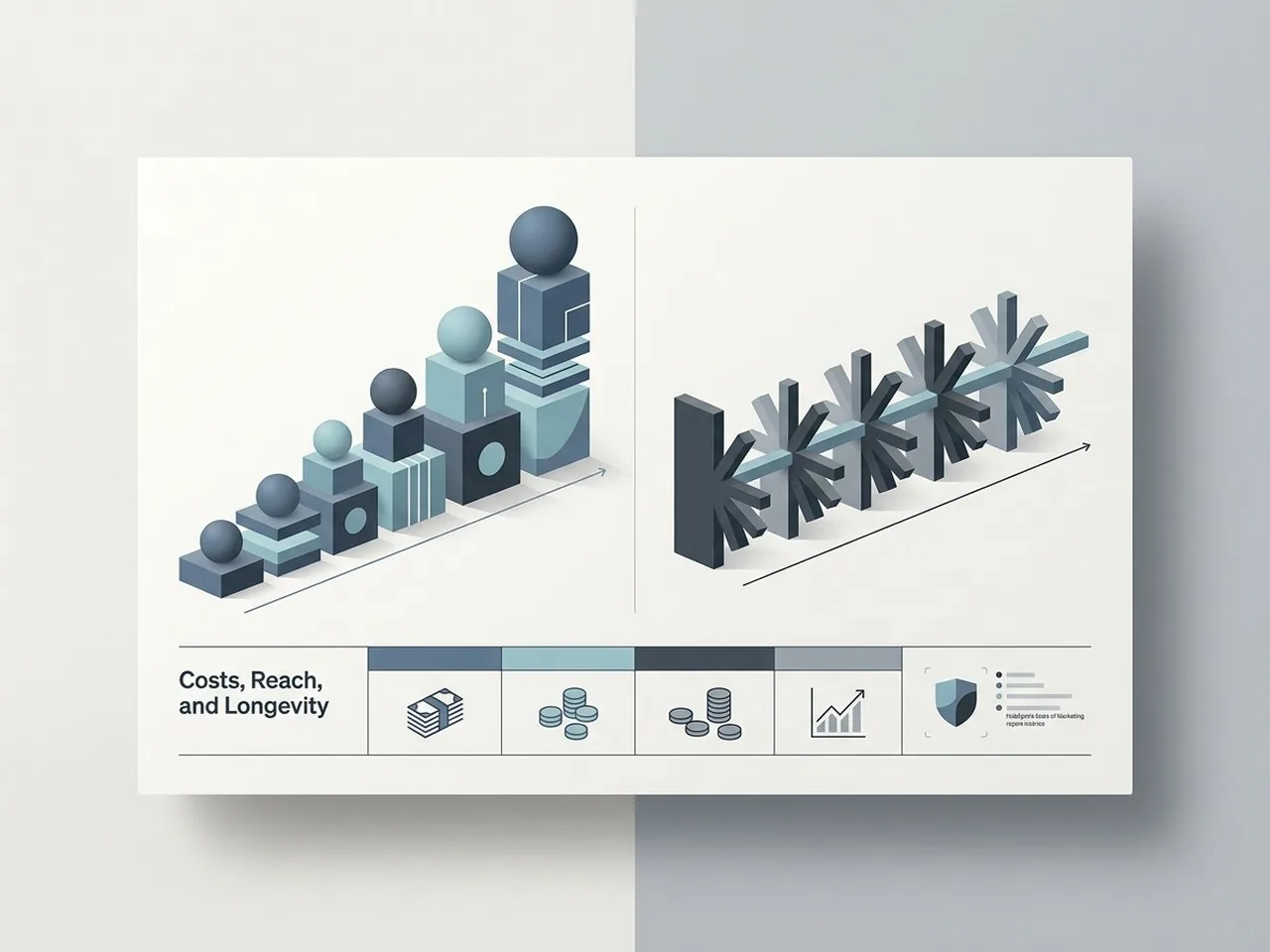
Choosing between pull and push strategies requires a clear understanding of your resource allocation and your timeline for growth. While outbound marketing acts like a faucet that you can turn on for instant flow, inbound marketing is more akin to planting an orchard; it requires upfront labor and patience, but eventually produces a harvest that grows year after year without a proportional increase in effort.
Customer Acquisition Cost (CAC) Discrepancies
The financial reality of marketing often comes down to the efficiency of your spend. Inbound strategies generally focus on organic discovery, which naturally reduces the reliance on paid media. According to insights from the HubSpot State of Marketing report[2], inbound leads consistently cost less than outbound leads because the content assets you create continue to attract users long after the initial production cost is paid off. This compounding effect is the secret sauce of high-growth agencies and SaaS platforms.
Speed to Market: Instant Results vs. Long-Term Equity
If you need to hit a sales target by the end of the month, outbound is your primary lever. It provides immediate reach and allows you to bypass the time it takes for search engines to index your site. However, the moment you stop paying for those ads or stop sending those emails, your lead flow drops to zero. Inbound marketing builds equity; every blog post, whitepaper, and case study is a permanent digital asset that builds brand authority and search engine ranking over time.
Trust Signals and Brand Authority
Trust is the hardest currency to earn in a digital landscape. Outbound marketing often starts from a place of skepticism because it is disruptive by nature. In contrast, inbound marketing positions your brand as a helpful resource. When a user finds your content while searching for a solution to their problem, you aren’t just a vendor; you are an expert who has already provided value before a single dollar has changed hands.
| Feature | Inbound Marketing | Outbound Marketing |
|---|---|---|
| Primary Goal | Earned Attention/Trust | Bought Attention/Reach |
| Cost Structure | Lower CAC over time | Higher, linear costs |
| Growth Type | Compounding Equity | Flash-in-the-pan Results |
| User Perception | Helpful and Educational | Interruptive and Direct |
Inbound marketing is an investment in your brand’s future autonomy; outbound is a rental agreement for someone else’s audience.
Decision Framework: Which to Prioritize?
- Choose Inbound if you want to build a sustainable lead engine and establish yourself as a thought leader in your niche.
- Choose Outbound if you are launching a new product, testing a message, or need to fill a sales gap immediately.
- The Sweet Spot involves using outbound to fuel your inbound engine while your organic authority is still maturing.
Attract: SEO, Blogging, and Social Media Value
The inbound methodology shifts the focus from chasing customers to creating a magnetic presence that draws them in naturally. This begins with the ‘Attract’ phase, where the goal is to provide genuine value before you ever ask for a sale. High-quality blogging and SEO are the cornerstones of this strategy; by answering the specific questions your audience is typing into search engines, you position your brand as a helpful resource rather than a persistent salesperson. Social media complements this by distributing your expertise and building a community around your insights, turning passive scrollers into active visitors.
Engage: Lead Magnets, Webinars, and Conversational UX
Once a visitor lands on your site, the ‘Engage’ phase takes over to build a lasting relationship. This is where the synergy between marketing and design becomes critical. To keep users on the page and encourage them to interact, your site must feature an intuitive UX/UI design that reduces friction. If the interface is clunky or the navigation is confusing, even the best content won’t prevent a bounce. Effective engagement often involves offering high-value assets in exchange for a deeper connection, such as lead magnets or interactive webinars. Conversational UX, like well-timed chatbots or streamlined contact forms, ensures that the transition from a casual reader to a qualified lead feels effortless and human.
Essential Inbound Content Types:
- Educational Whitepapers and E-books
- In-depth Industry Podcasts
- How-to Video Tutorials
- Original Research and Case Studies
- Interactive Assessment Tools
Delight: Personalization and Post-Purchase Support
The inbound flywheel doesn’t stop once a deal is closed. The ‘Delight’ phase focuses on turning customers into vocal promoters. By utilizing personalization and exceptional post-purchase support, you ensure that every interaction feels tailored to the individual’s needs. This builds a feedback loop where happy customers provide the testimonials and word-of-mouth referrals that fuel the ‘Attract’ phase for new prospects. According to recent data, roughly 60% of marketers are now using some form of AI to help personalize these experiences and improve content efficiency, ensuring the flywheel spins faster over time.[3]
Inbound marketing isn’t just a tactic; it is the art of becoming the answer to your customer’s most pressing questions.

The Outbound Engine: Precision Targeting and Scale
While inbound focuses on the long game, outbound marketing acts as the turbocharger for your growth engine. Modern outbound is no longer about shouting into a void; it has evolved into a highly sophisticated, data-driven discipline that prioritizes relevance over volume. When you need to break into a new market or reach a specific high-value stakeholder immediately, outbound provides the control and speed that organic methods sometimes lack. Successful outbound relies on identifying exactly where your audience lives and meeting them there with a message so tailored it feels like a personal invitation rather than an interruption.
Modern PPC and Programmatic Advertising
Pay-per-click (PPC) and programmatic ads allow brands to buy their way to the top of the search results or onto the screens of their ideal customers across the web. Unlike the broad TV spots of the past, today’s digital advertising uses granular intent data. For example, a high-budget Super Bowl ad creates massive brand awareness, but a precisely targeted LinkedIn Sponsored Content campaign can place your whitepaper directly in front of CTOs at Fortune 500 companies. The key is to treat your ad spend as an investment in data; every click provides a signal that helps you refine your targeting parameters and creative messaging.
Outbound Best Practices:
- Use lookalike audiences to find prospects similar to your best customers.
- A/B test headlines and visual assets every two weeks to prevent ad fatigue.
- Ensure the landing page experience matches the promise of the ad copy.
- Set strict frequency caps so you do not over-saturate your target audience.
Account-Based Marketing (ABM) for B2B Success
For B2B agencies and service providers, Account-Based Marketing is the pinnacle of outbound precision. Instead of casting a wide net, you treat individual high-value accounts as markets of one. This involves coordinated efforts between sales and marketing to deliver bespoke content, such as personalized video pitches or industry-specific reports, to key decision-makers. According to the 2026 State of Marketing report by HubSpot, outbound tactics remain a vital component of the mix, especially as 16% of marketers report that direct mail and targeted outreach are seeing a resurgence in effectiveness for high-touch deals.[4]
The Evolution of Cold Outreach and Direct Mail
Cold outreach has moved away from the ‘spray and pray’ model toward a ‘quality over quantity’ framework. Modern tools allow for deep personalization at scale, where an initial email might reference a specific podcast the prospect spoke on or a recent company milestone. Interestingly, physical direct mail has become a luxury differentiator in a cluttered digital world. Sending a well-designed, tactile brand package to a prospect’s office can cut through the noise of a crowded inbox and create a lasting first impression that digital channels simply cannot replicate.
Outbound marketing is not about being loud; it is about being so relevant that your interruption is actually welcomed as a solution.
Strategic Implementation: When to Use Which Method
Choosing between inbound and outbound marketing is not a binary decision; it is a resource allocation challenge. The most successful brands treat these as two gears in the same machine. While outbound provides the spark of immediate activity, inbound builds the engine that eventually runs on its own. Understanding your current business constraints, such as cash flow and market maturity, will dictate which strategy deserves the lion’s share of your budget at any given moment.
Stage of Business Growth and Cash Flow Needs
For early-stage startups or companies launching a new service line, outbound marketing is often the pragmatic choice. You cannot wait six months for organic search traffic when you need to validate a product-market fit today. Outbound allows for rapid experimentation and immediate feedback loops. Conversely, established brands with stable revenue should lean heavily into inbound. According to the 2026 State of Marketing Report by HubSpot[5], lead generation remains a top priority, and inbound strategies continue to offer a lower long-term cost per acquisition compared to paid disruption.
High-Ticket vs. Low-Ticket Product Cycles
The complexity of your sale dictates your communication style. High-ticket B2B services usually require a sophisticated blend of both. You might use outbound LinkedIn outreach to start a conversation with a specific stakeholder, but that prospect will immediately research your blog and case studies to verify your authority. For low-ticket, high-volume consumer goods, inbound content and social proof often do the heavy lifting because the barrier to purchase is low enough that a cold call would be inefficient and intrusive.
Navigating Saturated vs. Emerging Markets
In a saturated market, your inbound content must be exceptionally high-quality to rank, making outbound a necessary tool to bypass the noise. In emerging markets where search volume is low because people do not yet know the solution exists, outbound is essential for category education. You have to tell people there is a better way before they know to search for it.
Is your brand ready for an inbound-only strategy?
- You have at least 6 to 12 months of cash runway to allow for organic growth.
- Your brand has established enough authority to earn backlinks and social shares.
- You have a dedicated team or agency to maintain a consistent content calendar.
- Your target audience actively searches for solutions to their problems online.
Outbound earns you the customer today; inbound earns you the market tomorrow.
Ready to build a digital presence that attracts and converts? Partner with Align to master your UX, branding, and SEO strategy.
The Hybrid Approach: Creating a Unified Marketing Ecosystem
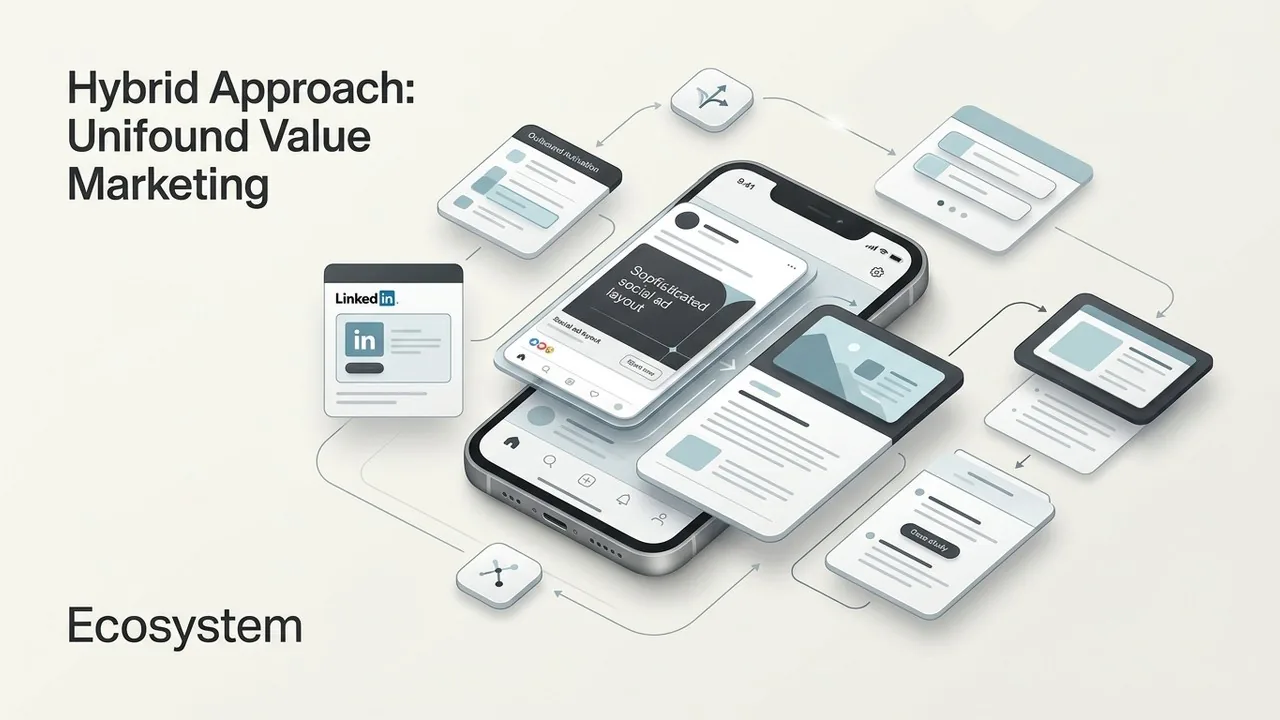
Modern marketing is rarely a choice between push or pull; it is about how well you can synchronize the two. When you treat inbound and outbound as separate silos, you create a fragmented user experience. Instead, a unified ecosystem uses outbound tactics to accelerate the reach of your inbound assets, ensuring that your high-value content does not sit in a vacuum waiting for search engines to find it.
Using Outbound to Fuel Inbound Content Reach
The most effective way to shorten the sales cycle is to use outbound channels to promote your inbound ‘magnets.’ For example, instead of a cold sales pitch, a LinkedIn Sponsored Content ad can target a specific niche with a link to a comprehensive industry report or a specialized UX audit tool. This approach uses the precision of outbound targeting to drive traffic into an inbound funnel, where the user can then be nurtured through educational content and email sequences.
The Hybrid Workflow:
- Step 1: Identify a high-performing inbound asset, such as a whitepaper or a case study.
- Step 2: Launch targeted outbound ads on platforms like LinkedIn or Meta to reach specific decision-makers.
- Step 3: Capture lead data through a dedicated landing page designed for conversion.
- Step 4: Use automated email nurturing to provide additional value, moving the lead toward a sales call.
Retargeting: The Bridge Between Push and Pull
Retargeting is the ultimate hybrid tactic. It allows you to stay top-of-mind with users who found you through inbound methods, like an organic search or a social media post, but did not convert immediately. By serving a tailored ‘push’ ad to someone who has already engaged with your ‘pull’ content, you reinforce your brand authority and gently nudge them back into the conversion path. This creates a feedback loop where every organic visit increases the efficiency of your paid spend.
Data Synchronization Across Sales and Marketing
For a hybrid strategy to succeed, your data must be unified. Sales teams should know which inbound whitepapers a prospect has downloaded before they make an outbound call. This intelligence allows for a warmer, more personalized outreach that feels like a continuation of the conversation rather than a cold interruption. According to recent data from HubSpot, businesses that align their sales and marketing teams see significantly higher retention and win rates, proving that a connected ecosystem is a more profitable one.
Integration is the multiplier: outbound starts the conversation, but inbound gives the prospect a reason to stay.
Common Pitfalls and How to Avoid Them
Even the most sophisticated marketing engines can stall when inbound and outbound efforts are siloed or poorly maintained. Success in balancing these strategies requires constant vigilance and a refusal to treat digital presence as a static asset. When you bridge the gap between initial contact and the final user experience, you ensure that your marketing spend actually converts into long term brand equity.
The ‘Set it and Forget it’ Inbound Trap
A frequent mistake is assuming that inbound marketing is a passive endeavor. High quality content requires regular updates to remain relevant to search engines and helpful to users. If a prospect lands on a blog post from three years ago that references outdated tools or dead links, your authority evaporates instantly. You must treat your content library as a living ecosystem through regular audits and refreshes.
Outbound Fatigue: Avoiding Spam and Ad-Blockers
In an era of digital saturation, outbound strategies often fail because they lack empathy for the recipient’s time. Bombarding a cold list with generic templates or aggressive retargeting ads leads to brand fatigue and high opt-out rates. To avoid being filtered out by ad-blockers or mental fatigue, your outbound touchpoints must provide immediate value or solve a specific, recognizable pain point right in the headline.
Misalignment Between Marketing Tone and UX Design
There is nothing more damaging to your conversion rate than a disconnect between your promise and your product. If an outbound ad features premium, high-end aesthetics but leads to a website with confusing navigation and slow load times, the user experiences cognitive dissonance. This friction causes immediate bounces. Your website UX is the final stage of your marketing funnel; it must mirror the quality and tone of the advertisements that brought the visitor there in the first place.
Performance Audit Checklist:
- Verify that your landing page load speed is under three seconds to prevent bounce spikes.
- Ensure the visual branding on social ads matches the website UI exactly.
- Check that all inbound CTAs lead to functional, mobile-optimized forms.
- Review outbound messaging every quarter to ensure it reflects current user pain points.
Your marketing gets them to the door, but your user experience determines if they stay to have a conversation.
Measuring Success: KPIs for Inbound and Outbound
The core difference between inbound vs outbound marketing lies in how you track the return on investment. While inbound marketing is a marathon that rewards patience with compounding interest, outbound marketing is a sprint that provides immediate feedback loops. To build a sustainable growth engine, you must measure both through the lens of their specific roles in your funnel.
Tracking Organic Growth and SEO Keyword Rankings
Inbound success is often measured by the health of your digital ecosystem. You are looking for steady climbs in organic traffic, improvements in domain authority, and a growing list of keywords where your content ranks on the first page. Tools like HubSpot CRM are essential here for connecting an anonymous blog reader to a known lead. By monitoring the lifecycle of a lead, you can see how many touchpoints it takes before a user feels comfortable enough to convert.
Calculating ROAS and Conversion Rates for Paid Media
Outbound strategies, such as LinkedIn Ads or PPC, demand a more immediate financial audit. Return on Ad Spend (ROAS) is your primary North Star; if you spend one dollar, you need to know exactly how much revenue that specific dollar generated. High conversion rates on your landing pages indicate that your outbound targeting is precise, whereas a high click-through rate with a low conversion rate suggests a disconnect between your ad copy and the actual user experience.
The Multi-Touch Attribution Challenge
Modern buyers rarely follow a linear path. They might see an outbound ad, ignore it, search for a solution a week later (inbound), and finally convert after seeing a retargeting banner. This is where Google Analytics 4 becomes vital, as it allows you to move beyond last-click attribution and see the full picture of how your channels work in harmony.
| Metric Category | Inbound Focus (Pull) | Outbound Focus (Push) |
|---|---|---|
| Primary Goal | Brand Authority & Trust | Immediate Lead Volume |
| Key KPI | Organic Traffic & SEO Rank | ROAS & Cost Per Lead (CPL) |
| Time Horizon | Long-term (6+ months) | Short-term (Instant) |
| Tracking Tool | HubSpot / Search Console | Google Ads / Meta Manager |
Data without context is just noise; the best marketers look for the synergy where outbound ads amplify inbound authority.
Future Trends: AI, Privacy, and the New Marketing Landscape
The line between inbound vs outbound marketing is blurring as technology evolves. We are entering an era where outbound strategies are becoming as personalized as a 1:1 conversation; meanwhile, inbound strategies are achieving a scale previously reserved for mass media. Staying ahead requires a shift from chasing algorithms to owning your relationship with the audience.
AI-Generated Content and the Future of SEO
Generative AI has fundamentally changed the volume of content hitting the web, making traditional SEO more competitive than ever. For inbound success, the focus must shift from quantity to high-signal expertise. AI tools now allow marketers to repurpose a single deep-dive research piece into dozens of personalized outbound touchpoints, ensuring that even your ‘push’ tactics carry the value of ‘pull’ content. The goal is to use AI to handle the heavy lifting of data analysis while humans provide the creative strategy that keeps a brand unique.
Privacy Regulations and First-Party Data
With the gradual phase-out of third-party cookies and the tightening of GDPR and CCPA regulations, the ‘spray and pray’ outbound model is officially dead. Marketers must pivot toward collecting first-party data. This means your inbound efforts; like newsletters, gated tools, or webinars; must work harder to earn user consent. Once you have that direct relationship, your outbound efforts become significantly more effective because they are based on actual user behavior rather than third-party guesses.
The Rise of Community-Led Growth
The future of marketing is less about shouting into a void and more about fostering a digital ecosystem. Community-led growth bridges the gap by creating a space where customers interact with each other. This creates a self-sustaining inbound loop where your best customers become your most effective outbound advocates.
The New Marketing Playbook:
- Prioritize ‘Zero-Party’ data by asking users for their preferences directly.
- Use AI to personalize outbound email sequences based on specific inbound interactions.
- Focus on E-E-A-T (Experience, Expertise, Authoritativeness, and Trustworthiness) to survive AI-driven search updates.
- Invest in ‘owned’ channels like email lists and private communities to bypass platform volatility.
In a world saturated with AI-generated noise, authenticity and owned audience data are the only true moats a brand can build.
At Align, we help brands navigate these shifts by building websites that don’t just look great but serve as powerful engines for data collection and user engagement. Ready to future-proof your digital presence? Partner with Align to master the balance of design and strategy.
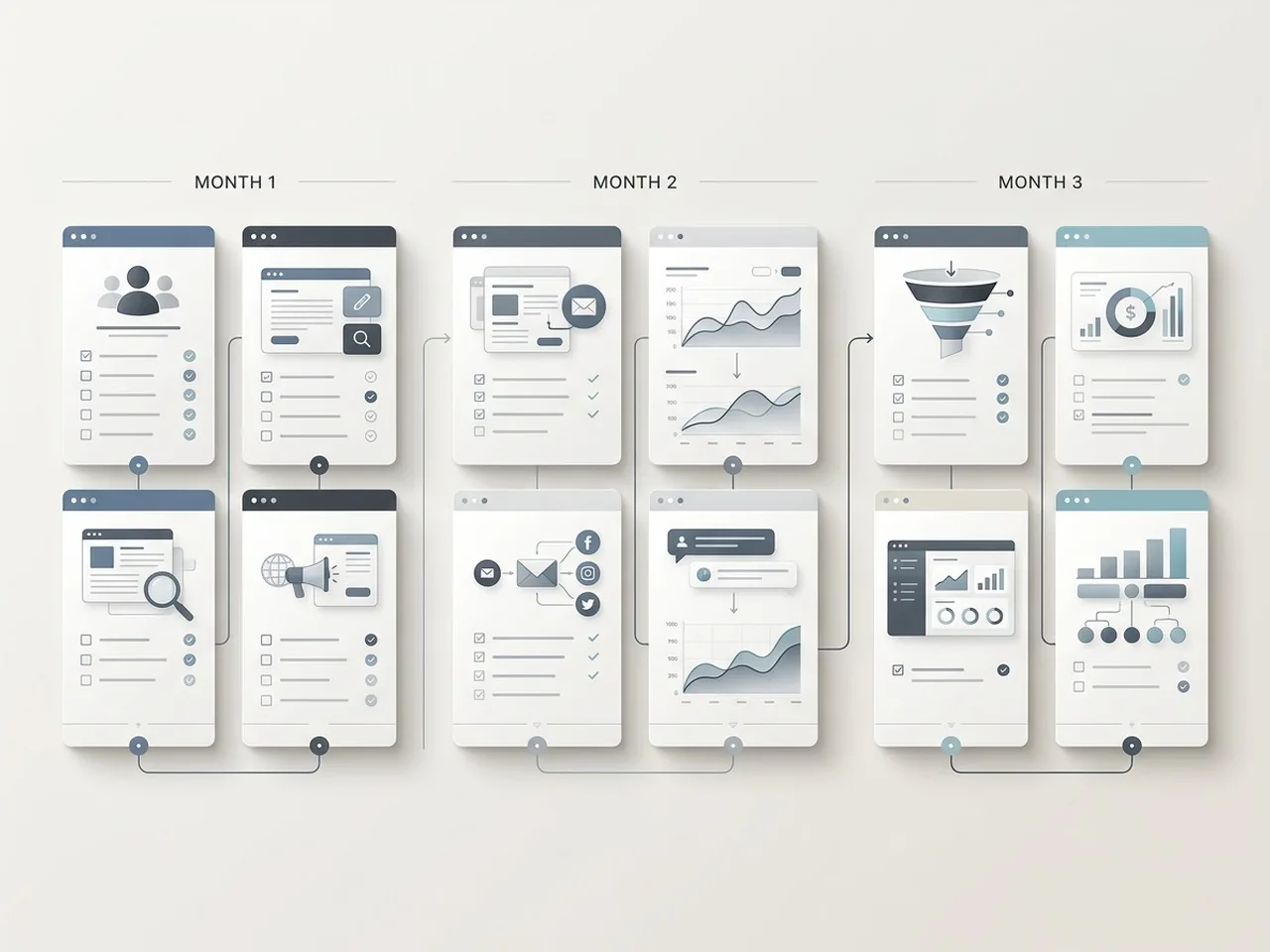
Implementation Checklist: Your 90-Day Marketing Roadmap
Transitioning from a fragmented marketing approach to a cohesive inbound vs outbound marketing strategy requires more than just good intentions; it demands a structured timeline. Over the next three months, your goal is to align your creative assets with your outreach efforts to ensure every ‘push’ is supported by a ‘pull’ ecosystem.
Audit: Current Performance and Content Assets
Before launching new initiatives, you must understand the strength of your current foundation. Begin by cataloging your existing high-performing blog posts, landing pages, and lead magnets. These are your inbound anchors. Simultaneously, review your outbound history, such as email open rates or LinkedIn outreach success, to identify where your messaging might be falling flat. Use this initial phase to prune outdated content and identify gaps where new design or copy is required to support a modern buyer journey.
Strategy: Defining the Ideal Inbound/Outbound Ratio
There is no universal percentage for success, yet most B2B firms find balance by leaning into inbound for long-term authority while using outbound for immediate pipeline needs. If you are a new brand, your first 30 days might skew 70% toward outbound to generate quick feedback loops. Established brands often flip this ratio to focus on organic search and community building. This phase is about setting your North Star metrics, whether that is cost per lead for outbound or organic traffic growth for inbound.
90-Day Priority Matrix:
- Days 1-30: Technical audit, content inventory, and setting baseline KPIs.
- Days 31-60: Content production, SEO optimization, and outbound script testing.
- Days 61-90: Integrated campaign launch, multi-channel tracking, and scaling.
Execution: Launching Your First Integrated Campaign
The final stage is where the magic happens: integration. Instead of running these strategies in silos, use your outbound efforts to drive traffic to your best inbound assets. For example, a targeted LinkedIn ad should lead to a high-value whitepaper, which then triggers an automated nurturing sequence. This creates a seamless experience where the user feels guided rather than hunted. Monitor the data closely during this period, as the interaction between these two forces will reveal exactly where your conversion funnel needs refinement.
Execution is the bridge between strategy and results; an integrated roadmap ensures that your push and pull tactics work as a single, powerful engine.
At Align, we specialize in building the digital infrastructure that makes this roadmap possible. From high-converting UX design to SEO strategies that capture intent, we help you master the balance. Connect with Align today to start building your custom 90-day growth plan.
Finding the Equilibrium in Your Marketing Mix
The debate of inbound vs outbound marketing is no longer about choosing a single winner; it is about understanding how these two distinct methodologies can harmonize to create a resilient growth engine. Outbound marketing provides the immediate spark and broad reach necessary to launch new products or break into fresh markets, while inbound marketing builds the long term equity and trust that lowers your customer acquisition costs over time. By aligning these strategies, you ensure that your brand is both proactive in seeking out potential clients and magnetic enough to draw them in when they are ready to buy. Success lies in the data; you must continuously monitor how your cold outreach feeds your organic traffic and how your educational content supports your direct sales efforts. When you treat these tactics as complementary forces rather than rivals, you create a sustainable ecosystem that captures attention, builds authority, and ultimately drives consistent revenue growth in an increasingly competitive digital landscape.
Optimize Your Digital Presence with Align
Mastering the balance between inbound and outbound strategies requires more than just a creative vision; it demands a high performing digital foundation that converts interest into action. At Align, we bridge the gap between aggressive growth tactics and sophisticated user experiences by designing websites that serve as the perfect destination for every lead, whether they arrived via a Google search or a targeted ad campaign. Our team specializes in crafting SEO driven content strategies and UX optimized landing pages that ensure your marketing spend never goes to waste. Whether you need a comprehensive UX audit to identify conversion bottlenecks or a custom SEO roadmap to dominate your niche, we are here to help you scale with intention. Visit Align today to discover how we can refine your digital presence and build a unified strategy that maximizes your ROI through expert design and strategic search optimization.