


Long before we were obsessed with pixel-perfect kerning and hex codes, our ancestors were busy etching stories onto stone walls. Visual storytelling isn’t just a modern luxury; it is a fundamental human instinct that has evolved over thousands of years to shape how we perceive the world. To truly master the craft of branding today, we have to look back at the history of graphic design to see how simple symbols transformed into the complex visual languages that define our digital age.
From the invention of the printing press to the radical shifts of the industrial revolution, every era has pushed the boundaries of how we communicate. Understanding this timeline is more than just a history lesson; it provides the essential context needed to create timeless work in a fast-paced market. By exploring these origins, we can better appreciate the design principles that still guide every logo, website, and interface we build at Align.
From Cave Walls to Manuscripts: The Ancient History of Graphic Design
While the actual professional title is a product of the last century, the history of graphic design traces back to the very moment humans first felt the urge to record their existence. Long before we had pixels or printing plates, our ancestors relied on visual cues to bridge the gap between thought and memory; using imagery to communicate complex ideas that spoken language alone could not preserve.[1]
Prehistoric pictographs and the birth of symbols
The journey begins in the depths of limestone caves, where early humans used charcoal and iron ore to depict the world around them. These weren’t just idle sketches; they were the first instances of information design. By simplifying the form of a bison or a hunter into a recognizable silhouette, these early artists created the foundation for iconography.
The Lascaux cave paintings represent the earliest known form of visual storytelling, where primitive symbols were organized with intent to archive human experience and provide a shared narrative for the community.
The precision of Egyptian hieroglyphics
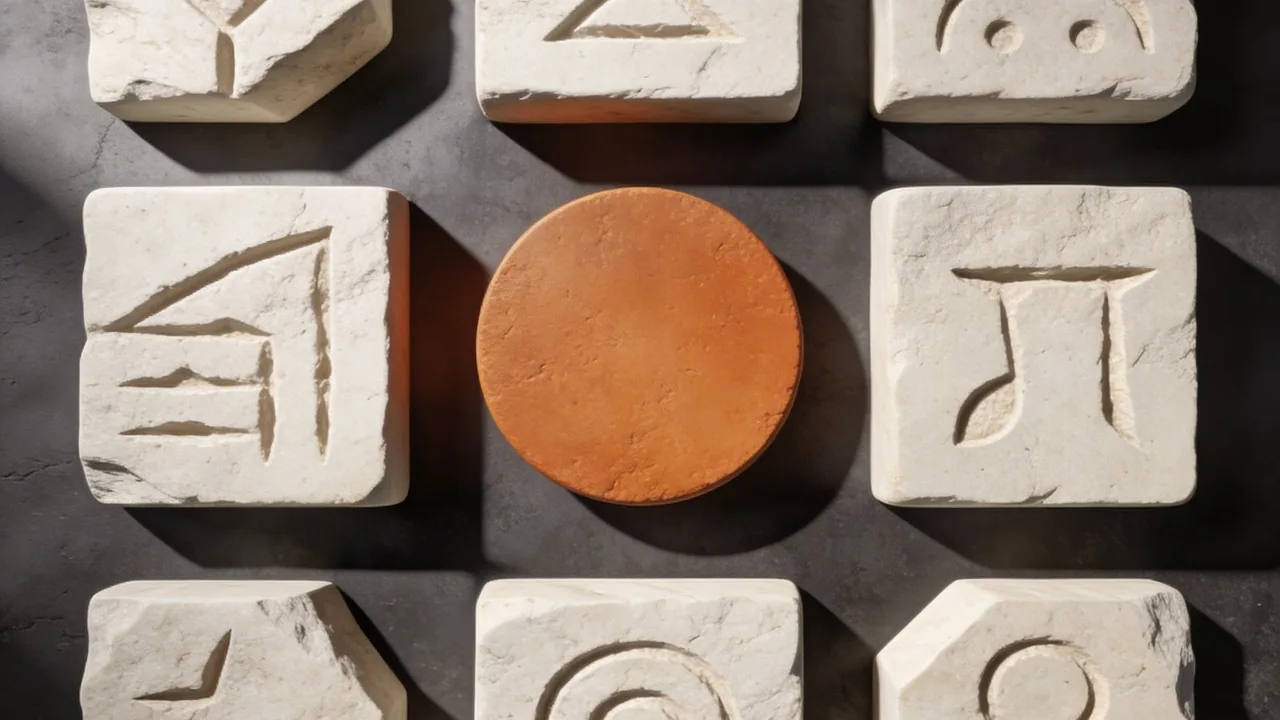
As civilizations stabilized, communication became more structured. The Egyptians refined the use of pictograms into a sophisticated system of hieroglyphics, which combined logographic and alphabetic elements. This era introduced the concept of brand-like consistency, as symbols had to be rendered with extreme precision to maintain their specific meanings across monuments and papyrus scrolls alike.
Medieval illuminated manuscripts and visual hierarchy
By the Middle Ages, the focus shifted toward the marriage of text and art. Monks spent lifetimes creating illuminated manuscripts, where they pioneered the use of visual hierarchy. By using decorative initial caps and vibrant borders, they guided the reader’s eye through the page, ensuring that the most important spiritual messages stood out. This period proved that design was not just about aesthetics, but about directing the user’s attention through a structured layout.
Ancient Design Milestones:
- Pictographs: Using simplified imagery to represent physical objects.
- Ideograms: Developing symbols to represent abstract concepts or ideas.
- Layout: Organizing text and image to prioritize information flow.
The Gutenberg Revolution and the Industrial Age
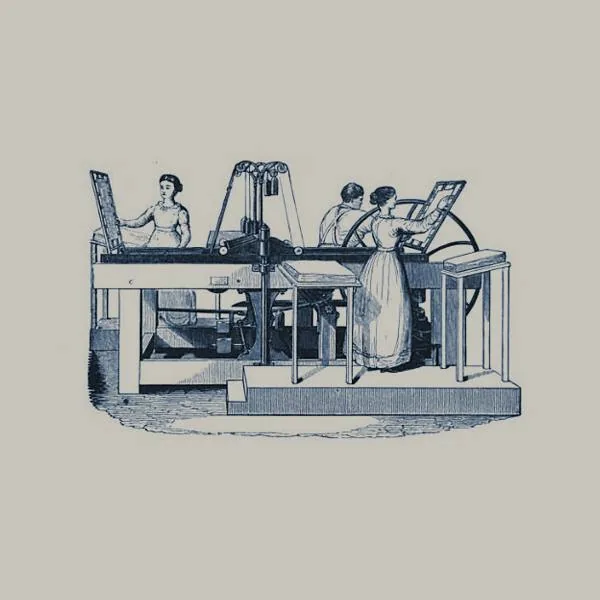
In the 1440s, the history of graphic design reached its first major pivot point when Johannes Gutenberg introduced the movable type printing press to the Western world. This was more than just a technical upgrade; it was a social explosion. For the first time, the written word was no longer the exclusive property of the elite or the clergy, as it moved from the silent scriptoriums into the hands of the public.
How the printing press democratized information
Before Gutenberg, books were luxury items that took months or years to produce. The printing press allowed for the mass production of texts, which standardized language and fueled the spread of new ideas across borders. This shift required a new way of thinking about page layout, as designers had to consider how to arrange metal type in a way that was both legible and efficient for the press.
| Feature | Pre-Press Era | Post-Press Era |
|---|---|---|
| Production | Hand-copied by scribes | Mass-produced via movable type |
| Accessibility | Rare and expensive | Widely available and affordable |
| Consistency | Unique variations in every copy | Standardized and repeatable |
The rise of typography and commercial posters
As the Industrial Revolution took hold in the 18th and 19th centuries, the role of design expanded from books to business. The birth of the modern advertising industry demanded attention-grabbing visuals. Typefaces became bolder and more experimental, leading to the creation of “Slab Serifs” and “Fat Faces” designed specifically to stand out on crowded street corners. Design was no longer just about recording history; it was about selling a future.[2]
Victorian era complexity vs. industrial utility
The Victorian era brought a love for the ornate, characterized by busy layouts, elaborate borders, and a mix of multiple typefaces on a single page. However, as factories churned out goods at an unprecedented rate, a tension emerged between this decorative complexity and the need for industrial utility. This era set the stage for the modern design movements that would eventually prioritize function over flourish.
Design is not just a record of information; it is the bridge between a message and its audience, transformed by the tools of the time.
Modernism and the Birth of Modern Design Principles
As the world transitioned into the 20th century, the decorative clutter of the Victorian era began to feel out of place in an increasingly mechanical world. Designers started to strip away the excess, seeking a universal language that could communicate clearly across borders. This shift wasn’t just about aesthetics; it was a fundamental change in how we perceive the relationship between a message and its visual container.
The Bauhaus school: Form follows function
Founded in Germany in 1919, the Bauhaus school became the epicenter of modern design thinking. The core philosophy was simple yet radical: form follows function. By removing unnecessary ornamentation, designers focused on the essential purpose of an object or layout. This movement bridged the gap between fine art and industrial production, laying the groundwork for the streamlined digital interfaces we build today at Align.
Swiss Design and the obsession with the grid
By the 1950s, the International Typographic Style, often called Swiss Design, refined these ideas into a precise science. This era introduced a heavy reliance on mathematical grids and sans-serif typography like Helvetica. The goal was total objectivity, ensuring that the designer’s personality never obscured the clarity of the information. This obsession with the grid remains the backbone of modern UX design, providing the structure needed for responsive and accessible websites.
Quick Breakdown: The Big Three
- Bauhaus: Championed the marriage of craft and technology while prioritizing utility.
- Art Deco: Blended modern glamour with geometric shapes and social progress.
- The International Typographic Style: Perfected the grid system and prioritized ultimate readability.
Minimalism as a reaction to industrial clutter
Minimalism emerged as the final refinement of the Modernist journey, acting as a direct response to the visual noise of the industrial age. It taught us that what you leave out is just as important as what you put in. In our current digital landscape, this principle is more vital than ever; we use white space and simple geometry to guide a user’s eye without overwhelming their cognitive load.
Modernism proved that design is a tool for clarity, not just a method of decoration, establishing the very rules that govern how we interact with screens today.
The Digital Era: How Technology Changed the History of Graphic Design
The late 20th century marked the most radical turning point in the history of graphic design, as the physical tools of the trade transitioned from drafting tables and X-Acto blades to pixels and processors. This shift was not merely a change in medium; it was a democratization of creative power that redefined how we conceive visual identity and user interaction.
The 1980s desktop publishing explosion
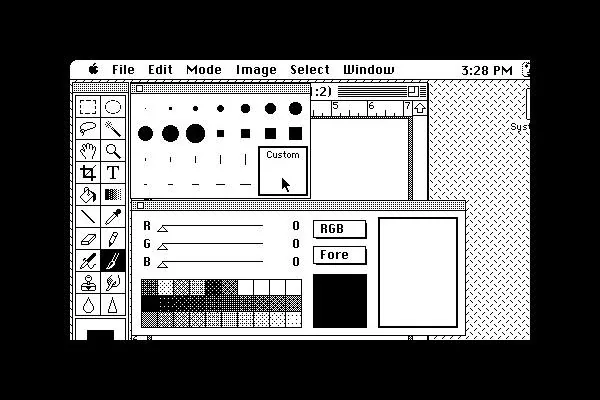
The introduction of the Apple Macintosh in 1984 served as the primary catalyst for this revolution, bringing professional-grade typesetting and layout capabilities to the masses. When paired with the launch of Adobe PostScript and PageMaker, the industry experienced a literal explosion in desktop publishing. Designers could suddenly iterate at speeds previously unimaginable, experimenting with layered compositions and digital typography that would have taken days to produce by hand.
From static print to interactive screen experiences
As the internet gained traction, the role of the designer expanded from paper to the browser. Design was no longer a finished, static object but a living environment that required navigation and feedback loops. The milestones of this era set the stage for everything we build at Align today.
Digital Evolution Milestones:
- 1991: The launch of the first website, introducing the world to the concept of hyperlinked information.
- 1990s: The rise of Photoshop and Illustrator as the industry standards for digital manipulation.
- 2007: The debut of the iPhone, which forced a global shift toward mobile-first design and responsive layouts.
The shift from graphic design to Product and UX Design
Today, the history of graphic design has branched into the sophisticated worlds of Product and UX Design. We are no longer just making things look good; we are solving complex problems through usability and empathy. The focus has moved from how a brand looks on a billboard to how a user feels while moving through an app interface. Technology has turned design into a two-way conversation between the brand and the consumer.[4]
The digital era didn’t just give us new tools; it fundamentally changed design from a finished product into an evolving, interactive service.
Why Understanding the History of Graphic Design Matters Today
In an era where software can generate a logo in seconds, it is easy to assume that the past is obsolete. However, looking back at the history of graphic design reveals that the most effective visual solutions are rarely about the tools used to create them. At Align, we believe that understanding where these rules came from allows us to break them intentionally, ensuring that every digital experience we build is grounded in proven human psychology rather than just fleeting aesthetics.
Timeless principles in a world of AI
Generative tools are incredible for speed; however, they lack the foundational understanding of spatial relationships and intentionality. Historical principles like the Golden Ratio, which dates back to ancient architecture, or the grid systems perfected by the Swiss School, remain the backbone of modern web accessibility. These frameworks ensure that a layout feels balanced and intuitive to the human eye, regardless of whether it is viewed on a stone tablet or a high-definition smartphone.
The Enduring Foundations:
- The Golden Ratio: Creates organic, aesthetically pleasing proportions in layout and logo construction.
- Grid Systems: Provides the structural logic necessary for responsive web design and performance.
- Hierarchy: Directs the user’s eye to the most important information first, a core tenet of UX.
- Color Theory: Leverages historical psychological associations to trigger specific brand emotions.
Avoiding fleeting trends by studying the classics
Designers who ignore history are often doomed to repeat the mistakes of short-lived trends. By studying the classics, we learn to distinguish between a passing fad and a stylistic evolution. This perspective is vital for longevity; it allows a brand to remain relevant for decades rather than months. When we look at the work of pioneers recognized by organizations like the American Institute of Graphic Arts[5], we see that clarity and purpose always outlast decorative clutter.
Innovation is not about abandoning the past; it is about using historical logic to solve modern problems with greater precision.
The Legacy of Visual Language
The history of graphic design is more than a timeline of artistic movements; it is a testament to the human desire for connection and clarity. From the precision of early typography to the boundless possibilities of the digital age, every era has contributed a layer of meaning to how we perceive information today. By understanding these roots, we gain the ability to create work that feels both grounded and visionary. As we look toward the future, the core principles of balance, hierarchy, and purpose remain our most reliable guides. Design will continue to shift, yet the fundamental goal of telling a compelling story through visual language remains as vital as it was centuries ago.
Ready to Make Your Own Mark on Design History?
Every iconic brand began with a single vision that dared to stand out from the noise. At Align, we bridge the gap between historical design wisdom and modern digital innovation to help your business leave a lasting legacy. Whether you are seeking a timeless brand identity or a high-performance website, our team applies the same rigor and artistry that have defined the greatest milestones in design history. We invite you to partner with us to build something that transcends fleeting trends and truly resonates with your audience. Visit Align.vn today to start your next chapter and create a visual identity that stands the test of time.


